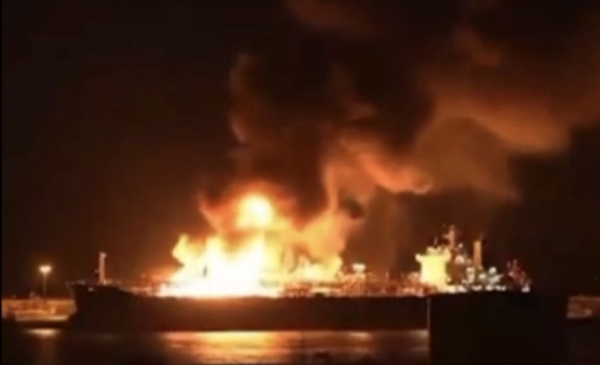
Ukraine Strikes Russian Oil Tanker in Sea of Azov: Escalating Regional Tensions
A Ukrainian drone attack has targeted a Russian oil tanker as the vessel was entering the channel connecting the Sea of Azov to the Black Sea, marking one of the most direct military actions in the region since the conflict escalated.
The incident occurred amid rising tensions between the two countries, with Ukraine continuously seeking to restrict Russia's maritime commercial activities in the area. According to military sources, the attack caused significant damage to the oil tanker, although the extent of the damage has not been officially confirmed.
Complex Geopolitical Background
The Sea of Azov, an inland body of water connected to the Black Sea via the Kerch Strait, has become a hotspot in the Russia-Ukraine conflict since 2014. This strategically located area holds both economic and military significance.
In 2018, Russia constructed a large bridge across the Kerch Strait, gaining near-total control over access to the Sea of Azov. This action drew strong condemnation from Ukraine, which accused Russia of attempting to completely isolate the region.
Economic Importance of the Maritime Route
The Sea of Azov serves as a vital maritime route for both Russia and Ukraine, particularly for coastal cities such as Mariupol (Ukraine) and Berdyansk (Russia). The region is a center for the fishing industry, maritime transport, and commerce.
| Major Sea Ports in the Azov Sea | |
|---|---|
| Ukraine | Russia |
| Mariupol | Taganrog |
| Berdiansk | Yeysk |
| Henichesk | Azov |
Attack Details
According to Ukrainian military sources, the attack was carried out using a homemade or modified drone capable of carrying light weapons. The Russian oil tanker, identified as "Volga Neft-145," was attacked as it was entering the Kerch Channel from the Sea of Azov.
"We are using new technologies to restrict Russia's maritime transport capabilities in this area," said an anonymous Ukrainian military official. "Attacks like this help us gain better control over strategic sea routes."
Reactions from Both Sides
Russia has strongly condemned the attack, calling it an act of "terrorism" and promising retaliation. Russia's Ministry of Defense announced enhanced security around important maritime routes, particularly in the Kerch Channel area.
Ukraine has not officially claimed responsibility for the attack, but military sources from the country suggest it is part of an "economic warfare" strategy aimed at weakening Russia's economy.
Impact on the Conflict
The attack is likely to escalate tensions in the region, especially amid stalled peace negotiations between the two sides. Attacks on commercial targets could lead to economic countermeasures from Russia, including restricting exports of important goods to Ukraine.
| Similar Attacks on Russian Vessels (2022-2023) | |
|---|---|
| Time | Target |
| August 2022 | Moskva cruiser |
| October 2022 | Kerch Bridge |
| March 2023 | Oil tanker in Black Sea |
| July 2023 | Oil tanker in Sea of Azov (current) |
Expert Analysis
Military experts note that Ukraine is becoming increasingly proficient in using drone technology for both military and commercial purposes. Such attacks demonstrate Ukraine's attempt to leverage every technological advantage to compensate for the military power imbalance with Russia.
However, experts also warn that attacks on commercial targets may violate international law of war, particularly regarding the protection of economic infrastructure during wartime.
Impact on Energy Markets
The Sea of Azov is an important oil transportation route, especially for refineries in southern Russia. Attacks on oil tankers could affect crude oil and petroleum product supply chains, leading to higher energy prices in the region.
Energy expert Oleksandr Kovalenko commented: "While the scale of this attack is not massive, it could create a psychological effect, making shipping companies hesitant to use this maritime route, disrupting supply chains and increasing transportation costs."
Conclusion
The attack on the Russian oil tanker in the Sea of Azov is a clear indication of the escalating conflict between the two countries. As Ukraine continues to seek ways to restrict Russia's commercial activities, Russia is also enhancing security measures to protect strategic sea routes.
This incident highlights the strategic importance of maritime routes in the current conflict and shows that both sides are willing to use any available technology and strategy to gain advantage. In this context, the potential for escalation into a larger conflict remains ever-present.