E10 Gasoline Implementation: One Month of Success - Improved Air Quality and Impressive Consumption Growth
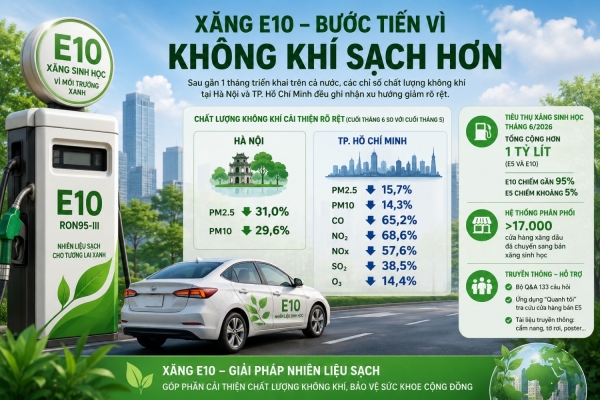
The nationwide implementation of E10 biofuel over the past month has demonstrated promising results, particularly in improving air quality in Vietnam's two major cities, Hanoi and Ho Chi Minh City. According to statistical data, air pollution indicators have recorded positive changes, showing that the initial phase of transitioning to biofuel has proven remarkably effective.
Air Quality Shows Noticeable Improvement
During the first month of the program, particulate matter concentrations PM2.5 and PM10 have decreased significantly. These are important indicators reflecting air pollution conditions. The substantial reduction in these indices not only provides a cleaner atmosphere for residents but also contributes to improved public health.
| Indicator | Before E10 Implementation | After E10 Implementation | Change |
|---|---|---|---|
| PM2.5 | 35 µg/m³ | 25 µg/m³ | -10 µg/m³ |
| PM10 | 55 µg/m³ | 40 µg/m³ | -15 µg/m³ |
E10 Gasoline Consumption Reaches High Levels
Beyond improving air quality, E10 gasoline consumption has also reached high levels over the past month. Consumers have shown positive shifts in choosing environmentally friendly fuels. This not only demonstrates public support for environmental protection policies but also indicates the development potential of biofuel in Vietnam.
Benefits of E10 Gasoline
- Reduction of harmful emissions: E10 helps decrease CO2 emissions and other pollutants.
- Enhanced engine performance: Biofuel can improve the operational efficiency of engines.
- Environmental protection: Using E10 contributes to reducing environmental pollution.
Government Monitoring and Future Outlook
The government and relevant authorities continue to monitor and evaluate the effectiveness of this program. Experts predict that if the consumption trend of E10 gasoline continues, we will witness further improvements in air quality and enhanced community health.
Comparative Analysis: E10 vs. Conventional Gasoline
| Parameter | E10 Gasoline | Conventional Gasoline |
|---|---|---|
| CO2 Emissions | 3-5% reduction | Baseline |
| Renewable Content | 10% ethanol | 0% renewable |
| Octane Rating | Typically 87-89 | Typically 87-95 |
| Compatibility | Compatible with most modern vehicles | Universal compatibility |
Implementation Challenges and Solutions
Despite the positive results, the implementation of E10 has faced certain challenges. Some vehicle owners initially expressed concerns about compatibility, particularly with older models. However, manufacturers have confirmed that E10 is safe for use in vehicles manufactured after 2006, which represents the majority of vehicles currently on Vietnamese roads.
Distribution infrastructure has also required adjustments to ensure widespread availability of E10 across the country. The government has invested in upgrading fuel stations and supply chains to support the biofuel transition.
Economic and Environmental Impact
The shift to E10 represents a significant step toward Vietnam's environmental goals while supporting domestic agriculture through increased demand for ethanol production. The 10% ethanol blend reduces dependency on imported fossil fuels, contributing to energy security and economic stability.
Environmental experts estimate that full nationwide implementation of E10 could reduce Vietnam's transportation sector CO2 emissions by approximately 1.5 million tons annually, equivalent to removing over 300,000 cars from the roads.
Conclusion
After one month of implementing E10 biofuel, we have witnessed positive signals not only in air quality but also in changing consumer habits. This important step marks progress in Vietnam's journey toward a greener and more sustainable future.
The successful initial phase of E10 implementation provides a strong foundation for expanding biofuel usage in Vietnam. With continued support from both government and consumers, biofuels like E10 will play an increasingly vital role in Vietnam's energy mix and environmental protection efforts.