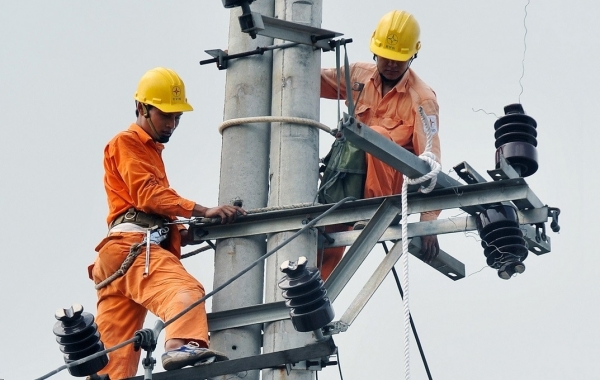
Ensuring Electrical System Safety During Typhoon No. 1 and Post-Storm Flooding
Amidst the complex developments of Typhoon No. 1 Maysak and the risk of prolonged heavy rainfall in the Northern region, Vietnam's Ministry of Industry and Trade has urgently directed the entire sector to implement measures to ensure safety for electricity production, supply systems, and industrial infrastructure. Simultaneously, the sector has prepared resources to serve disaster prevention work following the "4 at the place" principle.
Typhoon No. 1 Maysak: Current Situation
According to the National Center for Hydro-Meteorological Forecasting, Typhoon No. 1 Maysak formed over the East Sea with winds reaching level 10-11, gusting to level 13. The typhoon is forecast to move in a west-northwest direction at 15-20km/h, directly affecting the Northern and North-Central regions in the coming days.
The typhoon is accompanied by heavy rainfall, potentially causing flooding and landslides in many localities. This first typhoon of the season is expected to have strong and prolonged impacts, requiring decisive response measures.
Projected Impact Areas
The typhoon's path is expected to directly affect coastal provinces from Quang Ninh to Thanh Hoa, with possible impacts extending further inland. The combination of strong winds and heavy rainfall poses significant risks to electrical infrastructure, particularly overhead power lines and substations located in vulnerable areas.
Ministry of Industry and Trade Directives
In light of the developing situation, the Minister of Industry and Trade has issued urgent directives requiring all units under the sector to focus on key tasks:
- Proactively inspect and review the entire power grid system, especially in key areas vulnerable to typhoon impacts
- Prepare sufficient backup materials and equipment for rapid troubleshooting
- Enhance guidance and management at all units
- Ensure absolute safety for workers and local residents
Emergency Response Measures
The National Power Transmission Corporation (EVNNET) has implemented a series of measures to respond to the typhoon:
- Establishing working teams to inspect the safety of all transmission lines and substations
- Particular attention to power lines passing through mountainous areas and regions with high landslide risk
- Preparation of sufficient backup generators and repair materials
- Development of safe power outage plans when necessary
- 24/7 monitoring of system operations
Preventive Shutdowns
As part of the preventive measures, EVNNET has identified critical transmission lines that may be subject to forced shutdowns during the storm. These preemptive measures aim to protect equipment and ensure rapid restoration once weather conditions improve.
The "4 at the Place" Principle
Following the "4 at the place" principle for disaster response:
- At the place: Handle incidents immediately at their occurrence location
- At the place: Deploy technical personnel to the site
- At the place: Prepare backup materials and equipment
- At the place: Command and coordinate response efforts
This principle helps shorten incident response time, ensuring the fastest possible power restoration for residents.
Resource Preparation
Provincial Power Companies have established rapid response teams ready to operate 24/7. These forces include:
- Skilled engineers and workers
- Cranes and specialized vehicles
- Mobile power generators
- Repair equipment and replacement materials
Additionally, companies have closely coordinated with local authorities to stay informed of situations and prepare support plans when necessary.
Emergency Communication Systems
To ensure effective coordination during the storm, emergency communication systems have been established between power companies, local authorities, and rescue teams. These systems include dedicated hotlines and digital platforms for real-time information sharing.
Weather Forecast Update
According to the National Center for Hydro-Meteorological Forecasting, after the typhoon, the Northern region will experience prolonged heavy rainfall lasting 3-5 days, with widespread rainfall of 100-200mm, and some areas exceeding 300mm. Heavy rain could cause flooding in low-lying areas and landslides in mountainous regions.
The combination of strong gusty winds from the typhoon and prolonged heavy rain could cause significant damage to the electrical system, particularly overhead power lines and substations.
Risk Assessment
The prolonged nature of this weather event presents unique challenges for power infrastructure maintenance. The saturation of soil in mountainous areas increases the risk of landslides affecting transmission towers, while strong winds may topple trees onto distribution lines in forested areas.
Summary of Response Operations
| Organization | Primary Responsibilities | Personnel Deployment | Backup Equipment |
|---|---|---|---|
| EVNNET | Transmission system operation management | 500 personnel | 50 power generators |
| Provincial Power Companies | Power distribution | 2,000 personnel | 200 power generators |
| Power Repair Companies | Incident repair | 1,500 personnel | 150 specialized vehicles |
Community Preparedness
Beyond infrastructure preparations, power companies have launched public awareness campaigns to help residents prepare for potential power outages. These campaigns include guidance on emergency power sources, food preservation during outages, and safety precautions when using alternative lighting methods.
Conclusion
In the face of the complex developments of Typhoon No. 1 Maysak and prolonged heavy rainfall, the electricity sector has proactively implemented decisive response measures to ensure system safety and stable power supply for residents. Strict implementation of the "4 at the place" principle will help minimize damage and enable rapid recovery when incidents occur.
However, residents should still proactively take preventive measures and follow local authorities' guidelines to ensure safety for life and property during the typhoon and flood season.
#TyphoonNo1 #Floods #ElectricalSafety #DisasterPrevention #IndustryTrade #EVN