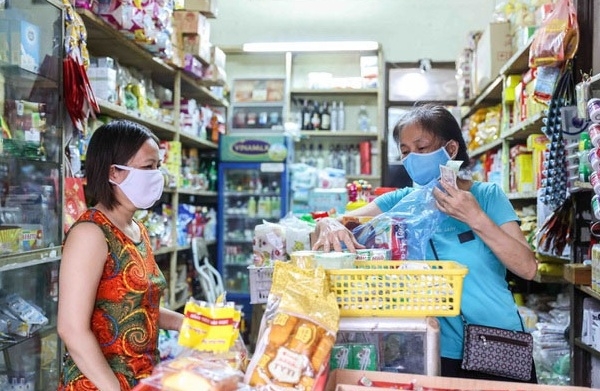
Consumer Price Index Reaches 5-Year High, Mounting Pressure on Inflation Control
In the context of global economic challenges, Vietnam's Consumer Price Index (CPI) has shown significant fluctuations. According to data recently released by the General Statistics Office of the Ministry of Finance, CPI in June 2026 decreased by 0.39% compared to the previous month. However, this monthly decline cannot overshadow the reality that CPI for Q2 2026 remained above 5.2%, with the first half of the year averaging over 4.3% growth.
Detailed CPI Analysis
| Period | CPI (%) | Change from Previous Period (%) |
|---|---|---|
| June 2026 | 5.2 | -0.39 |
| Q2 2026 | 5.2 | N/A |
| First Half 2026 | 4.3 | N/A |
The inflation trajectory indicates a concerning pattern. While June showed a slight relief compared to May's peak, the quarterly and semi-annual figures reveal persistent upward pressure on prices. This represents the highest inflation rate Vietnam has experienced in the past five years, exceeding the government's annual target of 4%.
Root Causes of Rising Inflation
Economic experts have identified several key factors contributing to the current inflationary pressure:
- Food and Commodity Prices: Increasing costs of food items and consumer goods due to adverse weather conditions affecting agricultural production and supply chains.
- Energy and Fuel Costs: Escalating prices of energy and petroleum products, which significantly impact transportation and manufacturing costs across various sectors.
- Consumer Demand: Sustained pressure from consumption demand in the context of economic recovery post-pandemic, coupled with pent-up consumer spending.
- Global Supply Chain Disruptions: Ongoing international supply chain issues that continue to affect the availability and pricing of imported goods.
- Exchange Rate Fluctuations: Currency movements affecting the cost of imported raw materials and finished products.
Economic Implications of High Inflation
The surge in Vietnam's CPI to a five-year high presents numerous challenges for policymakers in controlling inflation. Key consequences include:
- Reduced Purchasing Power: Eroding real incomes of consumers, potentially hindering economic recovery and consumption patterns.
- Monetary Policy Pressure: Increasing pressure on the State Bank of Vietnam to adjust interest rates and implement tighter monetary measures.
- Fiscal Policy Challenges: Complications in maintaining government spending priorities while balancing budget constraints.
- Macroeconomic Stability Concerns: Difficulties in maintaining overall economic stability and sustainable growth targets.
- Business Environment Impact: Increased operational costs for businesses, potentially affecting investment decisions and expansion plans.
- Social Implications: Potential increase in poverty rates and inequality as vulnerable populations are disproportionately affected by rising prices.
Policy Responses and Inflation Control Measures
To address this situation, the government and relevant authorities need to implement comprehensive solutions:
- Agricultural Support: Implement policies to boost agricultural production, ensure food supply stability, and control food price volatility.
- Fuel Price Management: Adopt reasonable mechanisms for adjusting petroleum prices to reduce pressure on commodity costs while maintaining market stability.
- Market Supervision: Strengthen monitoring and regulation of markets to prevent price speculation and ensure fair competition.
- Monetary Policy Coordination: Implement timely interest rate adjustments and liquidity management to balance inflation control with economic growth.
- Fiscal Measures: Consider targeted subsidies for essential goods and social protection programs for vulnerable populations.
- Supply Chain Enhancement: Invest in domestic production capabilities to reduce dependency on imports and build more resilient supply chains.
Expert Analysis and Market Perspectives
Economic analysts suggest that while the monthly decrease in June offers some temporary relief, the underlying inflationary pressures remain significant. Dr. Nguyen Van Minh, a senior economist at the Vietnam Institute of Economics, commented: "The current inflation trend requires a balanced approach between immediate price controls and long-term structural reforms. Over-reliance on administrative measures may provide temporary relief but could distort market mechanisms in the long run."
The business sector has expressed concerns about the sustained high inflation environment. Mr. Tran Dang Nguyen, Chairman of the Vietnam Business Forum, noted: "Enterprises are facing increased input costs while consumer purchasing power is weakening. This creates a challenging business environment that could impact Vietnam's competitiveness in the region."
Future Outlook and Projections
Economic forecasts suggest several scenarios for Vietnam's inflation trajectory in the coming months:
- Optimistic Scenario: Effective policy implementation could bring inflation down to around 3.8-4.2% by year-end if global energy prices stabilize and domestic supply chains improve.
- Base Case Scenario: Inflation may remain elevated at 4.5-5.0% through Q4 2026, requiring continued monetary tightening and targeted fiscal measures.
- Pessimistic Scenario: Further global supply disruptions or additional geopolitical tensions could push inflation above 5.5%, necessitating more aggressive intervention measures.
Conclusion
The surge in Vietnam's Consumer Price Index to a five-year high serves as a warning signal about mounting inflationary pressures. Controlling inflation is not solely the government's responsibility but requires concerted efforts from all sectors of society. Timely and effective measures will help stabilize the economy, protect consumer purchasing power, and ensure sustainable growth in the future.
The current situation presents both challenges and opportunities for Vietnam's economic policymakers. By implementing comprehensive reforms and balancing immediate relief measures with long-term structural adjustments, Vietnam can navigate through this inflationary period and maintain its economic development trajectory.