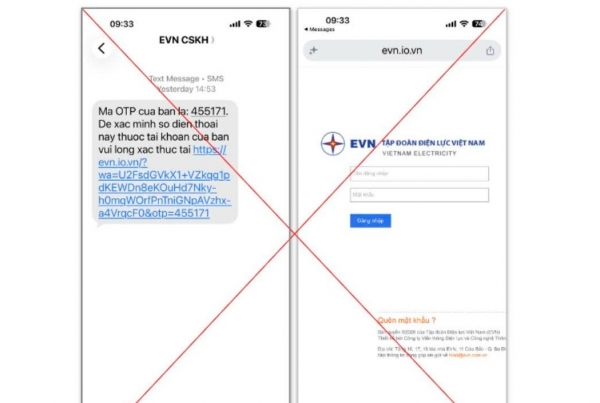
EVN Issues Warning About New Phishing Scam Using Fake OTP Messages
The Vietnam Electricity Corporation (EVN) has recently issued a warning about a sophisticated phishing scam utilizing fake One-Time Password (OTP) messages accompanied with suspicious links designed to steal personal information and bank account details from customers.
The Evolving Landscape of Digital Fraud
In an era of increasing digital transactions, cybercriminals continuously develop new methods to exploit unsuspecting individuals. The latest warning from EVN highlights a particularly concerning trend: the use of fake SMS messages that mimic banking systems to request OTP verification for purported transactions. This sophisticated phishing technique preys on the urgency of financial notifications, often causing victims to act without proper verification.
As Vietnam accelerates its digital transformation, with mobile banking and online payments becoming mainstream, the potential impact of such scams extends beyond financial loss to broader implications for public trust in digital financial systems.
How the OTP Phishing Scam Operates
According to EVN's official announcement, the scam typically follows a pattern designed to create a sense of urgency and panic:
- Victims receive SMS messages appearing to be from their bank, alerting them to a financial transaction
- The message includes specific transaction details: amount, recipient account number, and bank name
- Victims are instructed to verify the transaction by entering an OTP code on a provided link
- The link directs to a fraudulent website designed to mimic the bank's official interface
- Once the OTP is entered on the fake site, scammers gain access to the victim's banking credentials
The messages often contain grammatical errors, misspellings, or unusual phrasing that may indicate their fraudulent nature. However, in some cases, the scammers have become quite skilled at mimicking official communication, making detection more challenging.
Common Characteristics of Fake OTP Messages
| Feature | Legitimate Bank Message | Fake Phishing Message |
|---|---|---|
| Language | Professional, formal, error-free | May contain grammatical errors, misspellings |
| Urgency | Neutral tone, no pressure | Creates false urgency, panic-inducing language |
| Links | Directs to official banking domain | Shortened URLs, unusual domain names |
| Request for Information | Never asks for full OTP or credentials |
Identifying Phishing Attempts
EVN emphasizes the importance of vigilance when receiving unexpected financial notifications. Customers should be particularly alert to messages exhibiting the following red flags:
- Requests for sensitive information: Legitimate banks will never ask for complete OTP codes, passwords, or full card details via SMS.
- Suspicious links: Messages containing links that don't direct to the bank's official website should be treated with suspicion.
- Poor language quality: Professional institutions maintain high standards in their communications. Poor grammar or spelling can indicate fraud.
- High-pressure tactics: Messages creating artificial urgency or threatening consequences should be viewed skeptically.
- Unusual sender information: Messages from numbers or email addresses that don't match the bank's official contact details.
Best Practices for Banking Security
To protect against phishing attempts and secure financial assets, EVN recommends implementing the following security measures:
- OTP Confidentiality: Treat OTP codes like cash—never share them with anyone, including bank employees or purported customer service representatives.
- Message Verification: Always verify the sender's information and cross-reference with official bank contacts.
- Direct Website Access: When in doubt, access banking services directly through official apps or websites, not through links in messages.
- Software Updates: Maintain updated operating systems and banking applications to benefit from the latest security features.
- Strong Passwords: Implement complex passwords combining uppercase letters, lowercase letters, numbers, and special characters.
- Two-Factor Authentication: Enable two-factor authentication (2FA) for all banking accounts to add an extra layer of security.
- Regular Account Monitoring: Frequently review transaction histories to quickly identify and report unauthorized activities.
Documented Cases and Impact
Statistics from Vietnamese banks reveal that the fake OTP phishing scam has been widespread across the country, affecting numerous victims. In many cases, individuals have lost tens to hundreds of millions of Vietnamese Dong (equivalent to thousands of US dollars) within minutes of falling for the scam.
A representative case from Ho Chi Minh City illustrates the severity of this issue: A customer received an SMS notification about a 50 million VND transaction from their account. Panicked by the message, the customer entered the provided OTP code into the linked website, resulting in immediate unauthorized withdrawals from their account.
These incidents highlight how quickly financial losses can occur in such scams, often before victims realize they've been deceived. The psychological aspect—creating panic to prevent rational thinking—is a key element of the scam's effectiveness.
Financial Impact Analysis
| Victim Profile | Average Loss (VND) | Recovery Rate | Time to Discover Fraud |
|---|---|---|---|
| Young professionals | 30-50 million | 15% | 2-4 hours |
| Middle-aged individuals | 50-100 million | 8% | 4-12 hours |
| Seniors | 20-80 million | 5% | 12-48 hours |
Expert Recommendations on Cybersecurity
Cybersecurity specialists emphasize that the fake OTP phishing scam represents a significant evolution in digital fraud tactics. As criminals become more sophisticated, individuals must adapt their security practices accordingly:
- Maintain Composure: When receiving unexpected financial notifications, take a moment to verify before reacting emotionally.
- Independent Verification: Always check transaction histories through official banking channels before taking any action.
- Direct Communication: If concerned about a notification, contact your bank directly using official phone numbers or in-person services.
- App Source Verification: Only download banking applications from official app stores and avoid third-party sources.
- Regular Account Audits: Periodically review account statements and transaction histories to identify irregularities early.
- Security Awareness: Stay informed about the latest phishing techniques and share this knowledge with family members, especially those less familiar with digital banking.
The Regulatory Response
EVN's warning is part of a broader effort by Vietnamese authorities to combat digital fraud. The corporation has collaborated with banking institutions and cybersecurity agencies to develop comprehensive educational campaigns aimed at increasing public awareness about such scams.
"The sophistication of these phishing scams requires a multi-layered response," stated a representative from EVN's cybersecurity department. "While we work to detect and block fraudulent messages, customer education remains our most effective defense. Understanding how these scams operate and recognizing the warning signs can prevent financial losses before they occur."
Financial institutions have also implemented additional security measures, including enhanced fraud detection algorithms and more robust customer verification processes. However, experts note that the human element remains the most vulnerable point in the security chain, making continuous education and awareness crucial.
Conclusion: Building Resilience Against Digital Fraud
EVN's alert about the new OTP phishing scam serves as an important reminder of the ongoing challenges in our increasingly digital financial landscape. As Vietnam continues its digital transformation journey, protecting citizens from cyber threats becomes an essential component of this progress.
The fundamental principle to remember is that legitimate financial institutions will never request complete OTP codes or sensitive account information via SMS. Any such request should be treated as a potential scam. When in doubt, verification through official channels is always the safest approach.
In the face of evolving digital threats, combining technological security measures with human awareness creates the strongest defense against financial fraud. By staying informed, maintaining healthy skepticism, and following recommended security practices, individuals can significantly reduce their risk of falling victim to such scams.
Reporting Suspicious Activity
If you encounter what appears to be a phishing attempt or have been a victim of such scams, immediate reporting is crucial to limit potential damage and help authorities track these criminal activities.
| Authority | Contact Hotline | Availability |
|---|---|---|
| EVN | 19001222 | 24/7 |
| Cyber Police | 01289999119 | 24/7 |
| Ministry of Public Security | 0692377377 | 8:00 AM - 5:00 PM |
Citizens who suspect they've received phishing messages should report them immediately to the appropriate authorities and their banking institutions. This prompt action not only helps protect individual accounts but also contributes to the broader effort to combat digital fraud in Vietnam's increasingly connected financial ecosystem.