#MyIran #Iran #TrungDong #DauMo #Hormuz #DiaChinhTri #KinhTeToanCau #TinTheGioi
If Iran reopens its oil routes and receives $300 billion in capital, will this be true peace or just a halftime break before a bigger war?
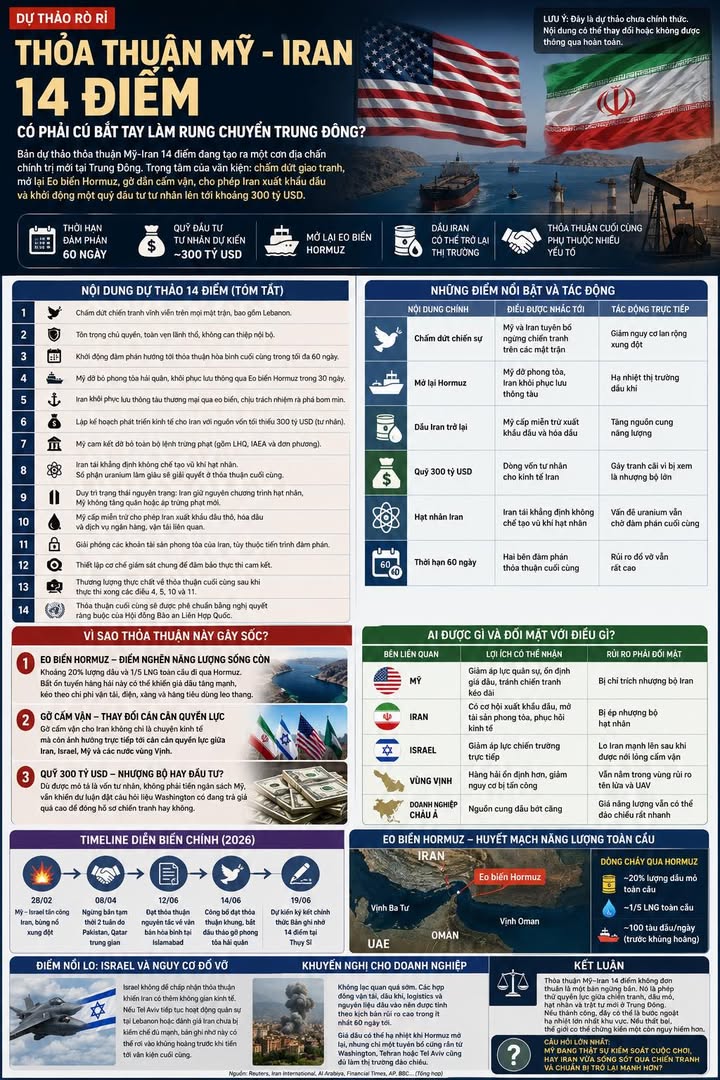
The draft 14-point US-Iran agreement is creating a new political earthquake in the Middle East. The focus of the document is not only to end the fighting, but also to reopen the Strait of Hormuz, gradually lift sanctions, allow Iran to export oil and launch a private investment fund of about 300 billion USD.
The controversial point is that this document is not the final peace treaty. This is like a temporary 60-day trigger lock, where each side both de-escalates and retains its strongest cards.
Main content What is mentioned Direct impact
End of hostilities The US and Iran declared a cessation of war on all fronts to reduce the risk of conflict spreading
Reopening Hormuz The US lifts the blockade, Iran restores ship traffic Cooling the oil and gas market
Iranian oil returns to US granting oil and petrochemical export waivers Increase energy supply
300 billion USD fund Private capital flow for Iran's economy Controversial because it is xYou are a big concession
Iran's nuclear Iran reaffirms that it does not build nuclear weapons. The uranium issue is still awaiting final negotiations
60-day deadline for both sides to negotiate a final agreement. The risk of failure is still very high
Why is this agreement shocking?
First, the Strait of Hormuz is the world's vital energy choke point. When this maritime route is unstable, oil prices can increase sharply, leading to escalating costs of transportation, electricity, gasoline and consumer goods.
Second, lifting the embargo on Iran is not just an economic matter. It could change the balance of power between Iran, Israel, the US and the Gulf countries.
Third, the $300 billion fund, although described as private capital, not US budget money, still makes public opinion question whether Washington is paying too high a price to close war records.
Stakeholders Benefits to be received Risks to be faced
US Reduces military pressure, stabilizes oil prices, avoids prolonged war Criticized for making concessions to Iran
Iran Has the opportunity to export oil, open frozen assets, and recover economically. Forced to make nuclear concessions
Israel Reduces direct battlefield pressure Worrying about Iran strengthening after the embargo was eased
The Maritime Gulf is more stable, reducing the risk of attack. Still in the missile and UAV risk zoneAsian businesses Oil supply is less tense Energy prices can still reverse very quickly
The most notable point is that Israel does not easily accept an agreement that gives Iran more economic space. If Tel Aviv continues to maintain military activities in Lebanon or assesses that Iran has not been restrained strongly enough, this memorandum could fall into crisis even before reaching the final document.
For businesses, this is not the time to be optimistic too early. Transportation, oil and gas, logistics and input materials contracts should be calculated according to the high-risk scenario for at least the next 60 days. Oil prices may cool down when Hormuz reopens, but just one tough statement from Washington, Tehran or Tel Aviv is enough to make the market reverse.
Conclusion
The 14-point US-Iran agreement is not simply a ceasefire. It is a test of power between war, oil, nuclear and the new order in the Middle East. If successful, this could be the biggest cooling turning point in the region. If it fails, the world could witness an even more dangerous round of escalation.
The biggest question is whether America really controls the game, or Iran has just survived the war and is preparing to come back stronger.