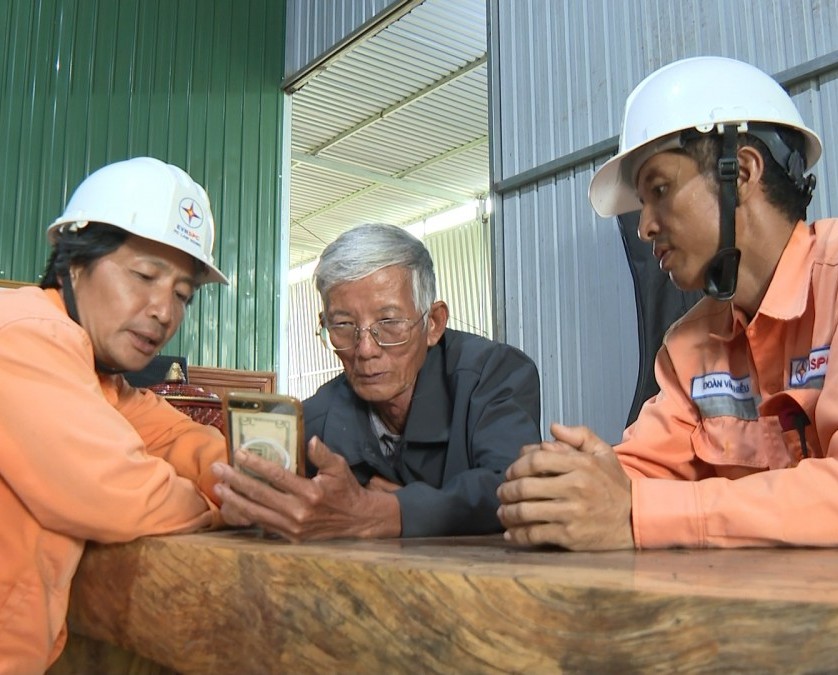
National Power Grid Transforms Border Commune of Đắk Wil in Lâm Đồng Province
The access to the national power grid has become a crucial driving force helping Đắk Wil border commune in Lâm Đồng province to undergo significant economic and social transformation while maintaining national security and defense in this border region. Mr. Hoàng Văn Tám - Chairman of the Đắk Wil People's Committee shared these positive changes in the border area during a recent interview.
A Unique Area with Multiple Challenges
The Đắk Wil border commune is located in the northwest of Lâm Đồng province, bordering Đắk Nông province and Cambodia. This is a remote, mountainous area with difficult terrain and transportation challenges. Before gaining access to the national power grid, local residents had to rely entirely on small-scale solar power systems or generators for their electricity needs, causing numerous inconveniences for daily life and production.
According to Mr. Hoàng Văn Tám, Chairman of the Đắk Wil People's Committee: "Previously, the lack of electricity was one of the biggest barriers to the development of our commune. Residents could not use modern electrical appliances, agricultural production faced many difficulties, and cultural and spiritual life was limited."
The Process of Connecting to the National Power Grid
To address the electricity shortage issue, local authorities collaborated with the Lâm Dong Power sector to implement a project extending the national power grid to Đắk Wil. The project was implemented with a total investment of tens of billions of Vietnamese đồng, spanning several years with difficulties in terrain and harsh weather conditions.
Mr. Tám added: "The process of bringing the power grid to Đắk Wil commune was extremely arduous. We had to overcome many treacherous terrains, cross streams and forests to construct the infrastructure. However, with the determination of the entire political system and the support of the power sector, we successfully achieved the goal of connecting the national power grid to the commune."
Summary of National Power Grid Implementation in Đắk Wil
| Indicator | Before National Grid | After National Grid |
|---|---|---|
| Percentage of households with electricity | 35% | 98% |
| Power source used | Solar power, generators | National power grid |
| Average monthly electricity cost | 300,000 - 500,000 VND | 150,000 - 300,000 VND |
| Daily electricity usage time | 4-6 hours | 24/7 hours |
Economic Impact on the Local Area
The arrival of the national power grid has brought significant changes to the economic life of Đắk Wil residents. Many new production models have been established, helping to increase income and improve living standards.
Mr. Tám stated: "Residents have boldly invested in new agricultural production models such as greenhouse vegetable cultivation, large-scale livestock and poultry farming. Electricity is also a prerequisite condition for developing traditional handicraft villages."
Specifically, many households have adopted automatic irrigation systems, used agricultural product processing machinery, and installed lighting systems for livestock farms. This has helped increase labor productivity, reduce production costs, and improve product quality.
Social Life Changes
In addition to economic impact, the national power grid has brought profound social changes to Đắk Wil. Children now have better learning conditions with adequate lighting, and residents have easier access to information and remote healthcare services.
Mr. Tám further shared: "Previously, students had to study under oil lamps or flashlights. Now, with the national power grid, children have sufficient lighting for evening studies, and teachers can use modern teaching equipment."
Moreover, the national power grid has also improved the primary healthcare system. The commune's medical station can use electronic medical equipment, properly preserve vaccines and medicines according to regulations, and improve the quality of medical examination and treatment for residents.
Ensuring National Security in Border Areas
Due to its special geographical location, ensuring national security in Đắk Wil has always been a priority. The national power grid has made a significant contribution to this work.
Mr. Tám emphasized: "The national power grid helps us build border road lighting systems and border checkpoint facilities. This not only facilitates patrol and control work but also improves the living conditions for border guard forces and residents in border areas."
In addition, the power grid helps strengthen propaganda and legal education activities, raising people's awareness of the task of protecting territorial sovereignty. Radio and television programs are more accessible, helping residents better understand state policies and laws.
Future Development Plans
The national power grid has created momentum for Đắk Wil's future development. Mr. Tám shared the commune's development orientations:
- Developing community-based eco-tourism based on natural landscape and indigenous cultural advantages
- Establishing mechanisms to attract investment in high-tech agriculture
- Developing transportation infrastructure to connect with major economic centers
- Improving the quality of human resources through vocational training programs
"We consider the national power grid as an important foundation for sustainable economic and social development in Đắk Wil. On this basis, we will continue to mobilize resources to build a wealthy, beautiful, and civilized border commune," Mr. Tám affirmed.
Conclusion
The story of Đắk Wil's transformation after gaining access to the national power grid is a clear demonstration of the importance of infrastructure in economic and social development, especially in remote, mountainous, and border areas. This success not only improves residents' living standards but also contributes significantly to ensuring national security in the border region.
Investment in energy infrastructure, particularly the national power grid, needs to continue to be strengthened so that no citizen is left behind in the country's common development process. This is the path to building a strong Vietnam and a comprehensively and sustainably developing Lâm Đồng province.