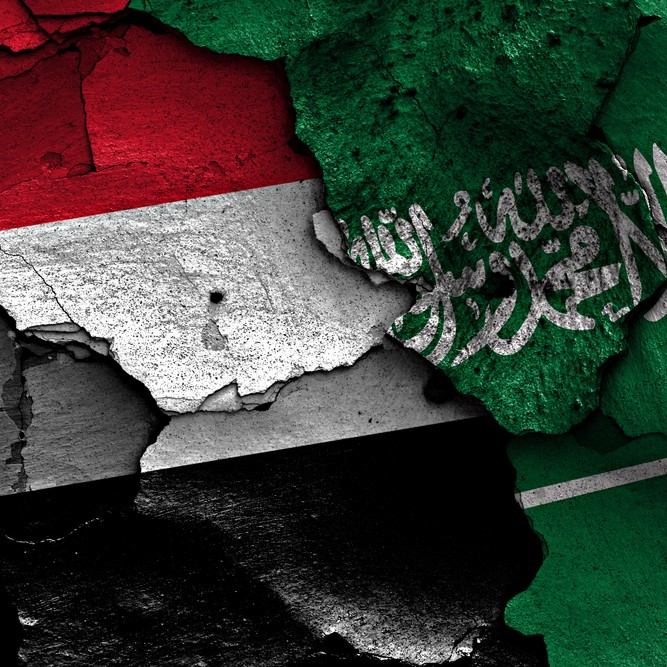
Technology Showdown in the Red Sea: Houthi Use Advanced Missile Systems to Attack Saudi Arabia
The maritime blockade declared by the Iran-aligned Houthi group against Saudi Arabia has officially brought U.S.-Iran tensions to the southern Red Sea, threatening the crucial energy export route that Riyadh uses to avoid disruptions in the Strait of Hormuz, according to Reuters.
Blockade Strategy and Technological Implications
The Houthi group announced an immediate "maritime blockade" of Saudi Arabia on Monday, reportedly in retaliation for what they call Saudi Arabia's "siege of Yemen." This declaration shows an escalation in maritime security strategy, using advanced surveillance and positioning systems to enforce the blockade.
Satellite surveillance technology and Automatic Identification Systems (AIS) are playing crucial roles in monitoring maritime activities in the region. These systems allow stakeholders to track vessel movements, detect unusual activities, and deploy effective defensive measures.
Impact on Energy Export Systems
Iran had previously instructed Houthi forces to prepare to close the Bab el-Mandeb Strait if the U.S. continues to attack Iran's energy infrastructure. A complete closure could disrupt approximately 7% of global oil supply, leaving Saudi Arabia vulnerable at both ends of its export system as tanker traffic through Hormuz remains significantly reduced.
Advanced positioning and navigation systems on vessels are now facing significant challenges when operating in high-risk areas. Technologies like Global Positioning System (GPS) and Electronic Chart Display and Information System (ECDIS) have become more important than ever to ensure the safety of energy transportation operations.
| Indicator | Before tensions | Current | Change |
|---|---|---|---|
| Oil volume through Hormuz | 8 vessels/day | 2 vessels/day | -75% |
| Ship-to-ship transfers outside Hormuz | 3/week | 1/week | -67% |
| Brent oil price | ~$85/barrel | ~$88/barrel | +3.5% |
Bombing Situation and Defense Technologies
The Houthi declaration comes after the ninth consecutive night of U.S. strikes against Iran. Tehran reported attacks in Tabriz, Chabahar, Konarak, Bandar Mahshahr, and Bandar Imam Khomeini, while the Islamic Revolutionary Guard Corps claimed to have attacked U.S. military assets in Jordan, Kuwait, and Syria. Kuwait also reported another attack on a desalination plant, causing a fire.
Missile defense technologies and short-range missile defense systems are being deployed to protect critical energy infrastructure. Systems like Iron Dome and Patriot missile defense systems are being used to protect strategic assets against increasing threats.
Impact on Energy Markets and Trading Technologies
Oil movement through the Gulf is deteriorating again. Satellite images reviewed by Reuters show only one oil transfer from vessel to vessel outside Hormuz on July 18, down from three weeks earlier. Maritime sources estimate only two or three transfers have occurred in recent days, and super tanker passages through Hormuz have averaged two per week in recent days, down from eight per day in late June and early July.
Algorithmic trading technology and AI are being used to analyze energy market data and forecast price fluctuations. Brent crude temporarily traded above $90 per barrel following the blockade announcement before declining as traders assessed new ceasefire efforts. Iran has received a 10-day ceasefire proposal, and both Tehran and Washington have left open the possibility of renewed talks. Brent subsequently traded near $88.04 per barrel, while West Texas Intermediate fell to around $82.29.
Future of Maritime Technology and Energy Security
This event highlights the rapid development of maritime security technology and the growing demand for automated surveillance systems. Maritime drone technology and Unmanned Surface Vehicles (USVs) are becoming important tools for monitoring and patrolling high-risk maritime areas.
New technologies like blockchain are being considered to increase transparency in energy transactions and minimize risks in energy transportation routes. AI-based monitoring systems could help predict maritime security threats earlier, allowing stakeholders to implement timely defensive measures.
Geopolitical tensions are driving the development of alternative energy technologies and advanced energy storage systems as countries seek to reduce dependence on vulnerable energy transportation routes.
Charles Kennedy for Oilprice.com