Global Energy Landscape: New Oil Flows, Political Conflicts and Investment Opportunities
In the context of shifting global energy geopolitics, nations are seeking to reposition themselves through new energy infrastructure, strategic agreements, and breakthrough extraction technologies. Below is a comprehensive overview of the most significant developments from the past week.
Iraq's New Oil Export Strategy and Geopolitical Implications
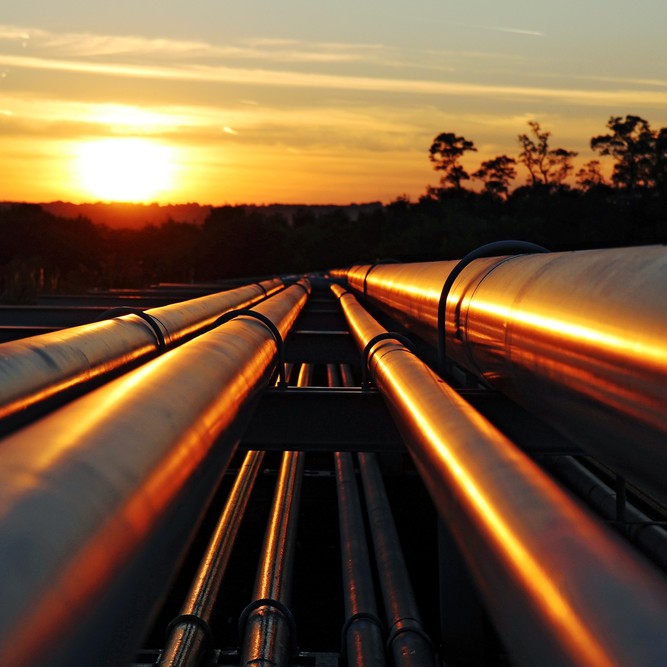
Iraq is developing a Western-oriented export system capable of transporting crude oil from southern Iraq to the Mediterranean via either Syria or Turkey. Baghdad has invited Chevron, US investment firm Capital TI, and Qatar's UCC to participate in technical and financial studies for two oil export pipelines being constructed around the Basra-Haditha axis.
One route would continue through Kirkuk to Turkey's Ceyhan port on the Mediterranean; the second would pass through Syria to Baniyas. KBR is conducting a separate study on the Basra-Haditha segment, where construction began in May on a pipeline designed to transport 2.5 million barrels per day.
| Iraqi Oil Pipeline System | Details |
|---|---|
| Common axis | Basra-Haditha |
| Kirkuk-Ceyhan route | To Turkey |
| Route through Syria | To Baniyas |
| Research company | KBR |
| Transport capacity | 2.5 million barrels/day |
This week, Washington endorsed the restoration of the Kirkuk-Baniyas route, which has been inactive since 2003. Chevron is also preparing agreements including the West Qurna 2 and Nassiriya oil fields alongside work on export routes outside Hormuz.
Notably, Iraq has also begun transporting limited crude oil and naphtha through the Syrian port and intends to continue doing so even after Hormuz stabilizes (if it stabilizes).
Incident at Basra Oil Port
A drone attacked a vessel near Iraq's Basra Oil Port on Thursday, the second drone incident involving Basra province port infrastructure in two days. Iraq's Oil Ministry stated that oil loading continued normally and exports from southern ports were uninterrupted. No damage was reported to the vessel or port. Basra handles over 3 million barrels per day of crude oil exports.
Venezuela's Earthquake and Impact on the Oil Industry
The June 24 earthquake in Venezuela killed 4,829 people, injured 16,740, and caused an estimated $6.7 billion in direct physical damage, with independent estimates placing total economic losses above $10 billion. Caracas faces reconstruction costs estimated at $15 billion but has limited resources to implement it.
| Venezuela earthquake impact | Statistics |
|---|---|
| Death toll | 4,829 |
| Injuries | 16,740 |
| Physical damage | $6.7 billion |
| Total economic loss | Over $10 billion |
| Reconstruction cost | $15 billion |
The sole bright spot is that the disaster caused minimal damage to the country's oil fields. With oil still being pumped during the disaster, theoretically there should be revenue to fund reconstruction; however, questions remain about who controls these revenues and where they are going.
According to The New York Times, the Trump administration has taken approximately $8 billion in oil export revenue from Venezuela since Maduro was ousted, while committing only $300 million in earthquake aid.
Israeli Elections and Geopolitical Implications
Israel will hold a national election on October 27 after the Knesset voted to dissolve itself, bringing the country to its first vote since the conflicts in Gaza, Lebanon, and Iran. The vote will determine whether Prime Minister Benjamin Netanyahu continues to power after nearly three years of conflict that has completely transformed Israel's security environment, disrupted domestic politics, and seen changes in relations with the US that would have been unimaginable a year ago.
The election is essentially a national referendum on Israel's wartime strategy, with Netanyahu's Likud party entering the campaign from a weak position. Polls show the Netanyahu ruling bloc would not come close to the 61-seat majority needed to form a coalition, with newly formed Yashar party of former IDF Chief of Staff Gadi Eisenkot emerging as the main challenge.
Armenia Approves TRIPP Corridor
Armenia has passed legislation to ratify the US-backed Trump Road for International Peace and Prosperity (TRIPP) corridor, with the agreement now being sent to the Constitutional Court before a vote in Parliament. TRIPP will establish a continental road, rail, energy, and communications corridor linking mainland Azerbaijan with its Nakhchivan region through southern Armenia under a US-Armenian joint venture.
This represents the final missing segment of the Central Corridor connecting Europe with Central Asia and China and importantly bypasses Russia and Iran. Moscow's view is that the corridor risks shifting the regional balance of power. Tehran's position is that they do not want to see a US-managed transport corridor along their northern border.
The project also faces legal challenges after Armenia's Ministry of Justice concluded that part of the agreement actually violated Armenian law.
Mergers and Acquisitions in the Energy Sector
BP and Venezuela Collaborate on Loran Gas Field
BP has signed a memorandum of understanding with Venezuela that includes exploration in the offshore Loran gas field, a cross-border discovery estimated to contain around 7.3 trillion cubic feet of natural gas. As Loran borders Trinidad and Tobago's gas-producing province, any future development could be connected to existing gas processing plants and LNG export facilities rather than requiring a completely new export system.
Shell Acquires ARC Resources
Shell has effectively eliminated an independent Canadian producer from the public market, securing one of the largest footprint positions in the Montney formation, which is expected to provide much of Canada's future LNG export growth. ARC Resources shareholders approved Shell's $16.4 billion acquisition with 99.54% support after the deal passed competitive reviews in Canada and the US, leaving only a final Alberta court hearing before closing by year-end.
The move strengthens Shell's long-term access to some of the cheapest natural gas in North America. Additionally, Shell stated it would resume the $3 billion share buyback program that had been paused during the acquisition.
New Exploration and Development Discoveries
Turkey Drilling Offshore Somalia
Turkey's state-owned TPAO is now drilling the Curad-1 exploration well offshore Somalia. This is Turkey's first ultra-deepwater drilling campaign overseas and Somalia's best effort to explore a commercial oil and gas industry. The well, located about 370 km northeast of Mogadishu at a water depth of approximately 3,500 meters, will test one of the world's least explored offshore basins after TPAO completed nearly 4,500 km² of 3D seismic surveys.
Success would essentially create a new offshore oil region in East Africa, with the side effect of giving Turkey greater strategic influence in the Horn of Africa - Ankara already has its largest military base there.
São Tomé and Príncipe Rejects Proposals
São Tomé and Príncipe has rejected all proposals submitted in its latest offshore licensing round after only Petrobras and Nigeria's Oranto Petroleum bid for the three available blocks, with the island nation offering investors up to 85% stakes. The government determined that the two contractors were insufficient to support a competitive licensing process.
For decades, the country has sought a commercial offshore oil discovery. In 2022, Galp's Jaca-1 well was dry, as was Shell's Falco-1 well three years later. Despite the lack of interest elsewhere, Petrobras expanded its position last week by completing the acquisition of 75% operating interest in Block 3.
Conclusion
The global energy landscape is evolving at a rapid pace, with nations repositioning their oil export strategies, major energy companies expanding their footprint, and emerging regions beginning to explore their oil and gas potential. These developments not only have economic significance but are reshaping the global geopolitical balance, creating both opportunities and challenges for nations and energy companies worldwide.