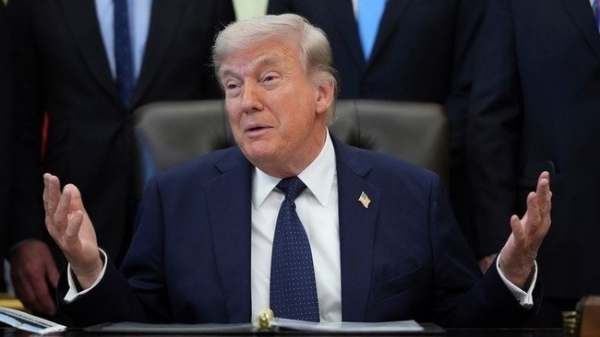
President Trump Threatens to Strike Iranian Power Plants and Bridges Amid Escalating Tensions
Washington, D.C. - In a declaration that has sent shockwaves through the international community, President Donald Trump has threatened to expand airstrikes to include critical Iranian infrastructure, specifically targeting power plants and bridges, if Tehran does not agree to negotiations within the coming week. This provocative move has triggered intense reactions worldwide and raises serious questions about the future of U.S.-Iran relations.
Escalating Tensions Between Washington and Tehran
Tensions between the United States and Iran have escalated significantly in recent months, with a series of provocative actions from both sides. This confrontation originated when the U.S. withdrew from the 2015 nuclear agreement and reimposed stringent economic sanctions against Iran. In response, Tehran gradually exceeded uranium enrichment limits, sparking concerns about its nuclear program.
The situation became increasingly tense last week when Iran accused the U.S. of conducting a large-scale cyberattack against its industrial infrastructure, including power plants. The U.S. administration maintained that these measures were necessary to counter security threats.
President Trump's Shocking Declaration
During a press conference at the White House, President Trump issued a direct threat: "We have sufficient evidence that Iran is preparing destabilizing actions in the region. If they do not agree to engage in peace negotiations next week, we will be forced to expand our attacks, targeting their power plants and bridges."
This statement has caused shockwaves as it indicates the U.S.'s willingness to target civilian infrastructure—an action that violates international law. Power plants and bridges are typically considered protected targets under the Geneva Conventions.
Intense International Reactions
President Trump's threat has drawn strong reactions from numerous countries and international organizations:
- United Nations: UN Secretary-General Antonio Guterres called for "calm and to avoid actions that could lead to a comprehensive conflict"
- Europe: EU member states, particularly France, Germany, and the UK, strongly condemned Trump's statement and urged all parties to return to the negotiating table
- Russia: The Russian Foreign Ministry described Trump's threat as "a dangerous provocation" and warned of serious consequences
- China: Beijing called on all parties to "adhere to international law and resolve differences through dialogue"
Impact on Technology and Energy Sectors
Industry analysts fear that an attack on Iran's energy infrastructure could have severe consequences for the global technology sector:
| Industry | Potential Impact |
|---|---|
| Energy | Disruption of oil and gas supplies from the Persian Gulf region, potentially causing a sharp increase in global energy prices |
| Information Technology | Increased risk of retaliatory cyberattacks from Iran targeting U.S. and allied industrial infrastructure |
| Cybersecurity | Escalation of state-sponsored cyber warfare, weakening global trust in cybersecurity |
| Green Technology | Disruption of renewable energy projects in the Middle East, slowing the global energy transition |
Expert Analysis of Potential Targets
Security and technology experts have conducted in-depth analysis of the selection of power plants and bridges as potential targets:
Mr. James Wilson, energy security expert at Georgetown University, commented: "Power plants are the backbone of modern infrastructure. Attacking these targets would not only cause immediate disruption but could also lead to severe humanitarian consequences when civilians lack electricity for essential services."
Regarding bridges, Ms. Sarah Johnson, infrastructure expert at the International Institute for Strategic Studies, explained: "Bridges are not merely transportation structures but symbols of economic and social connectivity. Their destruction would cause prolonged disruption to supply chains and economic activities."
Legal Perspective on Targeting Civilian Infrastructure
According to international legal experts, targeting civilian infrastructure such as power plants and bridges in an armed conflict is limited by international humanitarian law:
- Civilian targets may only be attacked if they contribute to the war effort
- Attacks must balance military advantage against civilian harm
- Attacks causing excessive civilian harm compared to military advantage are prohibited
- Infrastructure providing essential services like electricity, water, and healthcare is specially protected
Possible Scenarios for the Coming Week
According to analysts, three primary scenarios could unfold in the coming week:
- Scenario 1: Iran agrees to participate in negotiations, preventing a military escalation
- Scenario 2: Iran rejects negotiations, leading to U.S. attacks on the mentioned targets
- Scenario 3: Intermediate parties intervene, facilitating a temporary diplomatic solution
Conclusion
President Trump's threat has brought the world to the brink of a new conflict, with potentially severe consequences for global security and energy market stability. In this context, the international community is hoping for diplomacy to prevent an escalation that could lead to unpredictable consequences.
World leaders are closely monitoring the situation's development, with the hope that wisdom will prevail over militarism and that the parties will find a path of dialogue to resolve their differences.
#Trump #Iran #InternationalRelations #NationalSecurity #Energy #Technology #EnergyPrices