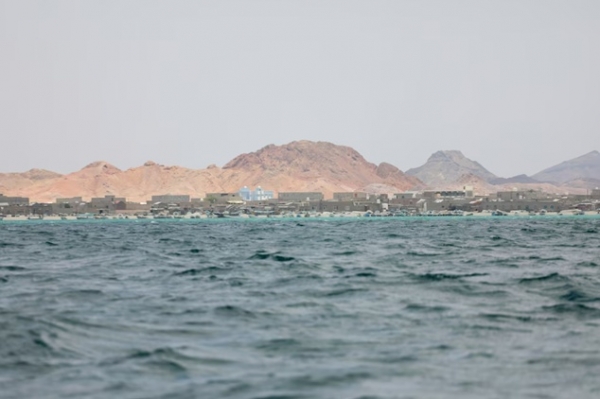
Iran Threatens Closure of Bab el Mandeb Strait: Escalating Tensions Pose Global Supply Chain Risks
Tehran has issued clear signals that it may deploy Houthi forces in Yemen to blockade the Bab el Mandeb Strait, one of the world's most critical maritime chokepoints. This development represents a dangerous escalation in the ongoing US-Iran tensions and could potentially trigger a global energy security catastrophe.
The Geopolitical Context: A Region on Edge
The Bab el Mandeb Strait serves as a strategic maritime corridor connecting the Red Sea with the Gulf of Aden and the Indian Ocean. This narrow waterway stands as one of the most important shipping lanes globally, with approximately 30% of total global maritime trade and about 20% of crude oil transportation passing through its waters.
Having previously exerted pressure through threats to disrupt shipping through the Strait of Hormuz - the entrance to the Persian Gulf - Iran is now signaling its willingness to employ a more dangerous card: utilizing its Houthi allies in Yemen to blockade Bab el Mandeb.
Details of Tehran's Emerging Threat
According to intelligence sources, Iran is actively considering the use of Houthi forces in Yemen, a close ally, to attack vessels transiting the Bab el Mandeb Strait. Recent drone and missile attacks have already been conducted, and Iran possesses the capability to provide more advanced weaponry and technology to these forces to execute larger-scale attacks.
The Bab el Mandeb Strait spans approximately 20 miles (32 km) at its narrowest point, flanked by Yemen on one side and Djibouti and Eritrea on the other. Controlling this narrow passage would allow any force to completely halt maritime traffic through the area.
Global Economic and Energy Implications
A blockade of Bab el Mandeb would sever the vital maritime link between Europe, Asia, and the Middle East, forcing oil tankers to take the longer route around the Cape of Good Hope in South Africa. This would significantly increase shipping costs and transit times.
| Impact Area | Severity Level | Potential Consequences |
|---|---|---|
| Oil Prices | Extremely High | Spike to potentially above $100 per barrel |
| Shipping Costs | High | 30-50% increase for alternative routes |
| Supply Chain Disruption | Extremely High | Global shortages of raw materials and goods |
| Inflation | High | Global economic growth slowdown |
Two of the world's most critical energy arteries - Hormuz and Bab el Mandeb - if both closed, would create an unprecedented disaster for the global economy. Asian nations such as China, Japan, South Korea, and India, which heavily depend on Middle Eastern oil, would be the most directly and severely affected.
International Response and Military Developments
The United States and its allies have expressed deep concerns over Iran's moves. The U.S. Navy has increased its presence in the region to protect vessels and ensure maritime security. European nations are also considering sanctions against Iran if it carries out such actions.
The United Nations has issued calls for restraint from all parties, with Secretary-General Antonio Guterres emphasizing the importance of maintaining freedom of navigation and maritime security along strategic sea lanes.
Saudi Arabia, Iran's main regional rival, has also issued strong warnings about the consequences of such actions, while simultaneously enhancing cooperation with Western powers to ensure maritime security.
Expert Analysis: Tehran's Pressure Strategy
International security experts view Iran's move as a strategic step to increase pressure on the United States and its allies amid escalating tensions. The closure of Bab el Mandeb would not only cause enormous economic damage globally but could potentially lead to large-scale military conflict.
"Iran is employing a 'shadow war' strategy - using proxy forces to carry out destabilizing actions without direct involvement," according to Dr. Nguyen Van An, a Middle East security expert at the Hanoi International Studies Institute.
Economists also warn that the impact of a Bab el Mandeb blockade could be more severe than the 2021 Suez Canal crisis, when a single vessel running aground disrupted supply chains worth billions of dollars.
Future Scenarios and Feasible Solutions
The international community faces a critical juncture: accept the risks and continue normal operations, increase military presence to protect sea lanes, or seek diplomatic solutions to de-escalate tensions.
Diplomatic solutions appear to be the most feasible option, albeit challenging. EU-led diplomatic efforts are being intensified, aiming to prevent Iran from taking destabilizing actions in Bab el Mandeb.
"Iran is testing Western reactions. If they receive a sufficiently strong response, they may back down. But if the response is weak, they may continue to escalate," stated an expert from the International Institute for Strategic Studies (IISS) in London.
Conclusion: The Looming Global Energy Crisis
The situation in the Bab el Mandeb Strait is emerging as a new flashpoint in the context of US-Iran tensions. Iran's threat to close this critical maritime passage could push the world into an unprecedented energy and economic crisis.
Major energy-consuming nations find themselves in a difficult position: needing to ensure energy security while facing the risk of military conflict that could escalate into large-scale war. The future of global energy security depends heavily on the restraint of all involved parties in the coming weeks and months.