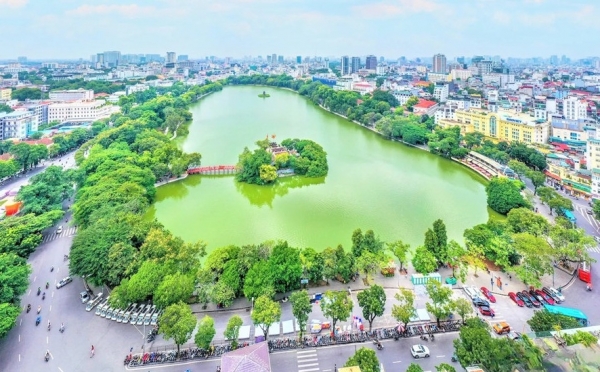
Hanoi Implements Low Emission Zone to Reduce Air Pollution
People's Committee of Hanoi City has recently issued a plan to implement the Low Emission Zone project within the Ring Road 1 area, assigning specific tasks to various departments and local authorities to gradually control traffic emissions, develop green transportation infrastructure, and improve air quality in the central area of the capital.
Implementation Background
In recent years, Hanoi has faced significant challenges regarding air pollution, particularly in the central areas. According to data from the Hanoi Department of Natural Resources and Environment, air quality at many locations frequently exceeds permissible limits, especially during the winter months. The implementation of the low emission zone is considered a critical solution to improve this situation.
Main Contents of the Project
The Low Emission Zone project in Hanoi focuses on the following main components:
- Establishing a low emission zone in the Ring Road 1 area
- Implementing emission control measures for vehicles
- Developing green transportation infrastructure
- Raising community awareness about environmental protection
Scope and Implementation Timeline
| Factor | Detailed Content |
|---|---|
| Scope | Ring Road 1 area, including districts: Hoan Kiem, Ba Dinh, Hai Ba Trung, Dong Da, Tay Ho and parts of Cau Giay, Thanh Xuan, Hoang Mai districts |
| Timeline | 2023-2025 period, with specific roadmap for each task |
| Target Groups | Transport vehicles, production facilities, construction works and residents within the area |
Division of Specific Responsibilities
The People's Committee of Hanoi has assigned specific tasks to various departments, sectors, and local authorities to ensure the project is implemented comprehensively and effectively:
Department of Transport
Primarily responsible for implementing vehicle emission control measures, including:
- Managing vehicle access to the Ring Road 1 area
- Building an emission monitoring system
- Developing public transportation infrastructure
- Piloting green vehicle priority lanes
Department of Natural Resources and Environment
- Monitoring air quality in the area
- Establishing an air pollution warning system
- Coordinating with units to inspect and monitor emissions
City Police
- Organizing patrols to ensure compliance with emission regulations
- Regulating traffic to reduce congestion
People's Committees of Districts and Wards
- Coordinating implementation at local level
- Propaganda and mobilizing public participation
- Managing local pollution-causing activities
Technical Solutions and Technologies
To effectively implement the project, Hanoi will apply advanced technical solutions and technologies:
| Solution | Description | Expected Effectiveness |
|---|---|---|
| Emission Monitoring System | Installing automatic emission control stations at entrances to the Ring Road 1 area | 30% reduction in non-compliant vehicles |
| Public Transportation Development | Expanding electric bus and metro networks | 20% reduction in private vehicles in the area |
| Green Vehicle Priority Lanes | Creating dedicated lanes for electric and hybrid vehicles | Encourage 15% of residents to switch to green vehicles |
Expected Impacts and Benefits
The successful implementation of the Low Emission Zone project in Hanoi is expected to bring positive impacts:
- Air Quality Improvement: 25-30% reduction in PM2.5 and PM10 particulate matter in the Ring Road 1 area
- Noise Pollution Reduction: Quieter living environment due to reduced traffic volume and control of noisy vehicles
- Improved Community Health: Reduction in pollution-related diseases such as respiratory and cardiovascular conditions
- Sustainable Development: Building a green, environmentally friendly urban model
- Enhanced City Image: Positioning Hanoi as a pioneer in air quality management
Challenges and Solutions
Despite the numerous benefits, the project implementation also faces several challenges:
| Challenge | Solution |
|---|---|
| High investment costs | Coordinating budget resources, mobilizing private investment, international cooperation |
| Changing public habits | |
| Management difficulties | Building smart monitoring systems, applying high technology |
International Experience
Many major cities worldwide have successfully implemented low emission zones:
- London (UK): Charging vehicles entering the center that are old and highly polluting
- Paris (France): Banning gasoline and diesel vehicles by 2030, prioritizing electric vehicles
- Shanghai (China): System for classifying vehicles entering central areas based on emission standards
- Tokyo (Japan): Developing efficient public transportation systems, limiting private vehicles
Conclusion
The implementation of the Low Emission Zone project in the Ring Road 1 area marks a significant step in Hanoi's air environmental protection efforts. With the coordinated participation of various departments, sectors, local authorities, and active involvement of citizens, the capital hopes to soon achieve the goal of building clean air, improving quality of life, and achieving sustainable development.
This is not just a temporary solution but a long-term strategic orientation, creating a foundation for Hanoi to become a green, modern, and livable city in the future.
Future Prospects
The success of the Low Emission Zone project in the Ring Road 1 area will serve as a basis for expanding the model to other areas of Hanoi, working towards the goal of building a "Smoke-Free City" by 2030.
In addition, Hanoi is also researching more comprehensive solutions such as developing renewable energy, applying green technology in construction, and promoting a circular economy to minimize environmental impact.
#Hanoi #LowEmissionZone #CleanAir #GreenTransportation #Environment