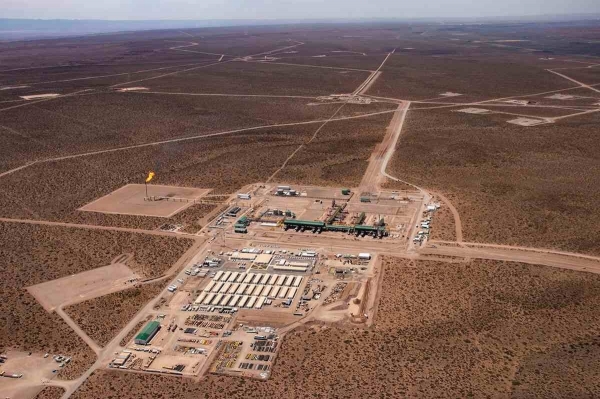
ADNOC and Eni Make Strategic Investment in Argentina's Vaca Muerta Shale Gas Field
In a significant move that underscores the evolving global energy landscape, Abu Dhabi National Oil Company (ADNOC) and Italian energy giant Eni S.p.A have entered into landmark agreements to acquire minority stakes in upstream natural gas production blocks. These strategic investments are focused on developing the massive Vaca Muerta shale gas formation in Argentina, positioning the country as a potential major player in the global liquefied natural gas (LNG) market.
Strategic Significance of the Investment
The partnership between ADNOC and Eni represents a convergence of Middle Eastern capital and European technical expertise aimed at unlocking one of the world's most promising unconventional hydrocarbon reserves. This collaboration not only strengthens the position of both companies in the global energy sector but also marks a significant step in Argentina's ambitious plans to become a net energy exporter.
As global energy markets continue to recover from recent disruptions and transition toward more diversified supply chains, the development of Vaca Muerta emerges as a critical component in ensuring energy security for multiple regions. The investment brings substantial financial resources, advanced technological capabilities, and international market access to accelerate the development of this strategic resource.
Company Profiles: ADNOC and Eni
ADNOC, headquartered in Abu Dhabi, United Arab Emirates, ranks among the world's largest oil and gas companies. With proven reserves exceeding 70 billion barrels of oil equivalent and production capacity exceeding 4 million barrels per day, ADNOC plays a pivotal role in global energy markets. The company has been actively expanding its international footprint beyond traditional markets in the Middle East, with increasing focus on Asia, Africa, and now Latin America.
Eni S.p.A, Italy's largest industrial company, has a presence in over 65 countries with operations spanning the entire energy value chain. With a history dating back to 1953, Eni has developed deep expertise in complex upstream projects, particularly in challenging environments. The company has been progressively increasing its investments in natural gas, positioning itself as a key player in the global energy transition toward cleaner hydrocarbons.
The Vaca Muerta Shale Gas Formation: An Overview
Located primarily in the Neuquén Province of Argentina, the Vaca Muerta formation (Spanish for "Dead Cow") represents one of the largest shale gas and oil reserves globally. The geological formation spans approximately 30,000 square kilometers and contains an estimated 16 billion barrels of technically recoverable oil and 308 billion cubic meters of natural gas.
The development of Vaca Muerta has been a strategic priority for Argentina, which has historically faced energy security challenges and significant import bills. The formation's development potential extends beyond hydrocarbon production, with the potential to stimulate economic growth, create employment, and generate substantial government revenue through taxes and royalties.
Despite its immense potential, Vaca Muerta has faced development challenges, including complex geological conditions, infrastructure limitations, and financing constraints. The entry of major international players like ADNOC and Eni is expected to address many of these obstacles through technological expertise, financial resources, and market access.
Details of the Strategic Agreements
The agreements between ADNOC, Eni, and Argentine energy companies involve the acquisition of minority stakes in three upstream natural gas production blocks within the Vaca Muerta formation. While specific financial terms have not been fully disclosed, industry analysts estimate the combined investment to be in the range of $2-3 billion, representing one of the largest foreign direct investments in Argentina's energy sector in recent years.
The partnership structure involves both companies taking minority stakes in existing production blocks operated by Argentine companies. This approach allows ADNOC and Eni to gain exposure to Vaca Muerta's resources while leveraging the local partners' existing infrastructure, regulatory knowledge, and operational experience in the challenging Argentine business environment.
A key component of the agreements is the development of an LNG export project, which will involve the construction of specialized facilities to process and export natural gas. The LNG project is designed to tap into growing global demand for natural gas, particularly in Asian markets where demand continues to outpace supply.
Economic Impact on Argentina
The development of Vaca Muerta with international partners is expected to generate substantial economic benefits for Argentina. The project is projected to create approximately 15,000 direct and indirect jobs during the construction phase and maintain around 5,000 permanent positions once operational.
Government revenues through taxes, royalties, and other fees are expected to increase significantly, potentially contributing several billion dollars annually to national and provincial budgets. This additional revenue could support social programs, infrastructure development, and economic diversification efforts.
Furthermore, increased domestic production of natural gas and associated liquids is expected to reduce Argentina's energy import bill, which has been a persistent drag on the country's economy. The development of Vaca Muerta could potentially transform Argentina from a net energy importer to a net exporter within the next decade.
Technical and Environmental Challenges
Despite its immense potential, the development of Vaca Muerta presents significant technical and environmental challenges that must be addressed:
- Complex Geology: The Vaca Muerta formation presents complex geological conditions that require advanced drilling and completion techniques, including horizontal drilling and hydraulic fracturing.
- Water Management: Hydraulic fracturing operations require substantial water resources, raising concerns about water availability and quality in the arid Neuquén region.
- Methane Emissions: The extraction and processing of natural gas can result in methane emissions, a potent greenhouse gas that requires careful monitoring and mitigation.
- Infrastructure Limitations: The remote location of Vaca Muerta requires substantial investment in pipeline networks, processing facilities, and transportation infrastructure.
- Regulatory Framework: Argentina's regulatory environment has historically created uncertainties for investors, requiring stable policies to attract long-term investment.
Future Outlook for Argentina's Energy Sector
The entry of ADNOC and Eni into Vaca Muerta marks a turning point for Argentina's energy sector. With international partners bringing technological expertise, financial resources, and market access, the development of Vaca Muerta is expected to accelerate significantly.
Industry projections indicate that Vaca Muerta could account for up to 40% of Argentina's total gas production by 2030, with potential to transform the country into a significant LNG exporter. The development is also expected to stimulate growth in related industries, including equipment manufacturing, services, and technology development.
The success of this partnership could attract additional international investment to Argentina's energy sector, creating a positive feedback loop that accelerates development and further reduces the country's energy import dependence.
Global Implications of the Investment
The strategic investment by ADNOC and Eni in Vaca Muerta has broader implications for global energy markets:
- Energy Security: Development of Vaca Muerta contributes to diversifying global gas supplies, reducing dependence on traditional suppliers and enhancing energy security for importing nations.
- Market Dynamics: Increased production from Vaca Muerta could impact global LNG pricing, potentially making natural gas more accessible to developing economies.
- Climate Considerations: Natural gas from Vaca Muerta, while a fossil fuel, represents a lower-carbon alternative to coal and could play a role in the global energy transition.
- Geopolitical Shifts: The involvement of Middle Eastern and European companies in Latin American energy resources reflects shifting geopolitical dynamics in global energy markets.
Comparative Analysis: Vaca Muerta in Global Context
To understand the significance of Vaca Muerta in the global energy landscape, it's helpful to compare it with other major unconventional resources:
| Shale Formation | Location | Estimated Recoverable Resources | Development Status | Major International Players |
|---|---|---|---|---|
| Vaca Muerta | Argentina | 16 billion bbl oil, 308 bcm gas | Early development phase | ADNOC, Eni, Chevron, Shell |
| Marcellus Shale | United States | 400+ trillion cubic feet gas | Mature development | ExxonMobil, Chevron, EQT |
| Bakken Formation | United States | 7.4 billion bbl oil | Mature development | Continental Resources, Whiting |
| Permian Basin | United States | 60+ billion bbl oil | Rapid development | ExxonMobil, Chevron, Occidental |
| Haynesville Shale | United States | 300+ trillion cubic feet gas | Mature development | Cheniere, ExxonMobil |
Conclusion: A Strategic Partnership for Energy Future
The strategic investment by ADNOC and Eni in Argentina's Vaca Muerta formation represents a convergence of global energy interests, technological expertise, and financial resources. This partnership has the potential to transform Argentina's energy landscape, turning the country from an energy importer into a significant exporter while creating substantial economic benefits.
As global energy markets continue to evolve, the development of unconventional resources like Vaca Muerta will play an increasingly important role in meeting global energy demand. The involvement of major international companies brings not only capital but also advanced technologies and best practices that can help address the technical and environmental challenges associated with shale development.
The success of this partnership could serve as a model for future international collaborations in the energy sector, demonstrating how strategic alliances can unlock resources, create value, and contribute to energy security while addressing environmental considerations.
As Argentina stands on the threshold of an energy transformation, the Vaca Muerta development represents not just an economic opportunity but a strategic imperative that could redefine the country's position in the global energy landscape for decades to come.