Japan Advances Comprehensive Transition to Low-Carbon Economy
Japan, a global leader in energy technology, is implementing significant strategic initiatives to transform its urban gas infrastructure toward low-carbon emissions. This ambitious transition not only addresses pressing environmental concerns but also demonstrates the nation's commitment to reducing greenhouse gas emissions in alignment with global climate goals.
As the world faces increasingly urgent climate challenges, Japan's comprehensive approach to energy transformation positions it as a potential model for other industrialized nations seeking to balance economic growth with environmental sustainability.
Strategic Focus on Synthetic Fuels Development
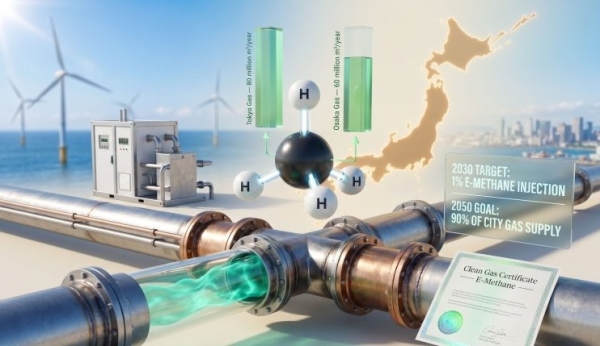
In the context of accelerating climate change, Japan has identified synthetic fuels as cornerstone technologies in its energy transition strategy. The government has prioritized the development and deployment of e-methane and biomethane as viable alternatives to conventional natural gas. These innovative fuel sources offer dual benefits: significant carbon emission reductions and enhanced energy security through renewable production methods.
The transition represents a fundamental shift in Japan's energy philosophy, moving from fossil fuel dependency to a circular economy model that integrates waste management with energy production.
Technical Overview of Synthetic Fuel Types
| Fuel Type | Production Method | Environmental Benefits | Current Status in Japan |
|---|---|---|---|
| E-methane | Synthesized through electrolysis of water using renewable electricity, combined with captured CO2 | Potentially carbon-neutral when using 100% renewable energy; enables long-term energy storage | Demonstration projects underway; expected to scale by 2030 |
| Biomethane | Produced through anaerobic digestion of organic waste materials including agricultural residues, food waste, and wastewater | Carbon-negative potential when considering waste management benefits; reduces methane emissions from decomposition | Already in limited commercial use; expansion planned across 50+ facilities by 2025 |
Strategic Implementation Framework
Japan's transition to low-carbon gas is guided by a comprehensive multi-pronged strategy that addresses technological, economic, and social dimensions of the energy transformation.
Technological Advancement Initiatives
- Research and Development Investment: The Japanese government has committed approximately $500 million over the next five years to advance synthetic fuel technologies. This funding supports both public research institutions and private sector partnerships.
- Pilot Programs and Demonstrations: Several large-scale demonstration projects are underway across Japan, with facilities in Tokyo, Osaka, and Hokkaido serving as test beds for optimizing production processes and distribution networks.
- Infrastructure Modernization: Significant investments are being allocated to retrofit existing gas infrastructure to accommodate blends of synthetic fuels with conventional natural gas, ensuring a smooth transition without complete system replacement.
International Collaboration Framework
- Bilateral Partnerships: Japan has established technology exchange agreements with several European nations, particularly Germany and the Netherlands, which have advanced biomethane production systems.
- Regional Initiatives: The nation is actively participating in the Asia-Pacific Partnership on Clean Development and Climate, sharing expertise and jointly developing region-specific solutions.
- Global Knowledge Sharing: Through international forums such as the International Energy Agency and the Global Methane Initiative, Japan contributes to and learns from global best practices in low-carbon gas technologies.
Public Engagement and Education Programs
- Consumer Awareness Campaigns: The Ministry of Economy, Trade and Industry has launched nationwide educational initiatives to inform consumers about the benefits and safety of synthetic fuels.
- Industry Training Programs: Specialized certification programs have been established for technicians and engineers working with synthetic fuel systems, ensuring workforce readiness.
- School Curricula Integration: Environmental science programs in Japanese schools now include modules on renewable energy and synthetic fuels, fostering long-term societal acceptance.
Economic and Environmental Impact Assessment
The transition to low-carbon gas is projected to generate substantial economic benefits alongside environmental improvements. By 2030, the synthetic fuel industry is expected to create approximately 25,000 new jobs across research, production, distribution, and maintenance sectors.
Environmentally, Japan's initiatives could reduce carbon emissions by an estimated 30 million tons annually by 2035, representing a significant contribution to the nation's commitment to carbon neutrality by 2050.
The economic diversification resulting from this transition is expected to stimulate innovation in related sectors including renewable energy generation, carbon capture technologies, and waste management systems.
Future Vision and Long-Term Objectives
Japan's vision extends beyond merely transforming urban gas systems. The nation is strategically positioning itself at the forefront of the global low-carbon economy through an integrated approach that encompasses energy production, consumption patterns, and industrial processes.
By 2040, Japan aims to achieve complete carbon neutrality in its gas sector, with synthetic fuels constituting 70-80% of the total gas supply. This ambitious timeline requires sustained policy support, technological innovation, and market transformation.
The government has established clear milestones for this transition, with targets for increasing production capacity, reducing costs through economies of scale, and developing standardized safety and quality protocols for synthetic fuels.
Challenges and Strategic Responses
Despite its comprehensive approach, Japan faces several significant challenges in implementing its low-carbon gas transition. These include:
- Cost Competitiveness: Synthetic fuels currently production costs remain higher than conventional natural gas. Japan is addressing this through technological innovation and economies of scale.
- Infrastructure Compatibility: Existing gas infrastructure requires careful modification to handle different chemical properties of synthetic fuels. The solution involves a phased approach with increasing blend ratios over time.
- Resource Availability: Biomethane production depends on consistent organic waste streams, which may vary regionally. Japan is addressing this through diversified feedstock strategies and import partnerships.
- Energy Storage Integration: The intermittent nature of renewable energy sources required for e-methane production necessitates advanced storage solutions. Japan is investing in next-generation battery technologies and hydrogen storage systems.
Global Leadership and Knowledge Transfer
As Japan advances its low-carbon gas transition, the nation is increasingly positioned as a global knowledge hub for synthetic fuel technologies. Through international partnerships, technology sharing, and collaborative research programs, Japan aims to accelerate global adoption of these critical climate solutions.
The Japanese government has established dedicated funding mechanisms to support technology transfer to developing nations, ensuring that the benefits of these innovations are accessible worldwide. This approach aligns with the global recognition that climate change requires collective action across national boundaries.
Conclusion: A Blueprint for Sustainable Energy Transformation
Japan's comprehensive transition to low-carbon gas represents one of the most ambitious energy transformation initiatives currently underway globally. By integrating technological innovation, policy support, and public engagement, the nation is developing a replicable model for other industrialized nations seeking to reconcile economic development with environmental responsibility.
The strategic development of synthetic fuels like e-methane and biomethane offers not merely a transitional solution but a fundamental reimagining of energy systems that could potentially transform global energy landscapes in the decades to come.
As Japan continues to implement and refine its approach, the outcomes of this transition will provide critical insights and practical experience that may shape the future of sustainable energy worldwide. The nation's commitment to this transformation demonstrates that environmental responsibility and economic prosperity can advance in tandem through strategic innovation and policy implementation.