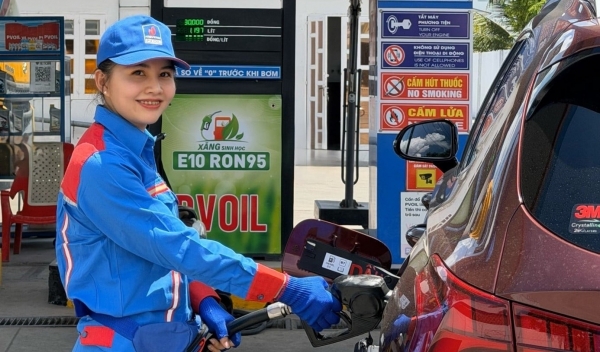
Market Confidence Strengthened After First Month of E10 Gasoline Implementation
After one month of nationwide implementation of the new biofuel blending mandate, market confidence in E10 gasoline has been firmly established. Ample supply, stable quality, and safe consumption practices have helped alleviate initial concerns, affirming the correctness of Vietnam's green energy transition policy.
Background of E10 Gasoline Implementation
On January 1, 2023, the Ministry of Industry and Trade officially implemented the transition from RON95-III gasoline to E10 gasoline (biofuel E5) nationwide. This decision aims to fulfill commitments outlined in Decree 84/2021/NĐ-CP on gasoline and oil business, while simultaneously contributing to the development of renewable energy, reduction of greenhouse gas emissions, and decreased dependence on imported fossil fuels.
E10 gasoline is a fuel blend containing 10% ethanol and 90% conventional gasoline. The use of this biofuel is expected to reduce CO2 emissions by approximately 8-10% compared to traditional gasoline, while creating a market for domestically produced ethanol from agricultural sources.
Market Status After One Month of Implementation
After one month of implementation, Vietnam's gasoline market has shown positive signals. Gasoline businesses have proactively prepared supply sources, ensuring sufficient E10 gasoline to meet consumption demands nationwide.
| Indicator | Results After 1 Month | vs. Plan |
|---|---|---|
| E10 Gasoline Consumption Rate | ~65-70% | Target Achieved |
| Number of Gasoline Stations Supplying | ~100% of stations | Completed |
| Consumer Feedback | Positive | Better Than Expected |
Supply Assurance and Quality Stability
Prior to implementation, Vietnam Oil and Gas Group (PetroVietnam) and gasoline businesses had developed plans to ensure E10 gasoline supply. Accordingly, refineries such as Dung Quất and Nghi Sơn proactively adjusted their technologies to produce E10 gasoline meeting quality standards.
According to Mr. Nguyen Nam Tien, Deputy General Director of Vietnam Oil and Gas Group: "We prepared the E10 gasoline supply early, ensuring sufficient ethanol biofuel from domestic ethanol production projects. The quality of E10 gasoline is strictly controlled, fully complying with technical standards of the Ministry of Science and Technology."
Safety in Consumption and Operation
One of the biggest concerns for consumers when switching to E10 gasoline was engine safety. However, reality after one month of implementation shows that most vehicles produced from 2005 onwards can use E10 gasoline without modification.
To ensure safety, businesses have implemented various measures:
- Collaborating with vehicle manufacturers to provide guidance on using E10 gasoline
- Conducting periodic quality testing at gasoline stations
- Training sales staff on biofuel technology
- Establishing hotlines to receive consumer feedback
Expert Opinions and Market Feedback
According to energy experts, the transition to E10 gasoline is a necessary step aligned with global green energy development trends. Mr. Tran Van Lam, an expert in renewable energy, commented: "The implementation of E10 gasoline not only helps reduce emissions but also contributes to agricultural economic development, creating jobs for people in regions growing sugar-containing crops like cassava, corn, and sugarcane."
From the consumer side, feedback after one month of use has been very positive. Mr. Nguyen Van Binh, a taxi driver in Hanoi, shared: "I have used E10 gasoline for the past month and noticed that the car runs smoother, without the stalling issues that were previously feared. The cost hasn't changed much compared to previous RON95 gasoline."
| Consumer Assessment | Response Rate |
|---|---|
| Good Rating | ~45% |
| Average Rating | ~40% |
| Poor Rating | ~15% |
Economic and Social Impacts
The transition to E10 gasoline has brought many positive economic and social impacts:
- Created stable market access for agricultural products used in ethanol production
- Reduced costs of importing fossil fuel-based gasoline
- Contributed to reducing environmental pollution and improving air quality
- Created momentum for research and development of biofuel technology
Challenges and Future Directions
Despite achieving positive results after one month of implementation, the widespread adoption of E10 gasoline still faces several challenges that need to be addressed:
- Ensuring stable, high-quality ethanol supply
- Raising consumer awareness about biofuels
- Improving policies to support biofuel development
- Investing in advanced, efficient ethanol production technology
According to plans, Vietnam will continue to research the implementation of E20 gasoline (with a 20% ethanol blend) in the 2025-2030 period, aiming for the target that by 2050, biofuels will account for at least 20% of total transportation fuel consumption.
Conclusion
After one month of implementing the E10 gasoline roadmap, the market has shown positive signals regarding supply, quality, and safety. Strengthening consumer and business confidence is an important foundation for Vietnam to continue promoting green energy transition, contributing to fulfilling emission reduction commitments at COP26 and building a circular, sustainable economy.
This initial success affirms the correct orientation of the Government in developing biofuels, while opening up great opportunities for the renewable energy sector and high-tech agriculture in Vietnam in the coming time.
Hashtag: #E10Gasoline #Biofuel #EnergyTransition #PetroVietnam #GreenEnergy #CircularEconomy