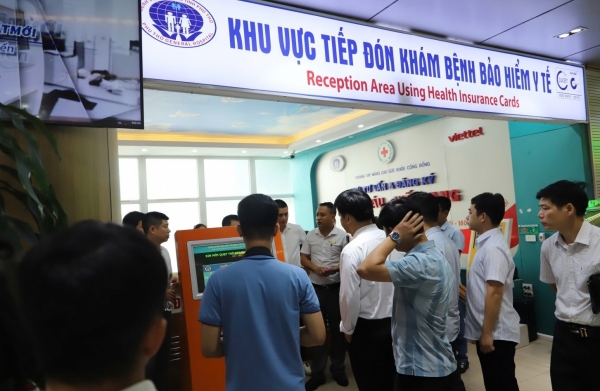
Understanding the 50% BHYT Coverage for Out-of-Network Medical Visits from July 1
On July 1, 2023, many people celebrated the news that possessing a health insurance card (BHYT) would entitle them to 50% coverage for medical visits outside their designated healthcare network. However, according to the new regulations, this benefit only applies under specific circumstances and is not the "free medical care" that many people mistakenly believe.
New Regulations on Out-of-Network Healthcare with BHYT
According to regulations in Decree 146/2023/NĐ-CP, effective from July 1, 2023, individuals with BHYT cards will receive 50% coverage from the health insurance fund for inpatient treatment costs when seeking care outside their designated network. This regulation applies to the following cases:
- Seeking healthcare outside the district-level network when there is no district-level healthcare facility or when such facilities are overloaded
- Seeking healthcare outside the provincial-level network when there is no provincial-level healthcare facility or when such facilities are overloaded
- Seeking healthcare outside the central-level network when there is no central-level healthcare facility or when such facilities are overloaded
Conditions for Receiving 50% BHYT Coverage for Out-of-Network Care
To receive 50% coverage from the health insurance fund for out-of-network medical care, patients must meet the following conditions:
- Must have a valid BHYT card
- No healthcare facility within the designated network or facilities within the network are overloaded
- Have proper referral documentation or have been rejected by the designated network facility due to overload
- Be receiving inpatient treatment
Cases Where 50% BHYT Coverage Does NOT Apply
Many people still mistakenly believe that having a BHYT card allows them to seek medical care anywhere and still receive 50% coverage. However, there are many cases where this benefit does not apply:
- Outpatient care outside the designated network
- Lacking proper referral documentation
- Healthcare facilities within the designated network are still accepting patients
- Medical care not required for health reasons
- Medical care at facilities not contracted with the health insurance fund
Illustrative Example of Out-of-Network Care with BHYT
Mr. Nguyen Van A, 65 years old, holds a BHYT card and resides in District X, Province Y. Mr. A experienced chest pain and visited the district-level hospital near his home for examination. However, this hospital was overloaded and unable to accept him. The hospital issued a referral for Mr. A to go to Provincial Hospital Z for medical care.
At Provincial Hospital Z, Mr. A was diagnosed and required inpatient treatment. In this case, Mr. A would receive 50% coverage from the health insurance fund for his inpatient treatment costs.
Conversely, if Mr. A had gone directly to Provincial Hospital Z without a referral from the district-level hospital, he would not be entitled to the 50% BHYT coverage benefit.
Summary Table of Out-of-Network Healthcare Benefits with BHYT
| Circumstance | 50% BHYT Coverage | Notes |
|---|---|---|
| Inpatient care outside network with proper referral | Yes | Facility within designated network is overloaded |
| Outpatient care outside network | No | No coverage provided |
| Inpatient care outside network without proper referral | No | Coverage only provided in emergency cases |
| Medical care at facility not contracted with BHYT | No | Full payment required by patient |
Advice for BHYT Cardholders
To receive BHYT benefits when seeking medical care, especially out-of-network care, individuals should:
- Always carry their BHYT card when seeking medical care
- Familiarize themselves with healthcare network transfer regulations
- Follow proper procedures when being transferred between facilities
- Choose healthcare facilities that have contracts with the health insurance fund
- Keep complete medical records and invoices as a basis for BHYT claims
Importance of Understanding BHYT Regulations Correctly
According to healthcare experts, properly understanding BHYT regulations not only helps people receive their full benefits but also helps reduce the burden on the healthcare system. When patients comply with transfer regulations, healthcare facilities can focus resources on cases that truly need attention.
However, many experts also note that current regulations remain complex and need simplification to make them more accessible and understandable to the public. In the future, the healthcare sector needs to strengthen communication efforts to help people clearly understand their rights and obligations when using BHYT cards.
The implementation of the 50% coverage policy for out-of-network medical care represents a step forward in BHYT policy reform, aiming toward the goal of universal healthcare coverage. However, for this policy to be truly effective, close coordination is needed among the public, healthcare facilities, and the health insurance fund.