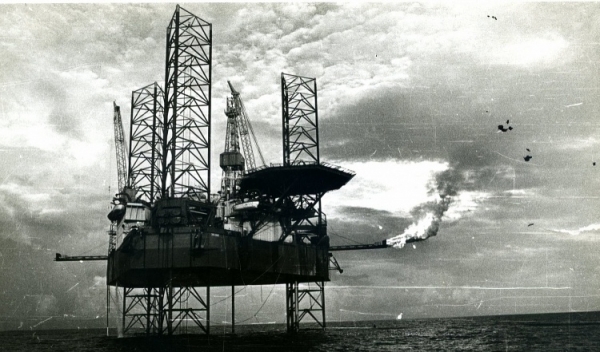
Bach Ho Oil Field: A 40-Year Journey from First Barrel to National Energy Powerhouse
On June 26, 1986, a pivotal moment unfolded in Vietnam's oil and gas industry at the Bach Ho (White Tiger) oil field, located on the continental shelf south of Vietnam. This marked the extraction of the first commercial barrel of crude oil, heralding a new era for the nation's economy and energy independence. Four decades later, this historic achievement continues to shape Vietnam's industrial landscape and stands as a testament to the country's growing capabilities in resource exploration and extraction.
The Historic First Extraction: A Nation's Turning Point
The first commercial oil extraction from Bach Ho represented more than just a technical achievement; it symbolized Vietnam's entry into the exclusive club of oil-producing nations. At a time when the country was undergoing significant economic reforms, the discovery and subsequent exploitation of this valuable resource provided crucial financial support for national development.
The Bach Ho oil field was discovered by the Soviet-Vietnamese joint venture Vietsovpetro in 1975, but commercial production only began more than a decade later. The first barrel of oil marked the culmination of years of geological surveys, technological challenges, and international cooperation. This achievement demonstrated Vietnam's potential in the global energy sector and set the foundation for what would become one of the country's most vital industries.
Technical Specifications and Significance of Bach Ho
| Parameter | Details |
|---|---|
| Year of First Production | 1986 |
| Location | Continental shelf, southern Vietnam, approximately 240km southeast of Vung Tau |
| First Commercial Extraction | 1 ton (approximately 7.3 barrels) of crude oil |
| Water Depth | Approximately 40 meters |
| Operator | Originally Vietsovpetro (Soviet-Vietnamese joint venture), now operated by PetroVietnam |
| Peak Production | Reached over 300,000 barrels per day in the early 2000s |
| Total Cumulative Production (1986-2026) | Over 300 million barrels |
| Economic Impact | Generated billions in revenue, contributing significantly to Vietnam's GDP |
Evolution of Bach Ho Over Four Decades
The journey of Bach Ho oil field over the past 40 years reflects the broader evolution of Vietnam's oil and gas industry. What began as a modest operation with limited technological capabilities has transformed into a sophisticated extraction system employing advanced engineering solutions and international best practices.
In its early years, the field relied on relatively simple extraction methods and basic infrastructure. However, as production expanded and technology advanced, the operation incorporated more sophisticated techniques including enhanced oil recovery (EOR) methods, advanced seismic imaging for better reservoir characterization, and sophisticated drilling technologies.
The field has undergone multiple development phases, each introducing new platforms, subsea systems, and processing facilities. These expansions have enabled the field to maintain production levels despite natural reservoir depletion and increasing technical challenges associated with aging infrastructure.
Technological Advancements and Innovations
The Bach Ho oil field has been a testing ground for numerous technological innovations in Vietnam's oil and gas sector. Over the decades, the field has implemented:
- Advanced Reservoir Management: Implementation of 3D seismic surveys and reservoir simulation models to optimize extraction strategies
- Enhanced Oil Recovery (EOR):strong> Introduction of water injection and gas injection techniques to maintain reservoir pressure
- Digital Transformation: Integration of IoT sensors, real-time monitoring systems, and data analytics for predictive maintenance
- Subsea Technology: Installation of subsea manifolds and multiphase flowlines to extend field life
- Automated Systems: Implementation of SCADA systems for remote monitoring and control of operations
Economic Impact and National Development
The economic significance of Bach Ho oil field extends far beyond its production figures. The revenue generated from this and other Vietnamese oil fields has played a crucial role in funding national infrastructure projects, social programs, and economic development initiatives.
During its peak production years, oil exports accounted for a substantial portion of Vietnam's total export revenue, helping to stabilize the national currency and reduce dependency on foreign aid. The industry has also created thousands of high-skilled jobs, both directly in the oil sector and indirectly in supporting industries.
Furthermore, the development of Bach Ho has catalyzed the growth of related industries including offshore support services, engineering consulting, and specialized manufacturing. This has contributed to the diversification of Vietnam's industrial base and enhanced the country's technological capabilities.
Challenges and Opportunities
Despite its successes, the Bach Ho oil field has faced numerous challenges throughout its 40-year history:
- Resource Depletion: Like all conventional oil fields, Bach Ho has experienced natural reservoir decline, requiring increasingly sophisticated extraction methods
- Technological Obsolescence: Aging infrastructure necessitates continuous investment in upgrades and modernization
- Price Volatility: Fluctuations in global oil prices have impacted revenue projections and investment planning
- Environmental Concerns: Balancing production with environmental protection has become increasingly important
- Geopolitical Factors: Maritime disputes and regional tensions have created operational challenges
These challenges have also presented significant opportunities:
- Technology Transfer: Collaboration with international oil companies has facilitated knowledge transfer and capability building
- Diversification: Experience in oil and gas has positioned Vietnam for development in renewable energy sectors
- Regional Leadership: Vietnam has emerged as a regional leader in offshore oil and gas technology and expertise
- Human Capital Development: The industry has developed a skilled workforce applicable to various technical fields
Future Outlook: Sustainability and Transition
As Bach Ho oil field enters its fifth decade of operation, the focus is shifting toward maximizing recovery while preparing for the global energy transition. The field operators are implementing strategies to extend the field's productive life through advanced technologies and improved reservoir management techniques.
Looking ahead, the oil and gas industry in Vietnam, including Bach Ho, is likely to undergo significant transformation. While conventional oil production will remain important in the medium term, there is growing emphasis on:
- Carbon Management: Implementing carbon capture and storage technologies to reduce emissions
- Gas Development: Increasing natural gas production as a cleaner transition fuel
- Renewable Integration: Exploring opportunities for offshore wind and other marine renewable energy
- Digital Transformation: Further integration of AI and big data for predictive analytics and autonomous operations
Legacy and National Pride
The 40-year journey of Bach Ho oil field represents more than just industrial achievement; it stands as a symbol of Vietnam's technological progress and economic sovereignty. The field has become an integral part of the national identity, representing what can be achieved through determination, scientific expertise, and international cooperation.
The anniversary celebrations not only commemorate past achievements but also inspire future generations of Vietnamese scientists, engineers, and entrepreneurs. The success of Bach Ho demonstrates that with the right combination of vision, investment, and technical capability, Vietnam can compete successfully in the global energy sector.
Conclusion: A Foundation for Future Energy Leadership
As the Bach Ho oil field marks 40 years since its first commercial extraction, its legacy extends far beyond the millions of barrels of oil produced. The field has been instrumental in building Vietnam's energy independence, developing technical expertise, and contributing to national economic growth.
Looking to the future, the lessons learned from Bach Ho's operation will be invaluable as Vietnam navigates the global energy transition. The experience, infrastructure, and human capital developed through this and other oil and gas projects will provide a foundation for the country's future energy leadership, whether in conventional energy, renewables, or emerging technologies.
The story of Bach Ho is not just about oil; it's about Vietnam's journey toward technological self-reliance and economic prosperity. As the country looks ahead to the next 40 years, the spirit of innovation and determination that characterized the development of Bach Ho will continue to guide Vietnam's energy sector toward new horizons.