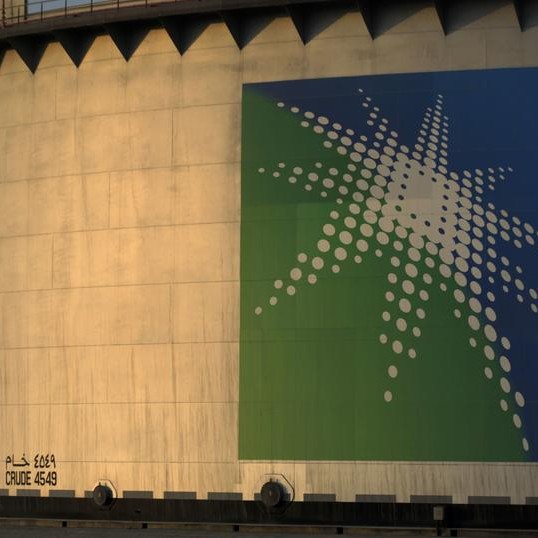
Saudi Arabia's Ras Tanura Terminal Resumes Operations - Greater Impact Than Strait of Hormuz Reopening
By Julianne Geiger, Oilprice.com - The largest oil export terminal in Saudi Arabia is gradually coming back online, and this development carries significantly more weight than news regarding the reopening of the Strait of Hormuz. After being virtually inactive since early March, Saudi Aramco is preparing to resume crude oil loading at Ras Tanura, with several Very Large Crude Carriers (VLCCs) owned by Bahri en route to the offshore loading area at Ju'aymah as of Thursday, according to vessel tracking data from Bloomberg.
The Critical Difference Between Strait of Hormuz Reopening and Ras Tanura Recovery
Over the past week, news headlines have been dominated by reports about the reopening of the Strait of Hormuz, but reopening a shipping route and restoring the region's largest export machinery are two entirely different matters. Saudi Arabia never completely halted exports during the crisis, thanks to the East-West pipeline that has been transporting millions of barrels per day to the Yanbu port on the Red Sea. However, Ras Tanura remained largely silent until now.
This indicates that Riyadh believes conditions have stabilized sufficiently to begin resuming exports from the Persian Gulf's primary port. It also explains why crude oil prices continue to decline slightly. The market is no longer pricing in hypothetical oil barrels. They are witnessing actual tankers lining up at loading facilities.
| Pre-Crisis vs. Current Situation Comparison | Before Crisis | Current Status |
|---|---|---|
| Ras Tanura Operations | Normal operations | Gradually recovering |
| Exports via Strait of Hormuz | High volume | Still below pre-war levels |
| Crude Oil Prices | Stable levels | Slightly declining |
Shipping Market Dynamics
However, traffic through the Strait of Hormuz remains significantly lower than pre-war levels, and many ship owners continue to approach the region cautiously despite reduced war risk insurance premiums. Earlier this week, freight rates for Gulf tankers increased as producers rushed to secure limited vessel capacity.
The movement of the Bahri fleet suggests Saudi Arabia is preparing for more sustainable increases in shipping activity. Bloomberg data also shows several other Bahri supertankers waiting in the Gulf of Oman, possibly positioning for future cargoes.
Regional Production and Export Status
Meanwhile, Iraq is boosting exports, Kuwait is restoring production, and Iran has resumed marketing crude oil across Asia. Now, Saudi Arabia's flagship export terminal is back in operation.
| Regional Oil Production and Export Status | Before Crisis | Current Status |
|---|---|---|
| Saudi Arabia | Full operations | Recovering at Ras Tanura |
| Iraq | Stable production | Boosting exports |
| Kuwait | High output | Restoring production |
| Iran | Sanction-limited | Resumed crude marketing in Asia |
Global Market Implications
The supply disruption that pushed oil prices above $100 per barrel is gradually becoming a thing of the past. However, the rebuilding process has only just begun. The resumption of operations at Ras Tanura is not just local news but has global significance, as it indicates stability is returning to the Middle East—the world's largest oil production and export region.
The return of Ras Tanura is a far more significant signal than the reopening of the Strait of Hormuz, as it represents the restoration of Saudi Arabia's primary export operations—the world's largest oil exporter. While shipping lanes can be reopened, restoring operations at critical infrastructure like Ras Tanura is a much more complex process.
Market Response and Future Outlook
The recovery at Ras Tanura marks a significant step toward stabilizing the global oil market. With Saudi Arabia, Iraq, Kuwait, and Iran all increasing production and exports, the oil market may witness a surplus in the coming months. This could continue to put downward pressure on oil prices, although geopolitical factors could still cause short-term volatility.
In this context, investors will closely monitor developments in the Persian Gulf region, particularly the movement of tankers and the status of major oil infrastructure. The resumption of operations at Ras Tanura is a positive signal, but the complete recovery of the global oil market still faces numerous challenges ahead.
Conclusion
The recovery at Ras Tanura represents a pivotal moment in the stabilization of the global oil market. As the world's largest oil export facility returns to operation, it signals a normalization of supply conditions that have been disrupted in recent months. The coordinated recovery of multiple major producers in the region suggests that the market is moving from a supply-constrained environment to one where availability is increasing.
For consumers and importing nations, this development likely means more stable or potentially lower energy prices in the medium term. For oil-producing nations, it presents both opportunities and challenges as they navigate a market with potentially increasing competition and pricing pressures.
As the situation continues to evolve, the international community will be watching closely how these developments impact not only energy markets but also the broader geopolitical landscape of the Middle East and global energy security.
#SaudiAramco #RasTanura #OilMarkets #StraitOfHormuz #GlobalOilMarket #OPEC #PersianGulf