Petrovietnam Launches Strategic Governance Enhancement Initiative Aligned with OECD Standards
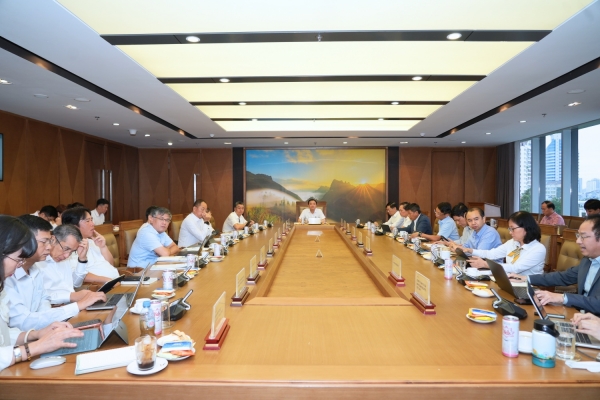
On June 22, 2026, the Vietnam National Oil and Gas Group (Petrovietnam) convened a meeting of its Members' Council (HĐTV) and Executive Board to review the results of a comprehensive assessment of corporate governance practices according to the principles of the Organisation for Economic Co-operation and Development (OECD). The meeting also examined an implementation plan for recommendations aimed at enhancing corporate governance capabilities, aligning with international standards.
Context and Objectives of the Governance Upgrade
As one of Vietnam's key economic conglomerates, Petrovietnam has consistently strived to perfect its governance system to meet the requirements of sustainable development in the context of deep international integration. The adoption of OECD governance principles represents a strategic move to enhance competitiveness, increase operational transparency, and attract foreign investment.
During the meeting, Petrovietnam's leadership emphasized the importance of establishing a modern, effective corporate governance system that aligns with international practices. This is not merely a market requirement but a crucial factor for Petrovietnam's sustainable development in the new era.
OECD Governance Assessment: Methodology and Scope
The assessment of Petrovietnam's governance status and its member units was conducted comprehensively based on OECD governance principles. The evaluation identified strengths, limitations, and areas requiring improvement across five key dimensions:
| Assessment Dimension | Key Focus Areas | Assessment Methodology |
|---|---|---|
| Rights and Responsibilities | Board and executive functions, accountability mechanisms | Document review, interviews with board members |
| Transparency and Disclosure | Financial reporting, non-financial information, stakeholder communications | Content analysis of public disclosures, stakeholder surveys |
| Stakeholder Relations | Shareholder rights, management accountability, stakeholder engagement | Stakeholder interviews, policy document review |
| Business Ethics and CSR | Code of conduct, anti-corruption measures, social responsibility | Audit of existing policies, compliance assessments |
| Risk Management and Internal Controls | Risk identification frameworks, internal control systems | Process documentation, control testing |
Key Findings from the Assessment
The evaluation revealed several significant findings:
- Structural Strengths: Petrovietnam demonstrated strong technical capabilities in operations and project management, with established processes for core business activities.
- Governance Gaps: The assessment identified limitations in board independence, particularly in the separation of executive and oversight functions.
- Transparency Challenges: While financial reporting met regulatory requirements, non-financial disclosures and stakeholder communications needed enhancement.
- Risk Management Evolution: While risk frameworks exist, they require modernization to address emerging challenges in the energy transition and geopolitical uncertainties.
Implementation Plan for OECD Governance Recommendations
Based on the assessment results, Petrovietnam has developed a comprehensive implementation plan with clear milestones and responsibilities. The plan is structured in three phases:
| Phase | Timeline | Key Objectives | Deliverables |
|---|---|---|---|
| Phase 1 | 2026-2027 | Structural reform and policy development | Revised governance charter, board restructuring, new codes of conduct |
| Phase 2 | 2027-2028 | Capacity building and process optimization | Leadership training programs, updated risk management framework, enhanced disclosure policies |
| Phase 3 | 2028-2030 | Digital transformation and international benchmarking | Integrated governance platform, sustainability reporting system, international certification |
Core Solution Areas
The implementation plan focuses on five core solution areas:
- Corporate Governance Reform: Strengthening board independence through the appointment of independent directors, clearly defining authority between management and oversight functions, and establishing specialized board committees for audit, risk, and compensation.
- Enhanced Transparency: Implementing comprehensive disclosure policies covering financial performance, environmental impact, social contributions, and governance practices. Establishing regular stakeholder engagement mechanisms to improve communication and accountability.
- Talent Development: Creating a leadership development program focused on international governance standards, establishing succession planning processes, and implementing competitive compensation structures to attract and retain top management talent.
- Digital Governance Transformation: Deploying integrated digital platforms for board management, risk assessment, and compliance monitoring. Utilizing artificial intelligence and analytics to enhance decision-making processes and real-time governance oversight.
- Sustainability Integration: Embedding environmental, social, and governance (ESG) factors into core business strategies and operations. Developing comprehensive sustainability reporting aligned with international standards and establishing measurable targets for carbon reduction and social impact.
Long-term Vision and Strategic Direction
According to Mr. Trần Văn Nguyên, Chairman of Petrovietnam's Members' Council, the adoption of OECD governance principles represents both a necessity and an opportunity for Petrovietnam to transform into a modern energy corporation with global competitiveness.
"Our goal is for Petrovietnam to become an internationally recognized energy enterprise with world-class governance by 2030. This transformation will not only enhance our corporate standing but also contribute to raising Vietnam's economic reputation on the global stage," emphasized Mr. Nguyên.
The vision encompasses three strategic pillars:
- Operational Excellence: Achieving industry-leading efficiency and safety standards across all operations.
- Market Leadership: Expanding Petrovietnam's presence in regional and global energy markets through strategic partnerships and technological innovation.
- Sustainable Growth: Balancing economic objectives with environmental responsibility and social contribution, positioning Petrovietnam as a leader in the energy transition.
Economic and Market Impact
Petrovietnam's governance upgrade is expected to generate significant positive impacts across multiple dimensions:
| Impact Area | Expected Outcomes | Timeline |
|---|---|---|
| Investor Relations | Increased foreign direct investment, improved credit ratings, expanded shareholder base | Short to medium term (2026-2028) |
| Corporate Performance | Enhanced operational efficiency, improved risk management, optimized capital allocation | Medium to long term (2027-2030) |
| Industry Influence | Setting governance benchmarks for state-owned enterprises, influencing sector-wide reforms | Long term (2028-2030) |
| International Position | Strengthened partnerships with global energy companies, increased participation in international energy forums | Medium to long term (2027-2030) |
Expert Analysis
Economic specialists have highlighted the significance of Petrovietnam's governance initiative as a critical step in Vietnam's economic integration process. Dr. Nguyễn Thị Mai, a corporate governance expert at the National Economics University, commented:
"Petrovietnam's move to adopt OECD governance principles demonstrates a profound understanding of the link between corporate governance and international competitiveness. This initiative could serve as a model for other state-owned enterprises in Vietnam's economic reform program."
International observers have noted that this reform aligns with Vietnam's broader commitments to improve business climate and attract foreign investment. The OECD's own representative in Vietnam stated: "We welcome Petrovietnam's commitment to implementing OECD governance principles. This initiative reflects Vietnam's progress in economic institutional development and will contribute to the country's economic resilience and growth."
Implementation Challenges and Mitigation Strategies
Despite the clear benefits, Petrovietnam's governance transformation faces several challenges:
- Cultural Resistance: Shifting from traditional state-owned enterprise governance to international standards requires addressing ingrained organizational culture and practices.
- Talent Acquisition: Finding qualified independent directors and governance professionals with both technical expertise and international experience remains challenging.
- Complex Integration: Coordinating governance reforms across diverse business units and subsidiaries requires careful change management.
- Performance Measurement: Developing appropriate metrics to assess governance improvements and their impact on business performance requires careful consideration.
To address these challenges, Petrovietnam has developed comprehensive mitigation strategies including targeted change management programs, partnerships with international consulting firms, and phased implementation approaches that allow for learning and adjustment.
Conclusion
The Members' Council and Executive Board of Petrovietnam have unanimously approved the implementation plan for the governance enhancement initiative aligned with OECD standards. With a clear roadmap and strong political commitment, Petrovietnam is advancing on its path to become a modern energy corporation with global competitiveness and significant contributions to Vietnam's sustainable economic development.
This initiative not only marks a significant step in Petrovietnam's restructuring and modernization process but also serves as evidence of Vietnam's commitment to improving corporate governance quality according to international standards. As Petrovietnam implements these reforms, it is expected to set new benchmarks for corporate governance in Vietnam's state-owned enterprise sector and strengthen the country's position in the global economic landscape.