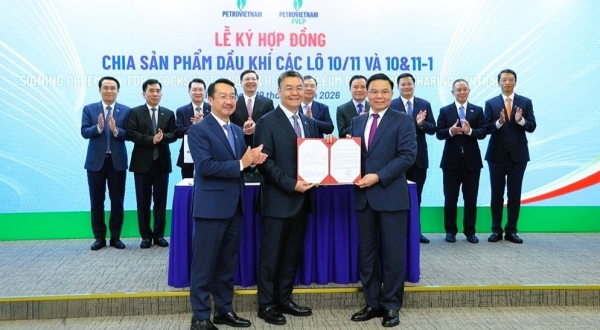
PetroVietnam Signs Major Oil and Gas Contracts: Solving the Energy Security Equation
The successful signing of key oil and gas contracts amid global market volatility not only firmly strengthens national energy security but also creates strong momentum toward achieving double-digit economic growth goals. This strategic move is set to unlock resources needed to realize Vietnam's energy vision through 2045.
Special Context of the Oil and Gas Contracts
Against the backdrop of complex global energy market fluctuations caused by geopolitical conflicts, economic tensions, and energy transition, PetroVietnam's completion of major oil and gas contracts holds particular strategic significance. These contracts not only ensure stable energy supply but also open up opportunities for sustainable development of Vietnam's oil and gas industry.
Importance for National Energy Security
Energy security stands as one of the pillars of national security. PetroVietnam, as the leading enterprise in the oil and gas sector, has demonstrated its responsibility by diversifying supply sources, enhancing international cooperation, and intensifying the efficient exploitation and utilization of domestic resources.
Energy experts evaluate that the successful signing of this chain of contracts will help Vietnam reduce dependence on imported energy sources while simultaneously strengthening the country's self-sufficiency in meeting socio-economic development needs.
| Indicator | Before Contract Signing | Forecast After Contract Implementation |
|---|---|---|
| Energy import dependency rate | ~35% | Decrease by ~10% |
| Oil and gas industry growth | 3-4%/year | Expected 7-8%/year |
| Contribution to GDP | ~12% | Increase to ~15% |
Positive Impact on Economic Growth
The successful implementation of these oil and gas contracts is expected to create strong ripple effects throughout the entire economy. The oil and gas sector not only contributes directly to the state budget through taxes and fees but also promotes the development of supporting industries, creates thousands of jobs, and attracts foreign investment.
According to expert calculations, these contracts could contribute an additional 1-2% to Vietnam's GDP growth rate in the coming years, bringing Vietnam closer to the double-digit economic growth target set by the Government.
Toward Vietnam's Energy Vision to 2045
The signing of this major chain of oil and gas contracts is part of PetroVietnam's long-term strategy toward implementing Vietnam's Energy Vision to 2045. According to this vision, Vietnam aims to develop a sustainable energy sector, ensure national energy security, while gradually reducing dependence on fossil fuels and strongly transitioning to renewable energy.
This vision sets specific objectives:
- Ensure national energy security, meeting socio-economic development needs
- Develop the oil and gas sector sustainably, efficiently exploiting domestic resources
- Strongly transition to clean energy, reduce emissions
- Strengthen international cooperation in the energy sector
PetroVietnam's Sustainable Development Strategy
PetroVietnam has clearly identified its sustainable development strategy with main pillars: enhancing exploitation efficiency, promoting high technology, developing high-quality human resources, and strengthening international cooperation.
The company is focusing on applying advanced technology in oil and gas exploration, drilling, and extraction, while simultaneously intensifying research and development of renewable energy. The goal is to gradually reduce the proportion of oil and gas in the country's overall energy structure while ensuring energy security.
| Field | Target by 2030 | Target by 2045 |
|---|---|---|
| Gasification | Increase production by 40% | Increase production by 60% |
| Renewable energy | Account for 20% of structure | Account for 35% of structure |
| High technology | Apply 50% new technology | Apply 70% new technology |
Future of Vietnam's Oil and Gas Industry
The successful signing of this major chain of oil and gas contracts opens a new chapter for Vietnam's oil and gas industry. In the coming years, the industry is expected to continue to welcome many opportunities from developing gasification projects, strengthening cooperation with international partners in high technology and energy transition.
However, the industry also faces numerous challenges from climate change, emission reduction pressure, and increasingly fierce competition from other energy types. To overcome these challenges, PetroVietnam needs to continue innovating, enhancing competitiveness, and proactively adapting to global trends.
Conclusion
PetroVietnam's successful signing of major oil and gas contracts is not only an achievement worth noting amid the global market's difficult context but also a crucial strategic step to solve Vietnam's energy security equation. This is an important foundation for realizing Vietnam's energy vision through 2045, while making a significant contribution to the country's double-digit economic growth target.
The future of Vietnam's oil and gas industry holds bright prospects when these contracts are effectively implemented, creating a solid foundation for the sustainable development of the sector and actively contributing to the socio-economic development of the country.