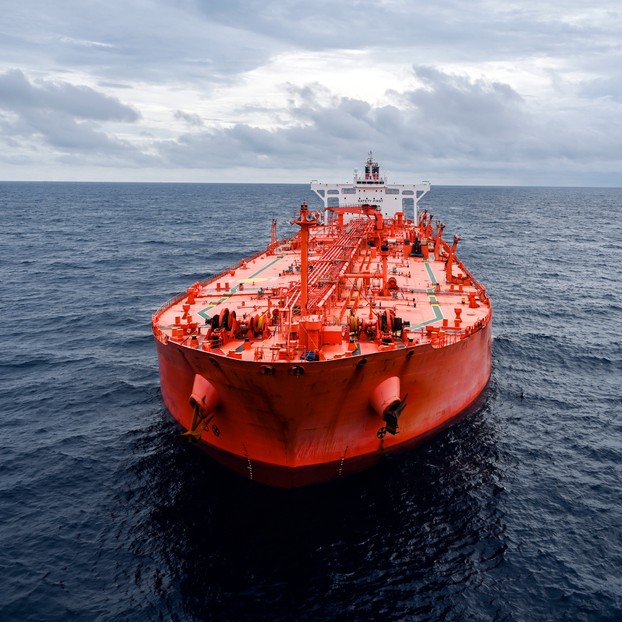
Iran Framework Agreement: Restoring Maritime Traffic in the Strait of Hormuz and Future Challenges
Market Response and Maritime Traffic Flow
The framework agreement between Iran and the United States has brought immediate positive effects to the market, with stock prices rising and oil prices declining. However, converting this into sustainable economic benefits will largely depend on shipping operations in the Strait of Hormuz.
Signs of maritime traffic recovery began on June 18, immediately after US and Iranian leaders signed a memorandum of understanding to end the conflict, according to maritime intelligence firm Windward. During an online briefing, Windward's chief analyst Michelle Wiese Bockmann noted that 18 vessels passed through the strait from 6 PM on June 17 to 2 PM UTC on June 18, which she described as "a sign of confidence in the agreement."
Details of Vessels Passing Through the Strait of Hormuz
Specifically, she mentioned one French-flagged LNG carrier, two Hong Kong-flagged oil tankers, one Italian-flagged vehicle carrier, one Japan-controlled oil tanker, and several Saudi-flagged oil tankers. Ten of these vessels were outbound, having been stranded in the Persian Gulf for 109 days since the conflict began with US and Israeli airstrikes against Iran on February 28.
| Vessel Type | Flag | Details |
|---|---|---|
| LNG Carrier | France | One vessel |
| Oil Tanker | Hong Kong | Two vessels |
| Vehicle Carrier | Italy | One vessel |
| Oil Tanker | Japan (controlled) | One vessel |
| Oil Tanker | Saudi Arabia | Multiple vessels |
The Importance of the Strait of Hormuz in Global Trade
Before the conflict, approximately 20% of the world's oil supply passed through the Strait of Hormuz, along with large quantities of LNG, fertilizers, and other critical products and goods. Iran's blockade of maritime traffic through the strait was a response to US and Israeli airstrikes that began the conflict on February 28, throwing global markets into chaos, causing acute fuel shortages in many parts of Asia, and prompting oil and gas producers in the Gulf region to begin questioning the need for alternative routes.
"Trickle" of Vessels
"This will start as a trickle, but certainly it's a very good sign, an early sign of confidence for outbound trips," Bockmann said. "The average trip was about seven vessels per day in the first two weeks of June until we had news of this agreement [June 14]. The total volume of trips in June has exceeded the 156 we tracked in May. We're certainly seeing things accelerate," she added.
Ben Cahill, a non-resident senior fellow at the Atlantic Council's Global Energy Center, noted that this flow needs to increase significantly if hopes for economic benefits from peace are to be realized. "It all depends on oil tanker traffic. Paper agreements don't mean much unless they actually get oil starting to flow again through the Strait of Hormuz, because that's what people will be watching—the number of oil tankers leaving the strait to transport oil, gas, and other products to market," he told RFE/RL.
Challenges to Maritime Traffic Recovery
"But it's also about oil tankers entering the strait, because that's when normal unloading operations will resume and when oil and gas production upstream across the Middle East can also resume. You have to monitor the two-way traffic of oil tankers," he added.
This is a real test. Shipping companies must have confidence that if their vessels enter the Persian Gulf, they won't be stranded there again by a resumption of hostile activities. This is crucial to restart oil tanker unloading from port facilities in Iraq, Kuwait, and Saudi Arabia, and to transport Qatar's LNG.
Under the agreement, Washington has also issued waivers on sanctions against Iranian oil, offering further potential economic growth. Windward is also monitoring Iranian vessels moving through the strait, as well as LNG and oil tankers controlled by Iran heading west from Southeast Asia through the Strait of Malacca—apparently confident in their ability to unload at Iranian ports now that the naval blockade of Iranian ports and waters has been lifted.
The First Test is at Sea
But the optimistic mood will only last as long as the agreement remains in effect. "There is a proof-of-concept element to all of this," Naysan Rafati, senior Iran analyst at the International Crisis Group, told RFE/RL. "The first test is at sea. Does traffic at Hormuz start to increase? Are Iranians still trying to harass or drone ships? Are the Americans allowing Iranian ships to pass through the belt?" he added.
Other critical tests of the strait's viability include insurance premiums, the presence of mines, and the issue of transit fees. The text of the US-Iran memorandum of understanding states that "Traffic of commercial vessels will commence immediately and considering the need to remove technical and military obstacles and mines by the Islamic Republic of Iran, will be established within 30 days." But at this stage, there are no details on when demining will begin and who will do it.
Summary of Challenges to the Strait of Hormuz
| Challenge | Current Status | Proposed Solution |
|---|---|---|
| Sea Mines | Timeline for demining unclear | Removal within 30 days per agreement |
| Transit Fees | Iran waived fees for 60 days | Further negotiations on maritime service fees |
| Insurance Premiums | 3-10% of vessel value (previously 1%) | Need stabilization to restore traffic |
| Security | Risks from attacks | Ensure safety for vessels |
The agreement also states that Iran has agreed to free passage through the Strait of Hormuz for 60 days, pending further negotiations with the US negotiator. Bockmann said the southern route through the strait is in Omani waters and once this route is demined, the issue of transit fees becomes irrelevant. Tehran has proposed implementing "maritime service fees" in cooperation with Oman, but Bockmann said, "I really don't think that will fly."
Insurance Costs and Expenses
Regarding insurance, she told RFE/RL that "it's still early to say" whether costs will start to decrease. "We know that附加保费, which are part of the war risk for entering listed areas, are being recalculated daily. And they are a percentage of the vessel value. And before the war, they were under 1% of the vessel value. Then we saw them fluctuate between 3% and 5%, sometimes up to 10%," she said, adding that returning to lower premiums will be important for maritime traffic to return to normal levels.
Cahill said he doesn't expect insurance costs to stabilize quickly, but that's not the main issue. "The issue is that ship owners simply don't want to put their crews in harm's way. Once they get certainty, safety, the sense that passage is acceptable, I think you'll see results pretty quickly," he said.
Consequences of the War for the Strait of Hormuz
Saudi Arabia has increased capacity on its East-West pipeline, pumping its crude oil to the Yanbu port on the Red Sea to avoid the strait. The United Arab Emirates has found a similar solution, using their pipeline to the Fujairah port, on the Gulf of Oman. Iran has targeted both routes in the conflict, but neither route is as vulnerable as the strait.
This has led some to believe that the war has given Iran a future weapon with potentially even greater influence than a nuclear arsenal—the ability to shut down global commercial flow whenever they want. However, not everyone agrees.
"One of the lessons from this event is how dangerous it is to be overly dependent on a single choke point. And of course, the Strait of Hormuz is the world's most important oil choke point," Cahill said. "Importers in importing countries will reassess supply risk and transit risk through the Middle East in really significant ways," he added. "There's some skepticism that the Strait of Hormuz will comprise as large a percentage of global oil transport and export as it has. Alternative pipelines are being developed. People will explore alternative infrastructure."
Conclusion
The Iran framework agreement has brought a positive start to the market and maritime traffic in the Strait of Hormuz. However, converting this into sustainable economic benefits depends on maintaining shipping companies' confidence, addressing security challenges and risks, and developing alternative routes to reduce dependence on a single choke point. While the future of the strait remains uncertain, the resumption of vessel traffic has brought hope for the recovery of global trade in the region.