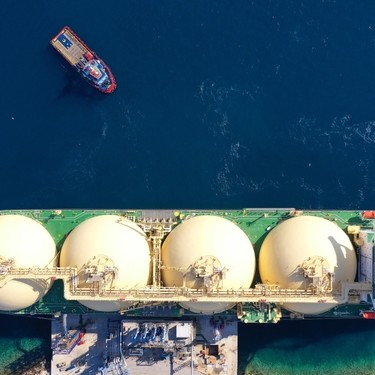
Historic LNG Ship Transits Strait of Hormuz After US-Iran Agreement, Arrives in India
The Journey of the Disha and Its Impact on Global Energy Supply Chains
Last Friday, India received the first liquefied natural gas (LNG) carrier to transit the Strait of Hormuz since the announcement of a US-Iran agreement over the weekend. The LNG tanker Disha, flying the Maltese flag, arrived at Dahej port on India's western coast on Friday, having passed through the Strait of Hormuz earlier in the week. The vessel safely docked at the Petronet LNG terminal, according to an announcement from the Bharuch Port Authority.
According to Petronet LNG, which chartered the LNG carrier, it is managed by an India-led shipping consortium. The Disha tanker passed through the Strait of Hormuz on Monday, June 15, just hours after the United States and Iran announced an agreement to reopen the strait more than 100 days after it was closed.
Historical Context
The Disha tanker had loaded LNG from Qatar's Ras Laffan in early March, precisely when the Gulf nation ceased LNG production and exports due to the closure of the Strait of Hormuz and missile attacks on LNG infrastructure at Ras Laffan.
The closure of the Strait of Hormuz triggered a global energy crisis, impacting LNG supply chains and driving prices to surge. India, one of the world's largest LNG markets, was particularly affected by the situation.
Current Situation
According to Opesh Kumar Sharma, a director in India's Ministry of Ports, Shipping and Waterways, since the Disha passed through the Strait of Hormuz on June 15, no Indian-flagged vessels have left the Persian Gulf.
"Currently, no Indian-flagged vessels are moving out after Disha," the official said at a press conference on Thursday. The owners and operators of the vessel are awaiting approval to proceed and are not in a hurry to test the route until they have assurance that it is safe.
Qatar's Role
Qatar has begun sending LNG tankers back to the Middle East in anticipation of the imminent reopening of the Strait of Hormuz, allowing the world's second-largest LNG exporter to resume production and move LNG supplies back to markets.
Qatar is the world's largest LNG producer, and its production disruption has caused significant disruption to the global energy market. The reopening of the Strait of Hormuz is expected to help Qatar restore its export operations.
| Overview of the Event | |
|---|---|
| LNG Carrier | Disha (Maltese flag) |
| Destination | Dahej Port, India |
| Port Arrival Time | Friday, June 15 |
| Hormuz Transit Time | Monday, June 15 |
| LNG Loading Port | Ras Laffan, Qatar |
| LNG Loading Time | Early March |
| Hormuz Strait Status | Reopened after over 100 days of closure |
Latest Developments
The situation took a new turn on Friday morning after Switzerland confirmed that US-Iran negotiations scheduled to begin in Geneva have been postponed. The postponement of these negotiations could add further instability to the energy market, although the commercial shipping route through the Strait of Hormuz has already been reopened.
Impact on the Energy Market
The reopening of the Strait of Hormuz is expected to help stabilize the global energy market, particularly the LNG market. India, one of the world's largest LNG markets, will benefit from the restoration of LNG supply chains through the Strait of Hormuz.
However, analysts warn that long-term stability will depend on maintaining peace in the region and resolving political tensions between countries in the region.
Conclusion
The journey of the Disha marks a significant step in restoring global energy supply chains after a prolonged crisis. This event is not only significant for India but also for the global energy market, especially in the context of continued growth in global energy demand.
Despite the latest developments regarding the postponement of US-Iran negotiations, the reopening of the Strait of Hormuz is viewed as a positive signal for energy market stability in the near future.