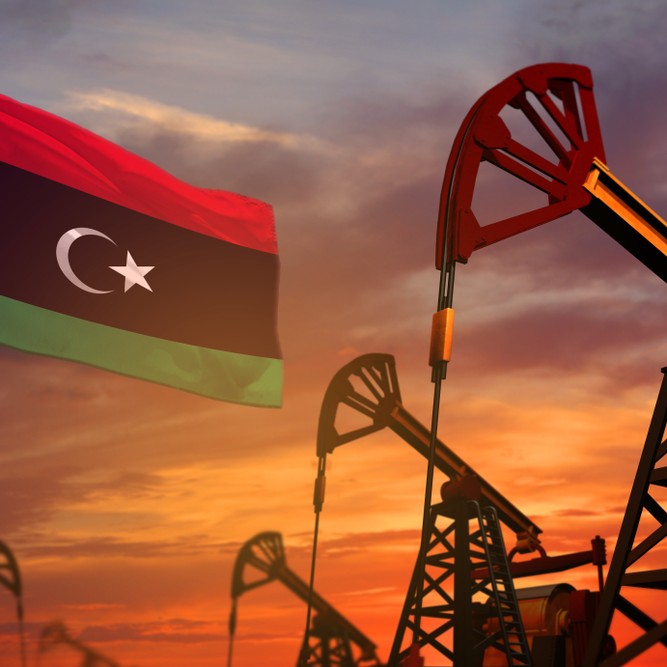
Libya: A New Beginning for the Oil and Gas Industry
Libya is attracting the attention of the world's largest oil and gas companies as Washington attempts to transform a fragile military thaw into a new source of oil supply. The National Oil Corporation (NOC) of Libya has officially signed exploration and production sharing agreements for the 2025 bidding round with international companies such as Repsol, Turkish Petroleum, Eni, QatarEnergy, and MOL. This marks Libya's first major licensing effort in 17 years.
Growth in Oil Production
Currently, Libya's oil production has reached approximately 1.4 million barrels per day (bpd), the highest level in over a decade. Officials have set a target of reaching 1.6 million bpd by the end of this year and 2 million bpd in the near future. Along with the resolution of issues in Iran, Libya, with Africa's largest oil reserves and proximity to European markets, is becoming an attractive option for investors.
Trends in Oil Exports
The value of Libyan crude oil has increased due to disruptions in Gulf countries, forcing refineries to seek alternative supplies. Nigeria imported Libyan crude oil for the first time in May; Egypt resumed purchasing Libyan crude oil for the first time since 2019; and Tunisia has increased its purchases. Italy remains the top destination, followed by Greece, Spain, and Turkey.
Political and Economic Challenges
However, the political situation in Libya remains fragile. The country still faces division and rival governments, each engaging in illicit activities to maintain peace. Oil production has repeatedly been halted as factions have used oil as a negotiation tool. A central bank dispute last year caused a sharp drop in production, while recent fighting in Zawiya forced the shutdown of the country's largest refinery.
In May, Libya generated nearly $4 billion in revenue from oil, but fuel import costs, payment deductions, bottlenecks at the central bank, and illicit outflows have slowed the process of converting oil income into financial strength.
Support from Washington and the Resurgence of Oil Companies
Washington is supporting military cooperation between eastern and western Libyan forces, including joint exercises under US supervision near Sirte, the gateway to the country's most important oil corridor. Major Western companies are returning to revive old fields, expand new areas, and stabilize export flows. ConocoPhillips, Chevron, and ExxonMobil have begun to return, while Eni, QatarEnergy, Repsol, and others are expanding their positions through the new bidding round.
Budget Agreements and Cooperation Dynamics
In April, opposing power centers found a feasible agreement to pass Libya's first unified budget framework in over a decade. This agreement creates a mechanism for both sides to benefit from oil revenue without sparking a new civil war. This provides financial incentives for both sides to maintain production flow.
| Year | Oil Revenue (USD) | Partner Companies | Oil Production (bpd) |
|---|---|---|---|
| 2022 | $3.5 billion | Eni, Repsol | 1.2 million |
| 2023 | $4 billion | ConocoPhillips, Chevron | 1.4 million |
| 2024 | Projected $4.5 billion | QatarEnergy, MOL | 1.6 million |
Conclusion: Sustainability and Stability
What investors are hoping is that this agreement will last longer, as both Dbeibah and Haftar have financial incentives to maintain it. Tripoli maintains international recognition and formal control of state institutions, while Haftar continues to consolidate power in eastern and southern Libya. As long as oil revenue continues to flow and spending continues, neither side will have strong incentives to disrupt the situation. This is not unity, but a coexistence.
For Haftar, this agreement is particularly beneficial. He doesn't need to capture Tripoli right now. Since the April agreement, eastern Libya has become the site of one of the largest state-supported construction programs. The Libya Development and Reconstruction Fund, controlled by Haftar, received an initial allocation of 10 billion dinars and has mobilized approximately $2.7 billion for projects in Benghazi, Derna, and other cities in eastern Libya. More than 20 foreign companies from Egypt, Turkey, Italy, France, UAE, and Russia have contracted for infrastructure construction projects.
All of this is worth much more than another military campaign. Oil revenue continues to flow through the national system while billions of dollars are being diverted to projects controlled by family-run organizations. His son, Belqasem, oversees the reconstruction fund, while son Saddam continues to consolidate military power.
For major international oil companies, this is a pragmatic guarantee. The situation will remain stable in the near term. The longer it lasts, the more time Haftar has to build the east into a parallel state with its own military, budget, foreign funding network, and reconstruction economy.