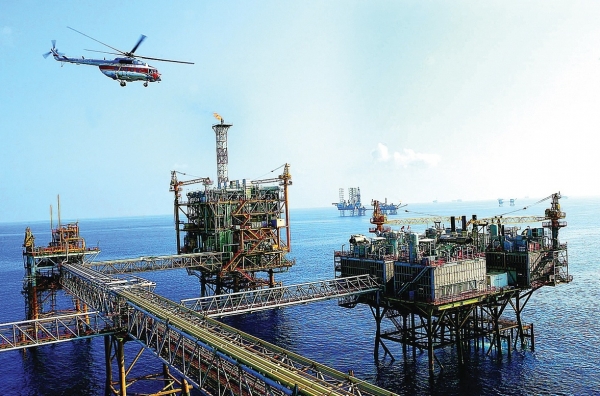
The Journey to 1 Million Tons: Vietnam's First Crude Oil Milestone
In the economic development narrative of Vietnam, the successful extraction of the first 1 million tons of crude oil stands as a monumental achievement with profound economic and political significance. This initial oil production not only generated valuable foreign currency for the nation's reconstruction and development efforts but also emerged as a symbol of enduring friendship and mutual support between Vietnam and the Soviet Union during the country's most challenging period.
Historical Context: Vietnam's Era of Hardship
The late 1970s and early 1980s marked a period of economic austerity for Vietnam as the country transitioned into a centrally planned economy. Having emerged from a devastating war, the nation faced severe challenges: infrastructure lay in ruins, the economy was in a state of collapse, and the population confronted critical shortages of essential goods. In this dire context, identifying and developing natural resources became an urgent priority to revitalize the national economy.
With invaluable assistance from the Soviet Union, Vietnam initiated oil and gas exploration activities on the continental shelf of the southern region. This collaboration represented more than mere economic cooperation; it symbolized international solidarity during Vietnam's most vulnerable moment.
The Journey to Vietnam's First Crude Oil
Vietnam's oil and gas exploration efforts commenced in 1975 with technical support from Soviet specialists. In 1978, the first oil well was drilled at the Bach Ho (White Tiger) field—Vietnam's first onshore oil discovery in Ba Ria-Vung Tau Province.
However, it wasn't until 1986 that Vietnam's first offshore oil field, the White Tiger field, began commercial production. This milestone marked a turning point in the history of Vietnam's oil and gas industry.
Development of Vietnam's Oil and Gas Industry
| Year | Key Milestone | Significance |
|---|---|---|
| 1975 | Initiation of oil and gas exploration program | Beginning of the journey to locate petroleum resources |
| 1978 | Drilling of first oil well at Bach Ho field | Discovery of Vietnam's first potential oil field |
| 1986 | White Tiger field brought to commercial production | Commencement of commercial crude oil production |
| 1990 | Achievement of 1 million tons of crude oil production | Validation of Vietnam's petroleum potential |
Economic Significance: A Valuable Source of Foreign Currency
The successful extraction of the first 1 million tons of crude oil provided Vietnam with substantial foreign exchange at a time when the country faced severe foreign currency shortages. Revenue from oil and gas became a crucial driver for the nation's reconstruction and economic development initiatives.
Crude oil not only generated direct revenue but also laid the foundation for the development of supporting industries, created employment for thousands of workers, and spurred infrastructure development in oil and gas production regions. This economic boost proved instrumental in Vietnam's transition from a war-torn economy to a developing nation with industrial potential.
A Symbol of Vietnam-Soviet Friendship
The first crude oil production milestone carried profound significance beyond economics, serving as a testament to the enduring friendship between Vietnam and the Soviet Union. During Vietnam's most challenging period, the Soviet Union generously shared technology, expertise, and financial support to help Vietnam explore and develop its oil and gas resources.
This collaboration embodied the spirit of "sharing half a grain of rice"—a symbol of mutual assistance and solidarity between the two nations. Soviet specialists worked alongside Vietnamese engineers directly at the oil wells, transferring knowledge and modern petroleum extraction techniques of that era.
Vietnam-Soviet Technical Cooperation in the Oil and Gas Sector
| Form of Cooperation | Content | Impact |
|---|---|---|
| Technology Transfer | Provision of modern drilling equipment and technology | Enhanced Vietnam's oil extraction capabilities |
| Expert Training | Training Vietnamese engineers in petroleum techniques | Development of technical human resources |
| Financial Support | Concessional loans for oil and gas projects | Reduced financial burden on Vietnam |
| Data Analysis | Support in geological analysis and reserve assessment | Improved efficiency in new oil field discoveries |
Legacy and Long-Term Impact
The first 1 million tons of crude oil production was not merely a past achievement but the foundation for Vietnam's oil and gas industry development over subsequent decades. From the White Tiger field, Vietnam continued to discover and develop additional oil fields such as Dragon, Dai Hung, and White Lion, among others.
The oil and gas sector has emerged as a key economic pillar, making substantial contributions to the national budget. Today, Vietnam ranks among the leading oil and gas producers in Southeast Asia.
Evolution of Vietnam's Oil and Gas Industry Through Different Periods
| Period | Characteristics | Main Achievements |
|---|---|---|
| 1986-1995 | Initial phase | Commencement of commercial crude oil production |
| 1996-2005 | Growth phase | Increased production, discovery of new oil fields |
| 2006-2015 | Sustainable development phase | Diversification of oil and gas activities, development of gas industry |
| 2016-present | Transition phase | Shift toward renewable energy, reduced dependence on crude oil |
Conclusion: An Enduring Legacy
Vietnam's first 1 million tons of crude oil production stands as more than an economic milestone—it represents a symbol of international friendship, embodying the spirit of self-reliance and international cooperation under challenging circumstances. This achievement demonstrates the strategic vision of Vietnam's leadership in harnessing natural resources to serve national development.
Looking back on the 35-year journey of Vietnam's oil and gas industry, we gain a deeper appreciation for the relentless efforts and invaluable support from the international community, particularly the Soviet Union. This legacy continues to serve as a driving force for the sustainable development of Vietnam's oil and gas sector, contributing to the nation's construction and defense endeavors.