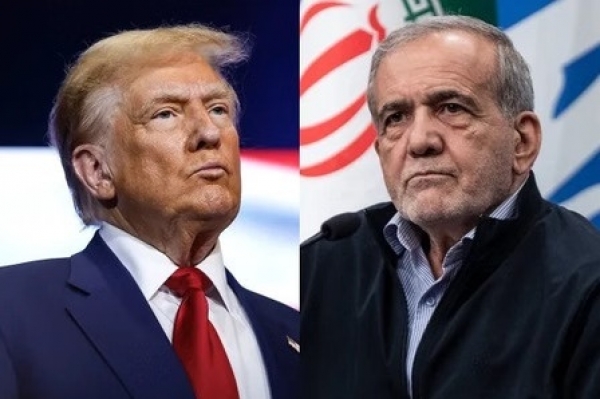
Iran Claims Victory Over US in Nuclear Technology Negotiations
Tehran asserts that recent agreements with Washington demonstrate the failure of American hardline policies while highlighting Iran's technological advancements in the nuclear field.
In a statement that has captured international attention, Iran's chief negotiator has declared that the latest agreement between Washington and Tehran serves as irrefutable proof of the failure of US pressure tactics against the nation. The announcement comes amid continued tensions between the two countries despite diplomatic breakthroughs.
Historical Context and Negotiation Rounds
Iran and the United States have endured decades of strained relations, particularly following the 1979 Islamic Revolution and the subsequent hostage crisis at the US Embassy. Iran's nuclear program has emerged as a focal point in bilateral relations, with Western allegations that Tehran was developing nuclear weapons capabilities.
In 2015, world powers and Iran signed the Joint Comprehensive Plan of Action (JCPOA), under which Iran agreed to limit its nuclear program in exchange for sanctions relief. However, in 2018, the US withdrew from the agreement and reimposed stringent economic sanctions, escalating tensions in the region.
Iran's Controversial Victory Claim
According to Iran's chief negotiator, the recent agreement not only demonstrates the failure of American hardline policies but also affirms Iran's technological achievements in the nuclear sector. He emphasized: "We have proven that no pressure can halt Iran's technological progress."
The statement follows stalled negotiations in Vienna aimed at reviving the JCPOA. Iran has presented new proposals, including demands that the US guarantee no future sanctions will be imposed.
Technological Aspects of the Agreement
The nuclear agreement between Iran and world powers contains several technological components focused on monitoring and restricting Iran's nuclear program. Key elements include:
| Technological Component | Level of Restriction | Implementation Period |
|---|---|---|
| Centrifuges | Limited quantity and type | 10-15 years |
| Uranium enrichment levels | Below 3.67% | 15 years |
| Enriched uranium stockpiles | Export or dilution | Immediately |
| Research and development | Restricted for 10 years | 10 years |
Iran's Nuclear Technology Achievements
Iran has made significant technological advancements in the nuclear field despite international sanctions. Major achievements include:
- Development of more advanced centrifuge technology
- Construction of underground nuclear facilities
- Progress in uranium enrichment techniques
- Achieving self-sufficiency in nuclear fuel production
According to experts, Iran has invested billions of dollars in its nuclear program and achieved a remarkable level of technical autonomy. This demonstrates Iran's resilience against international sanctions and its commitment to developing indigenous technological capabilities.
International Reactions
Iran's declaration has elicited varied responses from the international community:
- Europe: EU nations have called for restraint and emphasized the importance of diplomacy
- Israel: Accused Iran of attempting to conceal a nuclear weapons program
- Russia and China: Expressed support for Iran's position and called for the lifting of US sanctions
- United States: Maintained a firm stance on Iran's nuclear activities
Impact on Global Technology Sectors
The Iran-US conflict could have significant implications for global technology sectors:
| Sector | Potential Impact |
|---|---|
| Nuclear technology | May accelerate development of civilian nuclear technology in other countries |
| Monitoring technology | Increased demand for surveillance and control technologies |
| Cybersecurity | Elevated risk of state-sponsored cyber attacks between nations |
| Energy technology | Accelerated development of renewable energy alternatives to nuclear |
Future of Iran-US Relations
The future of Iran-US relations remains uncertain despite recent diplomatic breakthroughs. Experts note that:
- Both sides have non-negotiable strategic interests
- Domestic political changes in either country could affect bilateral relations
- Pressure from third parties may influence the negotiation process
- Technology could emerge as a potential area of cooperation between the two nations
Meanwhile, Iran continues to position itself as a regional technological power, with significant autonomy in high-tech sectors. The "victory" declaration may serve as a message to the international community about Iran's technological resilience and capabilities.
The technological rivalry between Iran and the US is likely to remain a significant international focal point in the coming years, with profound implications for global security and technological development.