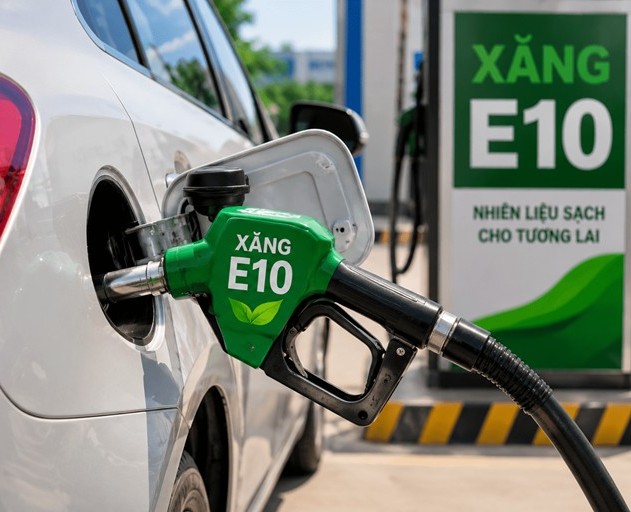
E10 Gasoline: A Technological Step Forward in Vietnam's Clean Fuel Transition
After years of preparation regarding raw materials, blending technology, and distribution systems, E10 biofuel has officially been widely sold in the Vietnamese market. More than just a new fuel product, E10 is expected to contribute to reducing emissions, promoting green consumption, and supporting the energy transition toward sustainability.
However, along with consumer interest, issues related to quality, technical standards, and effectiveness of use are being raised, requiring solutions from regulatory agencies and businesses.
Understanding E10 Gasoline
E10 gasoline is a type of A92 or A95 gasoline blended with 10% ethanol (bioethanol) from raw materials such as sugarcane, corn, cassava, or even organic waste. This product is part of Vietnam's biofuel development strategy, aiming to reduce dependence on petroleum and reduce greenhouse gas emissions.
According to government decisions, E10 gasoline has been deployed across all provinces and cities in Vietnam, gradually replacing ethanol-free A92 gasoline. This transition is expected to help reduce CO2 emissions by approximately 1.7 million tons/year and create a consumption market of about 500,000 tons of ethanol/year.
Benefits of E10
E10 gasoline offers many practical benefits for both the environment and the economy:
- Reduction of greenhouse gas emissions: Ethanol burns more completely than conventional gasoline, helping to reduce CO2 and other pollutant emissions.
- Sustainable renewable energy: The raw materials for ethanol production are mainly from renewable crops, helping to reduce dependence on fossil fuels.
- Agricultural support: Creates a stable consumption market for agricultural products such as sugarcane, corn, and cassava.
- Foreign currency savings: Reduces petroleum imports, helping to save foreign exchange for the country.
Implementation Status and Challenges
However, the implementation of E10 gasoline in Vietnam has not been without difficulties. Some prominent issues include:
Motorcycle Compatibility Issues
For motorcycles - the most common vehicle type in Vietnam, compatibility with E10 gasoline is a major concern. According to research by experts:
| Vehicle Type | E10 Compatibility | Precautions |
|---|---|---|
| Models produced from 2015 onwards | Absolutely safe | Designed to use E10 gasoline |
| Models produced from 2010-2015 | Needs checking | Most can use but need monitoring |
| Models produced before 2010 | Needs caution | Risk of damage to rubber components |
Quality and Technical Standards
Ensuring consistent quality of E10 gasoline nationwide is a significant challenge. Some points to note:
- Gasoline separation when stored for long periods, especially in high-temperature conditions
- Ability to absorb water from the air, reducing quality
- Differences in ethanol content between different gas stations
Distribution System and Consumer Awareness
The E10 distribution system still has many limitations:
- No clear regulations on distinguishing gas stations selling E10 and regular gasoline
- Lack of transparent information for consumers about product quality
- Many consumers are still confused about the benefits and risks of using E10 gasoline
Solutions and Prospects
To promote the success of the E10 program and develop clean fuel in Vietnam, the following solutions need to be implemented:
Improving the Legal Framework
| Field | Content to be improved | Expected timeline |
|---|---|---|
| Technical standards | Update TCVN on biofuels | 2023-2024 |
| Quality management | Establish periodic inspection system | 2023 |
| Consumer protection | Build compensation mechanism for incidents | 2024 |
Investing in Technology and Infrastructure
Upgrading the distribution system and investing in advanced ethanol production technology is a key factor:
- Investing in next-generation ethanol production technology from organic waste
- Upgrading storage tanks and pipelines to prevent gasoline separation
- Developing new motorcycle models fully compatible with E10
Enhancing Community Awareness
Extensive communication programs are needed to:
- Provide accurate information about the benefits and risks of E10
- Guide consumers on how to use and maintain motorcycles when using E10
- Strengthen education on clean energy and environmental protection
Conclusion
The widespread implementation of E10 gasoline marks an important step in Vietnam's energy transition process. Despite many challenges, with thorough preparation of raw materials, technology, and distribution systems, along with consumer consensus, biofuels are expected to contribute significantly to the country's sustainable development goals.
The future of clean fuel in Vietnam does not stop at E10. Other biofuels such as E5, Biodiesel (B5), and even alternative solutions like electrifying the transportation sector are being researched and deployed, moving toward a greener and lower-emission economy.
The transition to clean fuel is a long-term process requiring the efforts of the government, businesses, and citizens. E10 is just the beginning, but it will be an important foundation for the sustainable development of Vietnam's energy sector in the decades to come.