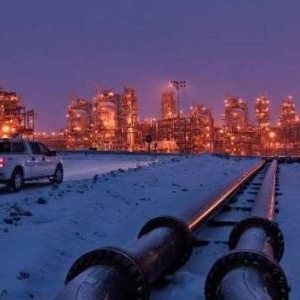
Canadian Oil Sands: Resurgence as North America's Most Cost-Effective Producer
In a dramatic reversal of fortune, Canada's oil sands have emerged as one of the most attractive oil production regions in North America, challenging the long-held perception of them as prohibitively expensive operations. This transformation comes as international energy giants who once abandoned these assets are now witnessing the strategic error of their divestment decisions.
Between 2014-2015, when oil prices plummeted, global energy behemoths like BP, Chevron, and TotalEnergies made the strategic decision to divest from their Canadian oil sands investments. They classified these operations as their most costly and least profitable assets, redirecting capital toward cheaper shale oil production in the United States, which offered quicker drilling timelines and higher profit margins.
However, these companies may soon be regretting their exit. According to a recent report from the Canada Energy Centre, oil sands operations have become one of the most attractive oil production areas in North America as costs in competitive basins like the Permian in Texas have escalated. "Operators have become more efficient and have extremely low sustaining break-even costs, arguably the lowest in North America," stated Trevor Rix, director of Enverus Research Intelligence.
The Canadian Oil Sands: An Overview
The oil sands, also known as tar sands, represent one of the world's largest petroleum reserves. This unconventional oil deposit located primarily in northern Alberta has undergone significant technological evolution and operational optimization over the past decade.
| Characteristic | Detail |
|---|---|
| Recoverable Oil | Approximately 167 billion barrels |
| Contribution to Canada's Oil Reserves | Nearly 97% |
| Global Ranking | Third largest after Venezuela and Saudi Arabia |
Production Costs and Profitability Transformation
The production economics of Canadian oil sands have undergone a remarkable transformation over recent years. Production costs began declining approximately a year ago, driven by technological innovations and aggressive cost-cutting measures. These initiatives include the deployment of autonomous truck fleets, standardized maintenance procedures across mining operations, improved water management systems, and even the use of robotics for routine maintenance tasks.
This efficiency drive stands in stark contrast to their American shale oil counterparts, who are currently facing higher costs due to persistent inflationary pressures. According to analysis by the Bank of Montreal for Reuters, Canada's five largest oil sands companies can achieve break-even points while maintaining dividends with WTI prices ranging from $43.10 to $40.85 per barrel. This demonstrates that oil sands producers have reduced their average production costs by approximately $10 per barrel over the past seven years. Between 2017-2019, the average break-even price for oil sands was $51.80 per barrel.
Comparative Cost Analysis
| Oil Type | Break-Even Price (USD/barrel) | Time Period |
|---|---|---|
| Canadian Oil Sands | $40.85 - $43.10 | 2023 |
| US Shale Oil | $65.00 | 2023 |
| Canadian Oil Sands | $51.80 | 2017 - 2019 |
| US Shale Oil | $50 - $52 | 2017 - 2019 |
Oil Sands vs. Shale Oil: Fundamental Differences
The operational distinctions between oil sands and shale oil production are substantial and have significant implications for their respective economics. Oil sands are typically extracted through large-scale mining operations where companies excavate sand and clay to separate the oil, known as bitumen. When the oil deposits are located deeper underground, steam is injected into the formation to heat and loosen the bitumen, which is then pumped to the surface.
While oil sands mines require substantial initial capital investment, once operational, they can maintain production for decades with relatively low decline rates. In contrast, shale oil wells involve lower initial investment but experience rapid production declines, often within just a few months. This phenomenon, known as the "Red Queen Syndrome," requires shale producers to continuously invest significant capital merely to maintain production levels—a stark difference from the steady, long-term production profile of oil sands operations.
Future Prospects and Market Dynamics
The International Energy Agency's 2025 report confirms that global oil and gas fields are depleting at a faster rate than previously anticipated, forcing the energy industry into an expensive battle to maintain production levels. The Canada Energy Centre has noted that heavy oil produced from oil sands is experiencing strong demand as global markets for heavy crude tighten.
Since 2021, oil sands production growth has propelled Canada's oil export growth to nearly 800,000 barrels per day, with competitors like Mexico and Venezuela struggling to keep pace. Enverus, the research firm, is calling for additional pipeline infrastructure, projecting that oil sands development will fill current capacity within the next seven years.
The lack of pipeline infrastructure to coastal markets has created a persistent surplus of Canadian crude oil, suppressing prices for years. This situation has prompted political calls for new pipeline construction to address the glut and enable Canadian crude to receive international pricing. Potential solutions include expanding and optimizing the Enbridge Mainline system, advancing the Trans Mountain expansion, considering South Bow's Prairie Connector proposal, and implementing Alberta's proposed Northwest Pipeline.
The resurgence of Canadian oil sands represents a remarkable turnaround in the global energy landscape. As conventional oil reserves decline and demand for heavy crude increases, the technological advancements and operational efficiencies achieved in Alberta's oil sands position Canada as a critical player in North America's energy future. The question no longer seems to be whether oil sands can compete economically, but rather how quickly the necessary infrastructure can be developed to unlock their full potential.
By Andrew Topf