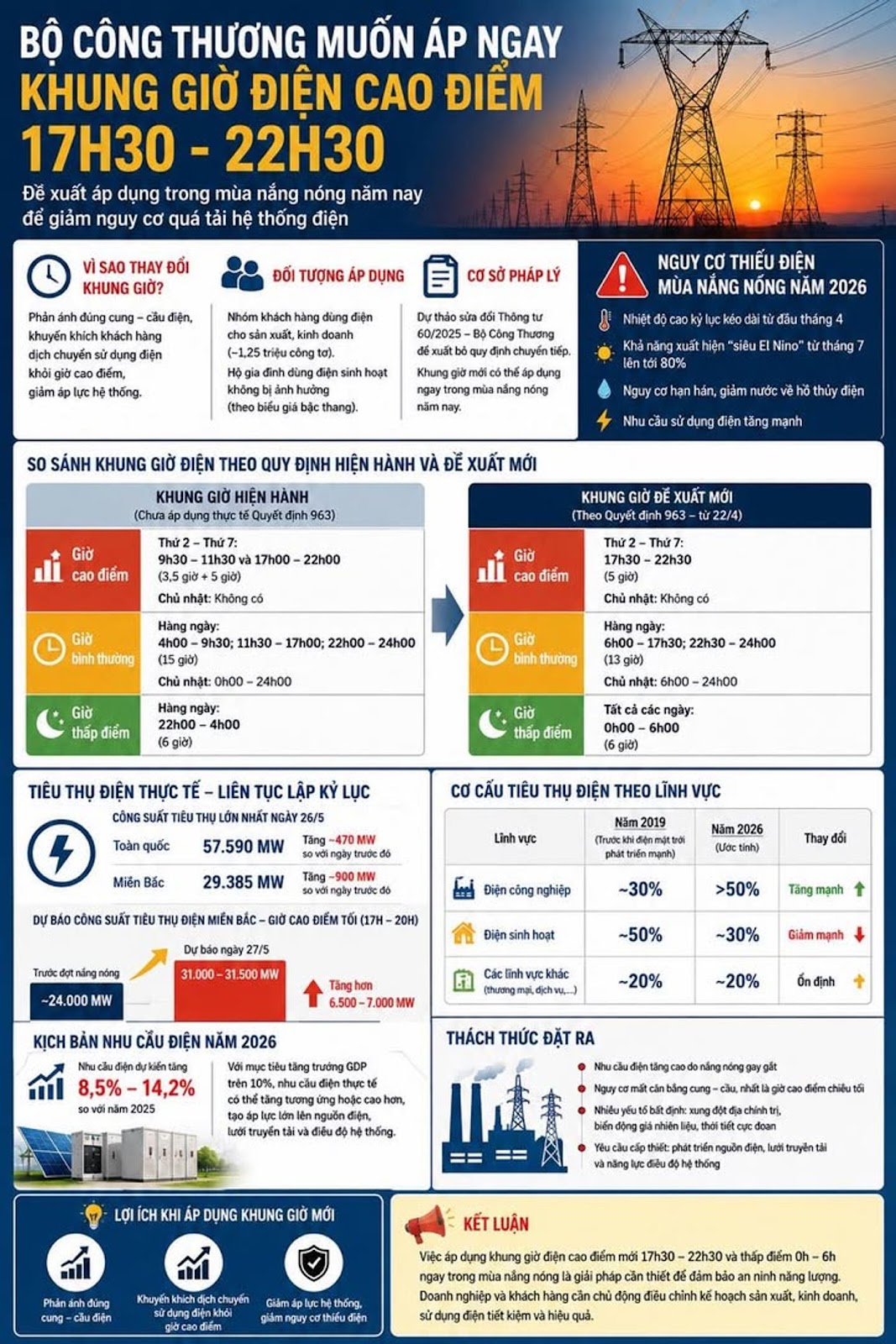
New Vietnamese Electricity Peak Hours Could Surge Business Costs During Historic Heatwave
In a move that could significantly impact millions of businesses and commercial operations, Vietnam's Ministry of Industry and Trade is proposing an emergency change to the nation's electricity peak hour pricing schedule. The proposed adjustment would shift peak hours to 17:30-22:30, potentially causing electricity bills for businesses to skyrocket during an unprecedented heatwave.
The Proposed Change to Electricity Pricing
The Ministry of Industry and Trade is considering implementing a new electricity peak hour schedule as an emergency measure to prevent the national power grid from becoming overloaded. The proposed changes would significantly alter when electricity is priced at the highest rates, directly affecting when businesses operate most efficiently.
| Time Period | Old Peak Hours | New Proposed Peak Hours |
|---|---|---|
| Peak Hours | 9:30-11:30 and 17:00-22:00 | 17:30-22:30 |
| Off-Peak Hours | 22:00-4:00 | 0:00-6:00 |
| Normal Hours | Remaining hours | 6:00-17:30 and 22:30-24:00 |
Notably, the proposal would eliminate peak hours entirely on Sundays, potentially providing some relief for weekend commercial operations. However, the new peak hours directly coincide with when people finish work, businesses operate at maximum capacity, and air conditioner demand reaches its highest point.
Why the Change is Being Considered
The proposed change comes as Vietnam's power system faces unprecedented pressure. On May 26, the national electricity grid reached a record consumption level of 57,590 MW, with the northern region alone accounting for 29,385 MW. Projections indicate that evening consumption in the north could reach 31,000-31,500 MW.
| Region | Peak Power Consumption (MW) |
|---|---|
| National Total | 57,590 |
| Northern Region | 29,385 |
| Projected Northern Evening Peak | 31,000-31,500 |
Extreme weather conditions have exacerbated the situation, with temperatures in many areas reaching 40-42°C (104-108°F) within just a few days. This has caused electricity consumption to surge dramatically. Adding to concerns, the Ministry of Industry and Trade has issued a warning about a potential "super El Nino" event beginning in July, with an 80% probability of occurrence. This weather phenomenon could lead to:
- Severe drought conditions
- Reduced water levels in hydropower reservoirs
- Decreased electricity generation capacity
- Increased demand for air conditioning
Who Will Be Most Affected
Approximately 1.25 million electricity meters serving production and business operations would be directly impacted by the proposed peak hour changes. The businesses facing the greatest pressure include:
- Factories operating night shifts
- Shopping malls and commercial centers
- Restaurants, hotels, and cold storage facilities
- Steel, cement, and mechanical manufacturing enterprises
These industries would face significantly increased operational costs, potentially affecting their competitiveness and profitability. The timing of the new peak hours is particularly problematic as it aligns with evening business operations and peak commercial activity.
The Changing Landscape of Electricity Consumption
Vietnam's electricity consumption patterns have undergone significant transformation in recent years. The proportion of electricity usage between industrial and residential sectors has shifted considerably:
| Period | Industrial Electricity | Residential Electricity |
|---|---|---|
| 2019 | Approximately 30% | Approximately 50% |
| 2026 (Projected) | More than 50% | Nearly 30% |
This shift indicates that industrial electricity consumption has now become the primary burden on Vietnam's national power system, rather than residential usage as was previously the case.
Potential Solutions and Alternatives
Faced with rising electricity costs during peak hours, some businesses are beginning to consider alternative solutions. One increasingly attractive option is investing in battery storage systems to offset higher electricity costs during peak periods.
| Cost Factor | Estimated Cost |
|---|---|
| Home Battery Storage System | Approximately +220 million VND |
| Monthly Electricity Savings | Approximately +3.15 million VND |
| Payback Period | Approximately 5.8 years |
This trend could lead to explosive growth in the battery storage, rooftop solar, and inverter markets from late 2026 onward. Businesses may also consider shifting production schedules, implementing energy efficiency measures, or investing in on-site generation capacity to mitigate the impact of higher peak-hour electricity prices.
Broader Economic Implications
The potential increase in electricity costs during peak hours could trigger a chain reaction of economic consequences. If businesses face higher electricity expenses, several outcomes are likely:
- Food prices could increase due to higher production and storage costs
- Logistics expenses may rise, affecting supply chains
- Retail prices for goods could increase
- Inflationary pressures may intensify
Industries with the highest electricity consumption—including steel production, cement manufacturing, food processing, and cold storage operations—would experience the most significant impact. These sectors are essential to Vietnam's economy and any cost increases could have widespread effects.
International Context
Vietnam is not alone in facing electricity challenges during extreme weather conditions. Several Asian countries, including Thailand and China, have implemented various measures to manage electricity demand during peak periods:
- Time-based electricity pricing structures
- Temporary reductions in industrial electricity supply
- Incentives for shifting production to nighttime hours
- Subsidies for residential electricity during hot seasons
However, Vietnam's proposed peak hour schedule is particularly contentious because it conflicts directly with evening activities for millions of families and commercial operations. Unlike some neighboring countries, Vietnam has limited capacity for load shedding or widespread industrial electricity cuts without significant economic consequences.
Conclusion
The proposed change to Vietnam's electricity peak hour schedule represents a difficult balancing act between ensuring grid stability and minimizing economic disruption. While the measure may be necessary to prevent system overload during an unprecedented heatwave, the timing and implementation could place significant financial burdens on businesses already operating in challenging conditions.
The government faces a critical decision: implement the peak hour changes to protect the electricity grid, or pursue alternative solutions such as accelerating new power generation capacity, enhancing grid infrastructure, or implementing more targeted demand management strategies. The chosen path will have far-reaching implications for Vietnam's economic competitiveness and the cost of living for millions of citizens.
As Vietnam continues to grapple with the impacts of climate change and increasing electricity demand, finding sustainable solutions that balance immediate needs with long-term planning will be essential for the nation's economic stability and development.