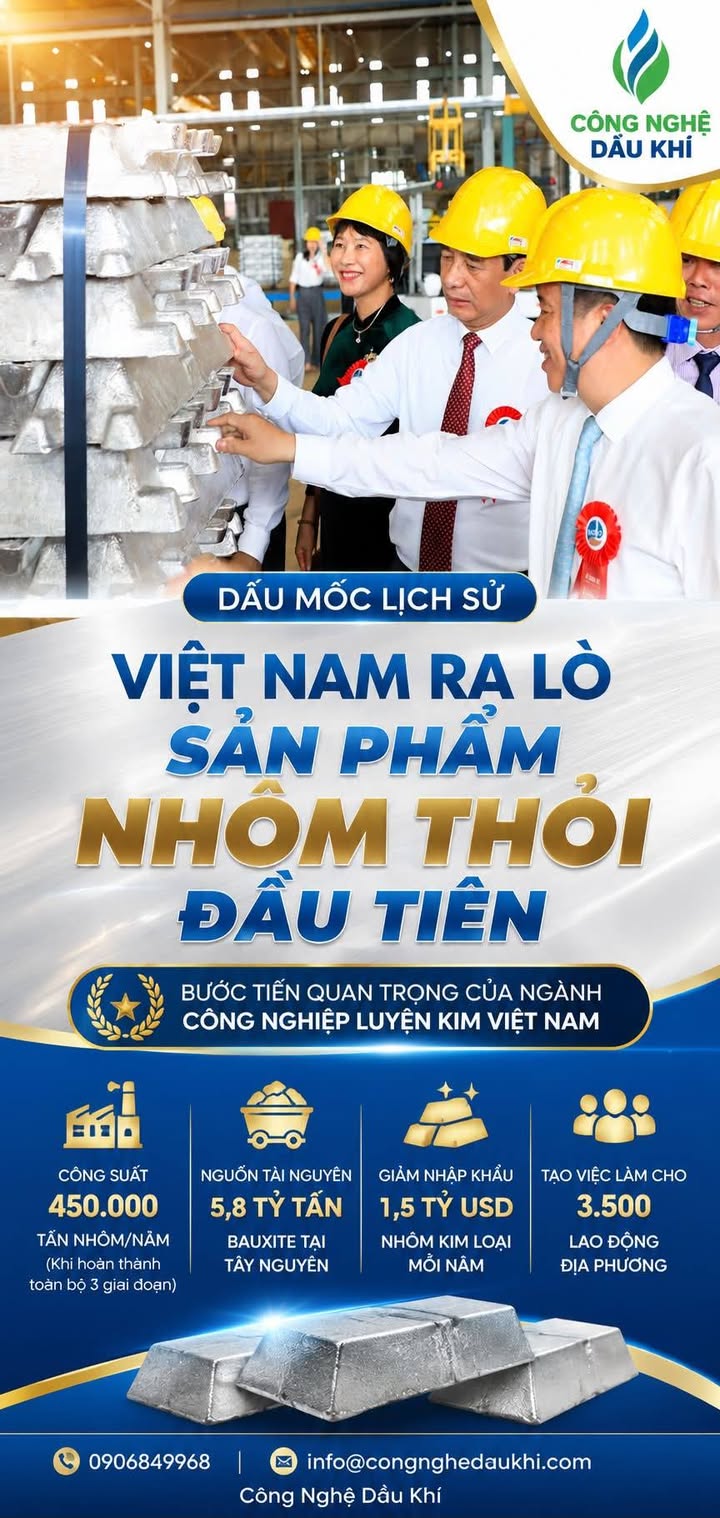
Vietnam Achieves Historic Milestone with First Domestic Aluminum Ingot Production
After eleven years of investment and construction, the Dong Nong Aluminum Electrolysis Plant in Nhan Co Industrial Park has successfully produced Vietnam's first aluminum ingot, marking a significant milestone in the nation's metallurgy industry. This achievement completes the final link in the domestic production chain from bauxite mining and alumina production to aluminum electrolysis, creating high-value-added metal products.
A Strategic Achievement in Vietnam's Industrial Development
The production of Vietnam's first aluminum ingot represents a breakthrough in the country's industrial capabilities. For years, Vietnam has possessed vast bauxite resources but has only exported raw materials or intermediate products. Now, with the successful completion of the electrolysis process, Vietnam can fully leverage its natural resources to create finished products with significantly higher value.
"This is a historic moment for Vietnam's metallurgy industry," stated industry analysts. "The ability to produce aluminum domestically not only increases the value of our bauxite resources but also establishes a foundation for developing various high-tech industries that rely on aluminum as a key material."
Project Overview and Technical Specifications
The aluminum production project is invested by Tran Hong Quan Metallurgy Company, with construction commencing in 2015. The facility spans approximately 129 hectares in Nhan Co Industrial Park and is designed to reach a total production capacity of 450,000 tons of aluminum per year upon completion of all three phases.
| Project Specifications | |
|---|---|
| Commencement Year | 2015 |
| Total Area | 129 hectares |
| Phase 1 Capacity | 150,000 tons per year |
| Phase 2 Capacity | 300,000 tons per year |
| Full Design Capacity | 450,000 tons per year |
| Expected Completion | Q1 2027 |
Bauxite Resources and Strategic Importance
Vietnam currently possesses over 5.8 billion tons of bauxite, primarily concentrated in the Central Highlands region. These resources have long been recognized as strategic for developing the aluminum industry, rather than being exported as raw materials or processed alumina.
The successful production of aluminum ingots demonstrates Vietnam's capability in mastering aluminum electrolysis technology domestically. This technological achievement enables the country to maximize the value of its natural resources while building a foundation for various downstream industries.
Impact on Vietnam's Industrial Landscape
The development of domestic aluminum production is expected to have far-reaching implications for Vietnam's industrial sector:
- Creating a complete production chain from raw materials to finished products
- Enabling the development of industries that rely on aluminum as a key material
- Reducing dependency on aluminum imports
- Enhancing the country's technological capabilities in metallurgy
- Positioning Vietnam as a more competitive player in the global aluminum market
Economic and Regional Benefits
The aluminum production project is anticipated to generate significant economic benefits, particularly for the Central Highlands region where the bauxite resources are located. The facility is expected to create approximately 3,500 jobs, contributing to local economic growth and reducing poverty in the area.
Furthermore, domestic aluminum production could reduce Vietnam's aluminum imports, which currently amount to an estimated $1.5 billion annually. This represents a substantial saving in foreign currency and a strengthening of the country's trade balance.
Comparative Analysis with Global Aluminum Producers
While Vietnam's aluminum production capacity of 450,000 tons per year may seem modest compared to global leaders, it represents a significant first step in the country's industrial development. For comparison:
| Country | Annual Aluminum Production (approx.) | Global Market Share |
|---|---|---|
| China | 36 million tons | 55-57% |
| Russia | 3.7 million tons | 5-6% |
| Australia | 1.6 million tons | 2.5% |
| Vietnam (current capacity) | 450,000 tons | 0.7% |
Despite the relatively small scale compared to global leaders, Vietnam's achievement is strategically significant as it marks the country's first fully integrated production chain from natural resources to finished metal products within its borders.
Future Prospects and Development Plans
If the subsequent phases of the project are completed according to schedule, Vietnam's metallurgy industry will gain a stronger foundation to enhance its competitiveness, expand material supply chains, and attract more supporting industries in the coming years.
The successful production of aluminum ingots opens up opportunities for Vietnam to develop various downstream industries, including:
- Mechanical engineering and manufacturing
- Automotive industry
- Aerospace components
- Electronics and electrical equipment
- Construction materials
- Renewable energy equipment
- High-tech industries requiring aluminum components
Industry experts suggest that this achievement could serve as a catalyst for Vietnam's broader industrial development, potentially encouraging similar initiatives in other strategic sectors where the country possesses natural resources but currently relies on exporting raw materials.
Conclusion
The production of Vietnam's first aluminum ingot represents a historic milestone in the country's industrial development journey. While it may take time for Vietnam to reach the scale of global aluminum producers, this achievement demonstrates the country's commitment to developing a complete domestic value chain for its strategic resources.
As the project continues to develop and expand, Vietnam is expected to increasingly leverage its bauxite resources to create higher-value products, develop supporting industries, and strengthen its position in the global aluminum market. This not only represents economic benefits but also aligns with Vietnam's broader goals of industrialization and technological advancement.
The successful implementation of this aluminum production project could serve as a model for other developing nations seeking to maximize the value of their natural resources through domestic processing and manufacturing capabilities.