## The Geopolitical Shift Reshaping Energy Risk Management
The escalating crisis in the Middle East has inadvertently triggered a significant transformation in the global insurance landscape, prompting major insurance corporations to reconsider their withdrawal from the oil and gas sector. As geopolitical tensions continue to disrupt traditional energy markets, a notable paradigm shift is occurring with offshore oil and gas projects emerging as the new frontier for insurance investment.
After years of stringent Environmental, Social, and Governance (ESG) pressures that constrained international insurance corporations' participation in new oil and gas ventures, the industry is witnessing a remarkable realignment. The prolonged conflict in the Middle East has substantially elevated risks for onshore oil and gas operations, compelling energy enterprises and insurance providers to fundamentally reassess their risk allocation strategies.
## The Middle East: A Region of Contradictions
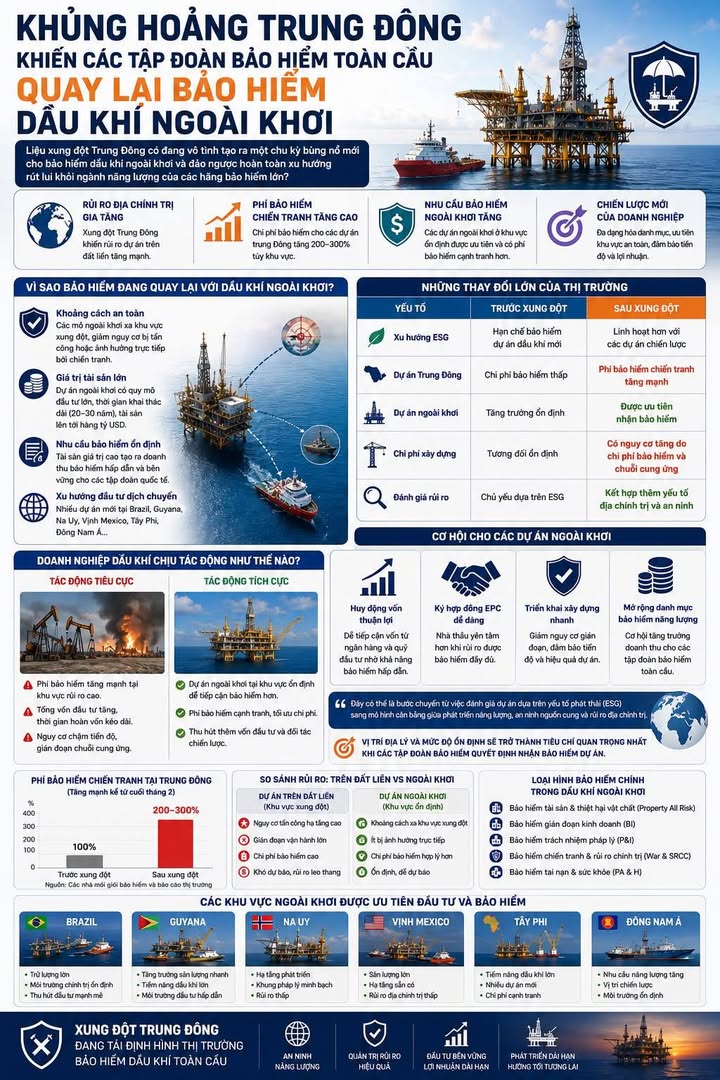
The Middle East has long represented the paradox of energy production – a region boasting the world's lowest oil and gas extraction costs while simultaneously carrying some of the highest geopolitical risks. Since the conflict intensification in late February, numerous exploration, drilling, and infrastructure development projects across the region have experienced exponential increases in insurance costs, soaring war risk premiums, and the looming threat of extended project delays.
This confluence of factors has created a strategic pivot among international insurers, who are now redirecting their focus toward offshore projects located in geopolitically stable regions. This shift represents more than just a temporary adjustment; it signals a fundamental restructuring of risk assessment frameworks within the global energy insurance sector.
## The Offshore Advantage: Beyond Geopolitical Stability
Offshore oil and gas projects present compelling advantages that have become increasingly pronounced in the current geopolitical climate:
- **Strategic Distance**: Offshore facilities typically maintain significant physical separation from land-based conflict zones, substantially reducing vulnerability to direct warfare impacts or attacks on energy infrastructure.
- **Enhanced Security**: The maritime environment offers natural protection that is difficult to replicate onshore, where infrastructure is often more accessible and exposed.
- **Long-Term Value Proposition**: Many offshore fields represent billion-dollar investments with operational lifespans spanning several decades, providing insurers with stable, long-term revenue streams.
- **Technological Complexity**: The advanced technological requirements of offshore development create specialized insurance needs that command premium rates.
As energy companies expand their operations in regions including Brazil, Guyana, Norway, the Gulf of Mexico, West Africa, and Southeast Asia, the offshore insurance market is positioned for substantial growth in the coming years.
## Market Transformation: Before and After the Conflict
The Middle East crisis has precipitated significant changes in the insurance landscape, fundamentally altering how risk is assessed and priced across the energy sector:
| Factor | Pre-Conflict Landscape | Current Market Reality |
|---|---|---|
| ESG Considerations | Limited participation in new oil and gas projects due to sustainability mandates | More flexible approach toward strategic energy projects with geopolitical importance |
| Middle East Projects | Attractive due to low insurance costs and established risk models | War insurance premiums escalated; capacity significantly reduced |
| Offshore Development | Steady growth in established markets with mature regulatory frameworks | Strategic priority with increased capacity and competitive pricing |
| Construction Costs | Relatively stable with predictable insurance components | Rising premiums and supply chain disruptions creating cost volatility |
| Risk Assessment | Primary focus on environmental impact and transition risks | Integration of geopolitical security and supply chain vulnerability analysis |
The shifting insurance landscape has profound implications for oil and gas companies navigating an increasingly complex risk environment:
Energy firms developing onshore resources in high-risk regions must recalibrate their investment models as insurance costs escalate dramatically. This adjustment affects not only total capital requirements but also directly extends project payback periods and return on investment timelines.
Conversely, offshore projects situated in politically stable jurisdictions are experiencing enhanced investment attractiveness due to improved access to insurance coverage and more competitive premium structures. This divergence in insurance accessibility is creating a bifurcated investment landscape within the global energy sector.
## Strategic Opportunities in Offshore Development
If current trends persist, large-scale offshore projects will gain distinct advantages in capital mobilization, engineering, procurement, and construction (EPC) contracting, and overall project implementation. The insurance industry, having previously curtailed energy portfolios due to ESG pressures, now finds itself positioned to expand its insurance offerings in this specialized sector.
For the global oil and gas industry, this transition represents a potential shift from project evaluation methodologies predominantly focused on emission profiles toward more balanced models that simultaneously consider energy development imperatives, supply security requirements, and geopolitical risk factors. In this emerging paradigm, the geographic location of hydrocarbon resources and the stability of their operating environments are becoming decisive criteria when insurance corporations determine coverage parameters for new ventures.
## The Future of Energy Risk Management
The resurgence of interest in offshore oil and gas insurance reflects a broader recalibration of risk priorities within the global financial services sector. As traditional energy markets face unprecedented volatility, insurers are developing more sophisticated risk assessment models that incorporate geopolitical analysis, climate resilience, and energy security considerations.
This evolution in risk management approaches suggests that while the transition to renewable energy sources continues, the immediate and medium-term energy security imperatives are reshaping insurance strategies. The offshore oil and gas sector, with its inherent advantages in terms of security, longevity, and strategic importance, appears well-positioned to benefit from this realignment.
As the energy landscape continues to evolve, the insurance industry's role in facilitating energy development will remain crucial. The current geopolitical crisis has merely accelerated a transformation that was already underway – a redefinition of risk priorities that acknowledges both environmental imperatives and the fundamental requirement for stable, secure energy supplies to power global economic growth.