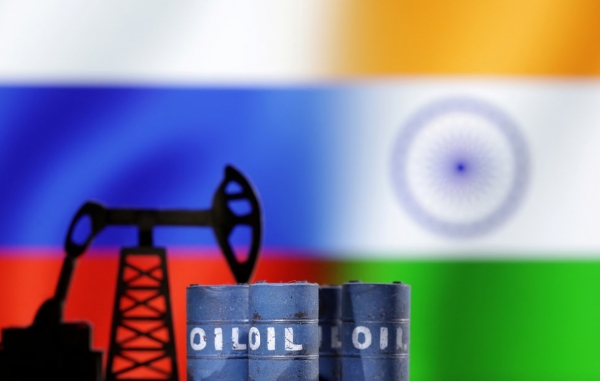
US Proposes 100% Tariff on Russian Oil Importers, India Becomes Focal Point
Washington - A controversial bill has been introduced in the US Senate targeting countries that purchase oil from Russia, with tariffs reaching up to 100%, bringing India into the spotlight of Washington's new sanctions campaign against Moscow. The proposal comes amid escalating geopolitical tensions following Russia's special military operation in Ukraine.
Details of the Controversial Bill
The bill, introduced by Senator Ron Wyden, Chairman of the Senate Finance Committee, along with Democratic and Republican allies, aims to cut Russia's revenue by imposing sanctions on countries purchasing its oil.
The most notable provision is the 100% tariff on all energy products imported from countries that buy Russian oil. This means that if a country purchases Russian oil and subsequently exports refined products from this oil to the US, those products would be subject to double taxation.
Why India Has Become the Center of Attention
India has emerged as one of the largest customers for Russian oil since Western sanctions were imposed. After the US and Europe banned Russian oil imports, New Delhi has capitalized on the opportunity to purchase oil at significant discounts, helping to reduce its trade deficit and control domestic inflation.
According to data from energy analytics firm Kpler, India imported approximately 1 million barrels of Russian oil per day in the first quarter of 2023, accounting for about 40% of the country's total oil imports.
| Month | Russian Oil Imports (million barrels/day) | Percentage of Total Imports (%) |
|---|---|---|
| January 2023 | 0.8 | 35% |
| February 2023 | 0.9 | 38% |
| March 2023 | 1.1 | 42% |
The significant increase in Indian purchases of Russian oil has made the country a primary target in Washington's new sanctions campaign. US officials have expressed concern that India's discounted purchases of Russian oil are helping Moscow maintain crucial revenue to fund its military campaign in Ukraine.
Reactions from Stakeholders
India's Response
The Indian government has reacted strongly to the US proposal. Foreign Minister S. Jaishankar emphasized that New Delhi has the sovereign right to make independent decisions about its energy policy based on national interests.
"India is a sovereign country and we make decisions based on the interests of the Indian people," Jaishankar stated at a press conference. "We do not accept any pressure from any country."
Russia's Response
Moscow has viewed the US proposal as an interference in international trade. Russian Foreign Ministry spokesperson Maria Zakharova commented: "This action demonstrates America's inability to impose its will on other countries. Nations have the right to choose their own trading partners."
US Response
The Biden administration has attempted to mitigate the bill's impact on India. National Security Council spokesperson John Kirby stated: "We understand that countries need to make decisions based on their economic interests. However, purchasing Russian oil is helping to fund the war in Ukraine."
However, analysts suggest that the proposal could strain US-India relations, which have been strengthened in recent years through security and trade agreements.
Impact on Global Energy Markets
The proposed 100% tariff could cause significant fluctuations in the global energy market. If passed, it could:
- Reduce global oil supply, driving prices higher
- Encourage countries to seek alternatives from the Middle East, the US, and Africa
- Strengthen energy cooperation between Russia and Asian nations like China and India
- Create fragmentation in the global energy market
According to economic experts, oil prices could increase by 10-15% if the bill is passed and enforced, putting upward pressure on global inflation and slowing post-pandemic economic recovery.
Future Prospects
The bill is currently under consideration in the US Senate and may face opposition from business interest groups. However, it reflects Washington's increasingly tough stance on imposing sanctions against Russia.
Meanwhile, India may face a difficult choice between maintaining economic ties with the US and ensuring access to affordable energy. Many experts predict that New Delhi will seek to diversify its oil supply sources while maintaining its strategic partnership with Washington.
Conclusion
The proposal for a 100% tariff on countries importing Russian oil has placed India in a central position in the geopolitical tensions between the West and Russia. Regardless of the bill's ultimate outcome, it demonstrates the growing trend of using financial tools as weapons in international relations.
This situation also highlights the challenges faced by emerging economies in balancing economic relationships with political pressures in an increasingly polarized world. The future of US-India relations and the stability of the global energy market will depend significantly on how the parties respond to this controversial proposal.