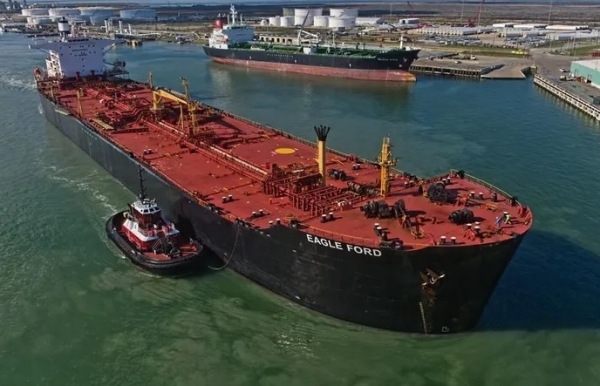
Asian Refiners' Strategy to Reduce Dependence on the Strait of Hormuz
In the context of escalating geopolitical tensions at the Strait of Hormuz, Asian refineries are actively adjusting their crude oil import strategies. Rather than relying heavily on supplies from the Middle East, many enterprises are increasing purchases of American oil to diversify their sources and minimize the risk of transportation disruptions. This trend is creating profound changes in the global oil trade map.
Risks at the Strait of Hormuz: A Threat to Global Oil Supply Chains
The Strait of Hormuz, a narrow waterway connecting the Arabian Sea to the Persian Gulf, represents the world's most important oil transportation artery. Approximately 30% of globally seaborne oil shipments pass through this strait, equivalent to 17-20 million barrels per day. However, this strategic location also makes it a geopolitical hotspot with frequent disruption risks.
Recent tensions between Iran and Western countries, along with attacks on commercial vessels in the region, have raised concerns among Asian oil importers about supply stability. The risk of disruption comes not only from military conflict but also from sanctions, blockades, or even increased shipping insurance premiums.
Challenges for the Asian Refining Industry
Excessive dependence on Middle Eastern crude has created a critical vulnerability in the Asian refining industry's supply chain. Countries like China, India, Japan, and South Korea—some of the world's largest oil importers—currently import the majority of their crude oil from the Middle East.
In this context, any disruption at the Strait of Hormuz could lead to:
- Sudden spikes in oil prices
- Severe supply shortages
- Production disruptions at refineries
- Significant economic losses for oil-dependent economies
Diversification Strategy: Focus on American Oil
To mitigate risks, Asian refiners are actively seeking alternative oil supplies, with American oil emerging as an increasingly attractive option. The shale oil boom in the US over the past decade has transformed the country from a net importer to one of the world's leading oil exporters.
Advantages of American Oil
American oil offers several advantages for Asian importers:
- Higher supply security due to stable geopolitical conditions
- Diversification of supply sources, reducing dependence on a single region
- Oil quality compatible with modern refining technologies
- Competitive pricing, especially with shorter shipping distances
| Characteristic | Middle Eastern Oil | American Oil |
|---|---|---|
| Transportation Cost | High (via Strait of Hormuz) | Low (East to West shipping) |
| Geopolitical Risk | High | Low |
| Oil Quality | Diverse | Suitable for modern refineries |
| Supply Stability | Variable due to tensions | High |
Trend of Increasing US Oil Imports
Recent data shows a significant increase in US oil imports by Asian countries:
- China: 45% increase in 2023 compared to 2022
- India: 60% increase in the same period
- South Korea: 35% increase
- Taiwan: 50% increase
Major refining companies such as Sinopec (China), Reliance (India), SK Innovation (South Korea), and CPC (Taiwan) have signed long-term contracts with US oil exporters, securing stable supplies for many years to come.
Impact on the Global Oil Trade Map
The shift in Asian oil import strategies is creating significant changes in the global oil trade map:
Changes in Oil Flow Patterns
Traditionally, Middle Eastern oil primarily flowed to Asia through the Strait of Hormuz. However, with the trend of reducing dependence on this source:
- Middle Eastern oil is increasingly being redirected to Europe and the Americas
- American oil is gaining a larger market share in Asia
- Oil from Africa and Russia is also being considered as alternative options
Impact on Oil Shipping Routes
The map of oil shipping routes is being reshaped:
- The route from the US to Asia is becoming more important
- Routes from the Middle East to Europe are being strengthened
- Shorter shipping routes (such as from Africa to Asia) are developing
Prospects and Challenges
However, this transition process is not without challenges:
Barriers in the Transition Process
- Investment costs required to adjust refining technologies for different oil types
- Lack of port infrastructure and pipeline transportation facilities
- Complex oil market with volatile price fluctuations
- Pressure from traditional oil suppliers
Future Prospects
Despite these challenges, the diversification trend is expected to continue in the coming years. Experts forecast:
- The proportion of American oil in Asia's total oil imports could reach 30-35% by 2026
- Investment in port infrastructure and pipelines will increase
- More flexible refining technologies will be developed to adapt to various crude types
- Regional cooperation on maritime security will be enhanced
Conclusion
The Asian refining industry's strategy to reduce dependence on the Strait of Hormuz is not merely a reaction to short-term geopolitical risks but a long-term strategic move toward building a sustainable oil supply chain. The shift from Middle Eastern to American oil is creating profound changes in the global oil trade map.
In an increasingly unstable world, diversifying crude oil supplies is not just an economic choice but an energy security imperative. Asian countries, as the world's largest oil importers, are demonstrating strategic vision in minimizing risks and ensuring long-term energy security.
This transformation will undoubtedly continue and reshape the global oil industry in the coming decades, with far-reaching implications for the economy, politics, and regional security.
#OilTrade #EnergySecurity #SupplyDiversification #StraitOfHormuz #USOil