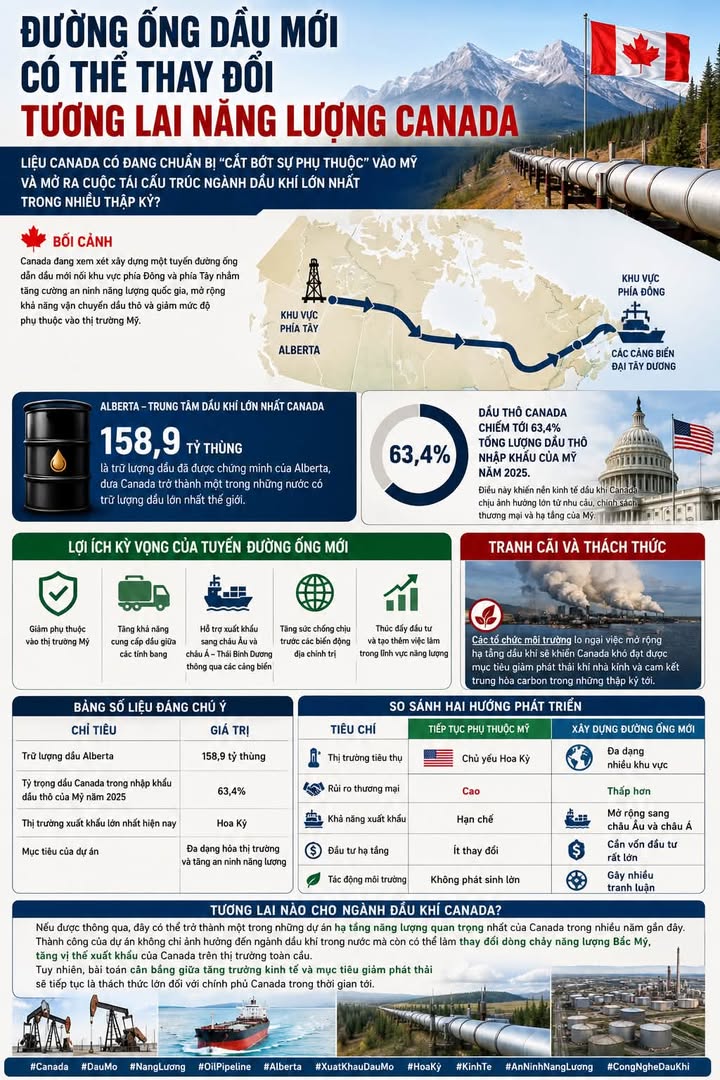
Canada's Proposed New Oil Pipeline: Reshaping North American Energy Landscape
In a move that could fundamentally reshape the continent's energy dynamics, Canada is considering the construction of a cross-country oil pipeline designed to reduce dependence on the United States market and enhance national energy security. The proposal comes amid growing concerns over trade relations, geopolitical tensions, and energy security, positioning Canada at the forefront of potential restructuring in the global energy sector.
The Current State of Canada's Oil Industry
Alberta stands as the heart of Canada's vast oil and gas sector, boasting approximately 158.9 billion barrels of proven oil reserves. This substantial resource base places Canada among the world's largest oil-holding nations. However, the current infrastructure heavily relies on exporting crude oil to the United States, creating significant economic vulnerability to changes in American policy, demand fluctuations, and pipeline capacity constraints.
According to 2025 data, Canadian crude oil constitutes 63.4% of total crude oil imports to the United States. This heavy dependence means that Canada's oil economy is substantially influenced by American demand, trade policies, and infrastructure limitations. The proposed cross-country pipeline represents a strategic response to this structural vulnerability.
The Proposed Cross-Canada Pipeline Project
The envisioned pipeline would connect eastern and western Canadian provinces, creating a comprehensive national energy transportation network. This infrastructure would enable Canadian oil producers to access multiple markets rather than being confined to the US market through existing pipelines. The project would facilitate the movement of crude oil from Alberta's oil sands to eastern ports for potential export to European markets, as well as to western ports for access to Asia-Pacific markets.
Key Benefits of the Proposed Pipeline
- Market Diversification: Reducing reliance on the US market by accessing European and Asia-Pacific markets
- Enhanced Energy Security: Creating a more resilient domestic energy distribution system
- Economic Growth: Stimulating investment in Canada's energy sector and creating employment opportunities
- Geopolitical Resilience: Reducing vulnerability to trade disputes and policy changes with the US
- Infrastructure Modernization: Upgrading Canada's energy transportation capabilities for the 21st century
Challenges and Controversies
Despite its potential economic benefits, the pipeline proposal has faced significant opposition, particularly from environmental organizations. Critics argue that expanding oil infrastructure would complicate Canada's efforts to reduce greenhouse gas emissions and achieve carbon neutrality commitments. The tension between economic development and environmental responsibility remains a central challenge for policymakers.
The project also faces economic hurdles, with substantial capital requirements and potential delays due to regulatory processes and public opposition. The timeline for implementation would depend on multiple factors, including regulatory approvals, funding arrangements, and market conditions.
Comparative Analysis: Current vs. Proposed Energy Infrastructure
The following table presents a comparative analysis of Canada's current energy export strategy versus the proposed pipeline approach:
| Criteria | Current US-Dependent Model | Proposed Cross-Canada Pipeline |
|---|---|---|
| Primary Market | United States (dominant) | Multiple markets (US, Europe, Asia-Pacific) |
| Trade Risk | High (concentrated market) | Moderate (diversified markets) |
| Export Capacity | Limited by existing pipeline infrastructure | Significantly expanded with additional routes |
| Infrastructure Investment | Maintenance-focused, minimal expansion | Substantial capital investment required |
| Environmental Impact | Established, incremental changes |