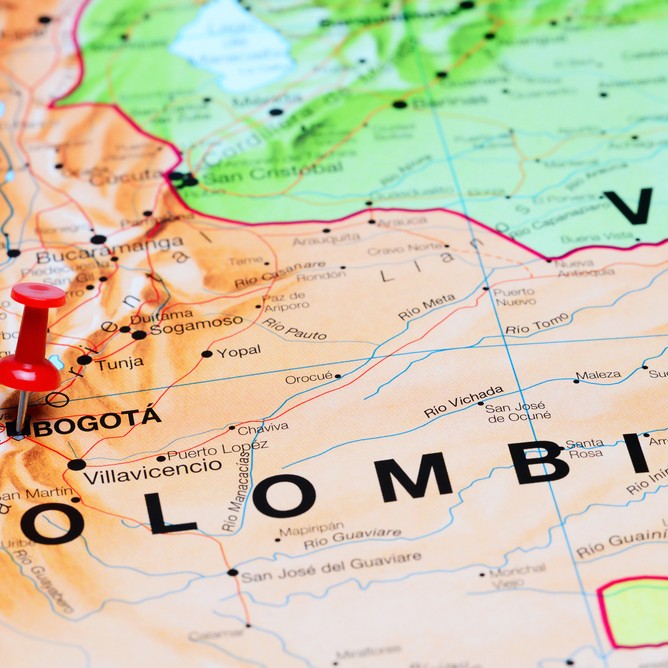
Colombia's Political Shift: New President Abelardo de la Espriella Wins Election
On June 21st, presidential candidate Abelardo de la Espriella, endorsed by former U.S. President Donald Trump, narrowly won Colombia's election with just a 1% margin over rival Iván Cepeda. He will officially take office on August 7th, marking a new chapter with comprehensive changes across all sectors of this South American nation.
Political Transformation: From Left to Right
Colombia stands at a major political crossroads as President Gustavo Petro, the country's first left-wing leader, prepares to transfer power to Abelardo de la Espriella, known as "The Tiger." The election concluded with an extremely narrow margin, reflecting deep societal divisions in Colombia.
Petro, who had steered Colombia in a leftward direction throughout his presidency, implemented significant reforms to the country's tax and healthcare systems. He was also a strong advocate for the green energy transition and actively pursued peace negotiations with organized crime groups, although these efforts largely failed to produce expected results.
Security Policy: The El Salvador Model
Abelardo de la Espriella built his campaign on a strong commitment to reducing crime and violence. He pledged to adopt a hardline approach, including the construction of 10 "mega-prisons," inspired by the policies of El Salvadoran President Nayib Bukele.
While Bukele's policies have succeeded in reducing homicide rates in El Salvador, many human rights organizations have criticized the leader for human rights violations. Similarly, de la Espriella's strategy is expected to focus heavily on crime suppression, potentially raising concerns about human rights and civil liberties.
Energy Transition: Achievements Under Petro
One of President Petro's most significant legacies was his strong commitment to clean energy and climate change mitigation. Under his leadership, Colombia established a solid foundation for the energy transition, with remarkable achievements:
- Colombia gradually reduced its dependence on fossil fuels, focusing on economic diversification and renewable energy
- By 2025, non-energy, non-mining exports accounted for 52.6% of total exports, for the first time exceeding mining and energy exports in at least a decade
- From 2022 to 2026, Colombia's renewable energy capacity increased from 200 MW to 3,600 MW
- Colombia hosted the first-ever Life Beyond Fossil Fuels Transition Conference in May, alongside the Netherlands in the city of Santa Marta
Energy Policy Comparison
| Policy Area | Under President Petro (Left) | Expected under de la Espriella (Right) |
|---|---|---|
| Energy Transition | Prioritizing renewable energy, reducing fossil fuel dependence | Focusing on fossil fuel extraction |
| Climate Goals | Strong commitment to global climate change efforts | Reduced commitments, prioritizing economy over environment |
| Ecopetrol (Oil Company) | Orienting toward diversification into clean energy | Shifting back to hydrocarbons |
| Permitting Process | Stricter process, balancing economic and environmental factors | Accelerating permits, relaxing environmental regulations |
Economic Challenges and Oil Resources
De la Espriella's policies are expected to reverse many of Petro's climate gains as Colombia returns to fossil fuel dependence just four years after committing to a green transition. Many expect him to redirect Ecopetrol, Colombia's largest oil company, toward hydrocarbons and support faster permitting for energy projects.
During his campaign, de la Espriella promised to maximize fossil fuel extraction. Recent economic concerns have led many to support oil drilling to generate essential revenue, as the country's deficit reached 6.4% in 2025 - the highest since the pandemic. Oil, natural gas, and coal still contribute approximately 5% of Colombia's GDP.
However, Colombia is not considered a major oil power, with only 0.1% of the world's proven oil reserves. This means that if de la Espriella pursues an extraction program, he must consider the inevitable decline of domestic oil reserves.
Colombia Economic Data
| Indicator | Value | Time Period |
|---|---|---|
| Budget deficit rate | 6.4% | 2025 |
| Fossil fuel contribution to GDP | 5% | Current |
| Colombia's global oil reserves | 0.1% | Current |
| Renewable energy capacity growth | 1,800% | 2022-2026 |
Responses from Oil-Producing Regions
While some view oil production as key to economic growth, not everyone agrees. In major oil-producing regions like Barrancabermeja and Puerto Wilches, residents strongly supported left-wing candidate Iván Cepeda, who secured 60% of the vote. After years of extraction, people in these areas have witnessed the significant environmental impact of oil production, with ongoing concerns about water pollution.
Impact of Trump Policies
Similar to U.S. President Donald Trump, de la Espriella has pledged to quickly issue a series of executive orders to reverse Petro's government policies. Former Environment Minister Susana Muhamad believes: "The new government could repeat the model established by former presidents Álvaro Uribe (2002-2010) and Juan Manuel Santos (2010-2018), who supported what was called the 'mining locomotive' as one of the main drivers of the economy."
Muhamad explained: "They will grant permits for extraction activities and relax environmental regulations. During the campaign, they even talked about abolishing the National Environmental Licensing Authority ANLA, the agency that oversees the country's highest-impact projects." She expects Trump's influence to play a role in the new government's energy and environmental agenda.
Political Challenges in Congress
Although de la Espriella may attempt to follow Trump's footsteps by reversing previous government policies - those aimed at achieving a green transition and reducing fossil fuel dependence - passing new policies in Congress, where the left still holds 68 seats, could be complicated. Some areas like fracking and environmental permitting cannot be abolished through executive action but must go through Congress.
Nevertheless, de la Espriella is expected to strongly support fossil fuel production, which could harm Colombia's recent climate progress. The leadership change occurs as Colombia faces significant economic challenges, including a high budget deficit and an urgent need for economic growth.
Conclusion
Colombia stands at a critical juncture with the upcoming leadership change. While de la Espriella promises a tougher approach to crime and a return to fossil fuels, economic, political, and environmental challenges remain. Balancing economic development with environmental protection, and crime suppression with human rights protection, will be central issues during his presidency.
The world is watching Colombia closely - a resource-rich country facing numerous challenges - to see whether de la Espriella can deliver on his campaign promises and which direction the country will take under his leadership.
#Colombia #ColombianElection #DeLaEspriella #Petro #EnergyTransition #ClimateChange