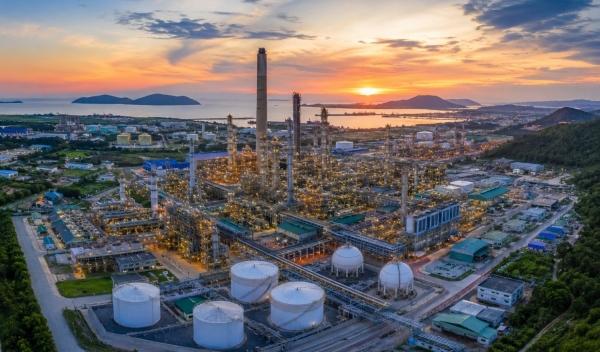
From Oil Refinery to a Symbol of Cooperation and Modern Industrial Development of Vietnam
When the Nghi Son Refinery and Petrochemical Complex officially commenced commercial operations at the end of 2018, this facility was recognized as a significant milestone for Vietnam's oil and gas industry. After several years of operation, the value of Nghi Son is measured not only by its processing capacity of millions of tons of crude oil annually or its ability to meet approximately 40% of the domestic demand for petroleum products, but also by its role as a symbol of international cooperation, modern petrochemical industry, and a new growth pole for the region.
Background Formation and Strategic Vision
Vietnam was once one of the world's largest importers of petroleum products with steadily growing consumption each year. In light of this situation, constructing a modern refinery became an urgent requirement to ensure national energy security and sustainable development.
The Nghi Son project was initiated with the vision of becoming one of the most advanced refineries in Southeast Asia, applying modern technology from Japan and other developed countries.
Technical Specifications and Impressive Scale
The Nghi Son Refinery and Petrochemical Complex was built in the Nghi Son Economic Zone, Thanh Hoa Province, with total investment reaching $9 billion, of which the Vietnam Oil and Gas Group (PetroVietnam) holds a 25.1% stake.
| Technical Specifications of the Nghi Son Refinery and Petrochemical Complex | |
|---|---|
| Design Capacity | 200,000 barrels/day (equivalent to 10 million tons/year) |
| Site Area | 520 hectares |
| Main Technology | Technology from JX Nippon Oil & Energy (Japan) |
| Construction Period | 8 years (2010-2018) |
The refinery was designed to process various types of crude oil, particularly heavy crude oil from the Southeast Asian region, producing high-quality products that meet Euro 5 standards and future Euro 6 standards.
Outstanding Socio-Economic Impact
The emergence of Nghi Son has marked a significant turning point in Vietnam's oil refining industry. With its design capacity, the refinery can meet about 40% of the domestic demand for petroleum products, significantly reducing dependence on imports and saving foreign currency for the nation.
Additionally, the project has created thousands of direct and indirect jobs, promoting infrastructure development and supporting industries in the local and regional areas.
| Economic Impact of the Nghi Son Refinery and Petrochemical Complex | |
|---|---|
| Domestic Petroleum Product Demand Satisfaction | ~40% |
| Investment Capital | $9 billion |
| Jobs Created | > 3,000 direct jobs and thousands of indirect jobs|
| Annual Taxes and Fees | > $1 billion|
Contribution to National Energy Security
Before Nghi Son's operation, Vietnam relied completely on the petroleum supply from the Dung Quat refinery and imported sources. The emergence of Nghi Son has diversified the supply sources, enhanced national energy security, and minimized risks from global price fluctuations.
Significant Revenue Source for the Budget
The Nghi Son refinery has become one of the largest taxpayers in the country, contributing billions of dollars to the state budget annually. This not only supports economic and social development programs but also enables reinvestment in the energy sector and other fields.
A Symbol of Successful International Cooperation
The Nghi Son project is a testament to the successful cooperation between Vietnam and international partners, particularly Japan. With the participation of leading global corporations such as Mitsui & Co., Idemitsu Kosan, and JX Nippon Oil & Energy, the project has brought advanced technology, management experience, and substantial capital.
The public-private partnership (PPP) model in the Nghi Son project is considered a successful model for large-scale projects in Vietnam, combining the strengths of domestic state-owned and private enterprises with international strategic partners.
Technology Transfer and Workforce Training
Besides building the refinery, Japanese partners have implemented technology transfer programs and trained high-quality human resources for Vietnam. This not only serves the operation of the Nghi Son refinery but also creates a foundation for the future development of the country's petrochemical industry.
Strengthening Foreign Relations
The Nghi Son project has contributed to enhancing diplomatic and economic relations between Vietnam and Japan and other international partners. The project's success has affirmed the cooperation capabilities of all parties and opened up opportunities for other strategic cooperation projects in the future.
Future Vision and Sustainable Development
To meet growing demand and global energy transition trends, Nghi Son is researching sustainable development solutions, including carbon emission reduction, increased use of renewable energy, and development of higher-value petrochemical products.
The refinery is also considering capacity expansion and product diversification to enhance its competitive position in the regional and international markets.
Green Transition and Sustainable Development
In line with its sustainable development strategy, Nghi Son is aiming to reduce carbon emissions, improve energy efficiency, and minimize environmental impact. Solutions being studied include carbon recycling technology, solar energy development, and green hydrogen.
Expansion and Product Diversification
To meet market demands and increase value-added, Nghi Son is considering plans to expand production of high-value petrochemical products such as polymers, special products, and industrial chemicals. This will not only optimize the value from crude oil but also create higher-value-added products.
Conclusion
From a strategic project, the Nghi Son Refinery and Petrochemical Complex has become a symbol of modern industrial development and successful international cooperation in Vietnam. With its large capacity, advanced technology, and strategic position, Nghi Son not only contributes significantly to energy security and economic development but also opens up sustainable development prospects for Vietnam's petrochemical industry in the future.
The success of the Nghi Son project is a clear testament to the strategic vision of national leadership and the cooperation capabilities of Vietnamese enterprises with international partners, contributing to making Vietnam a bright spot in regional industrial development.