Somalia: Red Sea Waters Poised to Become World's Next Oil Exploration Hotspot
In an era of increasing risks in the traditional energy heartland of the Gulf region, the global oil industry is actively seeking new hydrocarbon frontiers. While significant exploration activities are concentrated in Latin America and West Africa, far from the Asia-Pacific region—the primary center of oil demand growth—Somalia presents a distinctive proposition: one of the industry's hottest frontier wells is currently being drilled in the Arabian Sea, and if successful, could produce barrels that bypass the Strait of Hormuz entirely.
The Curad-1 Well: A Major Technical Challenge
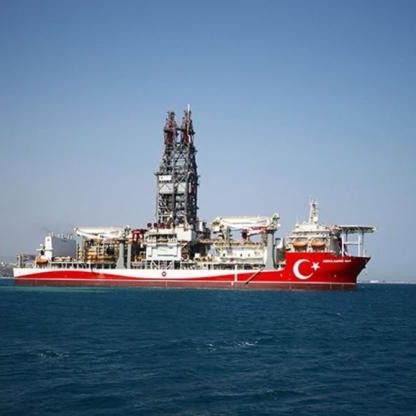
The Curad-1 exploration well was evaluated after TPAO's Oruc Reis vessel collected 4,464 km² of 3D seismic data offshore blocks 142, 152, and 153 from October 2024 to June 2025. Initial results from blocks 152 and 153 were encouraging, indicating substantial oil reserves, prompting TPAO to commence drilling in block 153 in April 2026 using the company's own drilling vessel.
Located approximately 372 kilometers northeast of the capital Mogadishu in water depths of about 3,500 meters, Curad-1 is expected to reach a total depth of approximately 7,500 meters. The drilling operation could take up to 288 days, making it one of the deepest offshore exploration wells ever undertaken.
| Technical Information about Curad-1 Well | Details |
|---|---|
| Location | 372 km northeast of Mogadishu |
| Water depth | Approximately 3,500 meters |
| Expected total depth | Approximately 7,500 meters |
| Drilling duration | Up to 288 days |
History of Oil Exploration in Somalia
Somalia's offshore market remains largely underexplored—only eight wells have been drilled in the country's history, including just two in the Somali Basin, with no commercial discoveries to date. Consequently, the risk is reflected in the country's newly restructured financial terms.
Under Somalia's 2020 Production Sharing Agreement (PSA) model, companies can recover up to 70% of oil production and 80% of gas production as petroleum costs, while the government's profit share increases as project returns improve. Somalia's revised 2023 PSA replaced a broad sliding-scale tax system with a fixed 5% rate for both oil and gas.
Financial Terms Comparison
| Country/Region | Tax Rate (%) | Characteristics |
|---|---|---|
| Somalia (2023) | 5% | Fixed tax rate |
| Guyana (initial) | 2% | Low tax to attract investment |
| Guyana (new) | 10% | Higher tax after geological risk reduction |
| West Africa (smaller nations) | ~5% | Similar tax for deep offshore |
Internationally, the 5% tax rate remains relatively generous to investors but is no longer exceptional for frontier offshore areas. It is comparable to deep offshore contracts in some West African countries and significantly higher than the 2% rate granted under Guyana's initial Stabroek deal. However, it is only half of the 10% tax rate that Guyana has applied to new licenses after its basin was de-risked by a series of major discoveries.
Complex History of Oil Licenses
Somalia attracted exploration companies as early as the 1950s, and by the late 1980s, companies including Conoco, Chevron, Eni, Shell, and ExxonMobil held exploration rights covering nearly half of the country. Exploration activities ceased when the state collapsed in 1991 due to civil war, but many companies declared force majeure rather than formally relinquishing their rights, leaving dormant legal legacies for decades.
Shell and ExxonMobil subsequently reached settlement agreements with the federal government regarding their offshore legacy interests, while new licenses were awarded to companies such as Coastline Exploration and operators working through authorities in the semi-autonomous Puntland and Somaliland regions. This created overlapping claims and disputes, as Mogadishu rejected some licenses independently granted by regional authorities, including those claimed by Genel Energy in Somaliland.
Turkey-Somalia Agreement
The Curad-1 operation operates under the Turkey-Somalia agreement, under which TPAO can recover up to 90% of production after deducting taxes, which are capped at 5%, while numerous bonuses and administrative fees are waived. Somalia thus accepts lower early revenue to reduce TPAO's exploration risk and improve eventual development prospects—a clear government strategy to mitigate risk and make the country attractive to international companies.
TPAO's Role
For Turkey's state-owned oil company TPAO, Curad-1 marks a significant shift. Internationally, the company typically participates as a minority partner in established projects, including Shah Deniz and Azeri-Chirag-Gunashli in Azerbaijan. Somalia is different—TPAO is combining operatorship, exclusive seismic acquisition, the company's ultra-deep drilling vessel, and broader Turkish involvement in Somalia's infrastructure and security.
The company's biggest technical success to date has been in the Black Sea, where the Tuna-1 well led to the giant Sakarya gas discovery a few years ago. Curad-1 represents TPAO's first serious effort to export that model.
Commercial Potential
A commercial oil discovery would be relatively straightforward to develop. A large enough discovery would be developed via a Floating Production, Storage, and Offloading (FPSO) unit, allowing crude oil to be processed and loaded directly offshore. Similar ultra-deep projects in Angola and Brazil might achieve break-even prices around $40-45 per barrel, but typically only when recoverable resources exceed 300 million barrels and the reservoir is manageable. A smaller or more complex discovery could struggle even under such favorable financial terms.
Gas would be more challenging. Somalia lacks significant domestic gas markets, has no offshore pipeline network, and limited industrial demand large enough to anchor a major development project. Commercialization would likely require floating LNG and much larger resource bases. Curad could target both oil and gas, but the economics strongly favor oil.
Geopolitical and Commercial Impacts
For Asian refiners, geography is the real prize. Somali oil could move across the Arabian Sea without entering Hormuz, giving buyers a diversified barrel option near the region. India would be the natural first market—it lies directly opposite Somalia, has refineries capable of processing various grades, and currently depends on Russia for nearly 60% of its crude oil imports.
A 200,000-300,000 barrel-per-day production project would also reshape East African oil commerce. At that scale, Somalia would compete with Uganda's Lake Albert project, designed to peak at around 230,000 barrels per day. Ugandan crude must travel through the 1,443-km East African Crude Oil Pipeline to Tanzania's Tanga port, while Somalia's FPSO could export directly offshore—giving the Somali project simpler logistics despite higher deep-water costs.
Moreover, Kenya's proposed 700,000 barrel-per-day Dangote refinery in Lamu could be a potential export point. Both projects are unlikely to operate for seven to ten years, leaving time for their timelines to converge. Somalia could ultimately supply a large East African refinery rather than exporting every barrel to Asia. However, even then, this discovery cannot end the region's dependence on imported fuel—crude oil production and refining capacity are separate constraints.
Turkey could receive some of the oil, especially if it resembles the grades already processed by Turkish refineries from Russia, Iraq, or Kazakhstan. However, shipments to Turkey would still pass through Bab el-Mandeb and the Suez Canal, while India is much closer. Somali oil would thus be a strong Hormuz-diversified barrel for Asia, but not a friction-free barrel for Turkey or Europe.
Conclusion
The Curad-1 exploration well will certainly keep the market buzzing, and this is because it sits at the intersection of geology, geopolitics, and commerce. If Somalia's exploration story becomes a success, a major new oil narrative could emerge in a country long divided by internal conflict, with large parts of its territory still beyond the effective control of the federal government. The result could be another major territorial and revenue struggle—or, alternatively, a significant financial foundation that finally allows the central government to strengthen the state and regain control of the nation.
Whether oil becomes a blessing or a curse for Somalia, only the future can tell.
#Somalia #OilExploration #RedSea #Curad1 #TPAO #SomalianOil #OilIndustry #EnergySecurity