China Unveils World's Largest Floating Offshore Wind Turbine for Oil and Gas Operations
In a groundbreaking development rarely seen at the intersection of wind energy and fossil fuels, China has introduced a revolutionary floating offshore wind turbine designed to power oil and gas extraction operations at offshore platforms. This technological breakthrough represents a significant step toward decarbonizing traditional energy sectors while maintaining production capabilities.
Breakthrough Technology from CNOOC
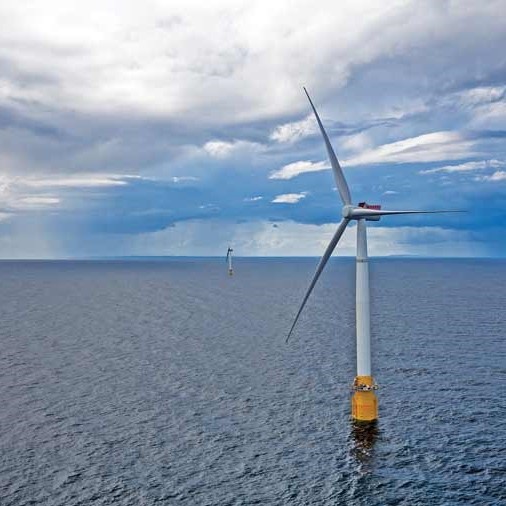
Developed by the China National Offshore Oil Corporation (CNOOC), the world's first 16-megawatt (MW) floating offshore wind turbine, utilizing a tension-leg platform (TLP) design, departed from Zhuhai city in Guangdong province, southern China, in late June. The turbine is scheduled for deployment at the Lufeng oil fields in the South China Sea.
This innovative structure is anchored in place by tensioned mooring cables, distinguishing it from most existing offshore wind platforms, which are fixed-bottom designs directly anchored to the seabed—typically using monopiles or jacket frames.
The Significance of Floating Platform Technology
According to the U.S. Department of Energy, approximately two-thirds of America's offshore wind potential exists in waters too deep for fixed-bottom wind turbines, requiring floating platforms instead. China's technology directly addresses this challenge.
The massive structure stands approximately 307 meters tall and weighs 8,000 tons. According to Intelligent Engineering, this represents the largest floating platform of its type ever constructed in terms of single turbine capacity.
| Technical Specifications | Details |
|---|---|
| Power Capacity | 16 MW |
| Height | 307 meters |
| Weight | 8,000 tons |
| Platform Type | Tension-leg platform (TLP) |
| Deployment Location | Lufeng oil fields, South China Sea |
Environmental and Economic Benefits
The turbine is projected to generate an average of 54 million kilowatt-hours of electricity annually. This output will reduce carbon dioxide emissions by approximately 35,000 tons each year. Furthermore, this clean energy source will save about 15,000 cubic meters of fuel oil that would otherwise be burned to maintain pumping operations at Lufeng.
By transmitting clean electricity directly from the platform to the Lufeng oil cluster via underwater cables, the project will establish a direct, low-carbon power supply for offshore oil and gas production.
Other Advanced Projects
This engineering achievement follows China's installation of the world's largest offshore converter station, which collects alternating current electricity from individual wind turbines, increases the voltage, and converts it to high-voltage direct current before transmitting the electricity to the onshore grid via submarine cables.
Named "Heart of the Sea Wind," the converter station completed its offshore installation in Guangdong province in early June, according to state-run media Global Times.
China's Leading Position in Offshore Wind Energy
China is a global leader in offshore wind power capacity. Data from the National Energy Administration shows that by the end of May, the country's installed wind power capacity increased by 17% to 660 million kilowatts, and total installed power generation capacity rose by 11% year-on-year to 4.01 billion kilowatts.
A separate industry report indicates that China accounted for 78% of newly grid-connected offshore wind capacity worldwide in 2025.
| Global Wind Energy Statistics | Data |
|---|---|
| Global operational wind capacity | Over 1.1 terawatts (TW) |
| Capacity in pipeline | 2.7 TW |
| China - operational offshore capacity | 50% of global total |
| Brazil - leader in planned offshore projects | 90% of future energy growth |
U.S. Wind Energy Landscape
Regarding wind energy in the United States, Oilprice recently reported significant debate about offshore wind. As part of ambitious green transition plans, the previous Biden administration strongly supported offshore wind both in policy and federal funding.
However, the Trump administration reversed U.S. wind energy goals, with President Trump publicly opposing offshore wind. Despite this, greater political opposition from Congress and federal judges appears to be preventing progress in the wind energy sector from being completely halted.
- The Trump administration paid nearly $1 billion to TotalEnergies and $129 million to Duke Energy to abandon offshore wind projects, redirecting savings to oil and gas.
- The Pentagon's delays in assessing wind farms have slowed 106 projects worth approximately $47 billion across 21 states, leading to a lawsuit from renewable energy groups.
- Federal judges have repeatedly ruled against the administration, including restoring tax credit rules for wind and solar projects in June.
The Future of Offshore Wind Energy
China's project represents a significant technological advancement in integrating renewable energy with traditional industries. Using offshore wind to power oil and gas operations not only reduces carbon emissions but could also create a more sustainable economic model for the oil and gas industry in the future.
Meanwhile, in the United States, the political debate surrounding offshore wind continues, with significant policy changes between administrations. However, the overall trend toward renewable energy appears irreversible, with court decisions and congressional opposition continuing to drive the industry forward.
The development of technologies like China's tension-leg platform could open new opportunities for wind energy harvesting in previously inaccessible deep waters, significantly expanding global renewable energy potential.
#WindTechnology #RenewableEnergy #China #OilAndGas #GreenEnergy