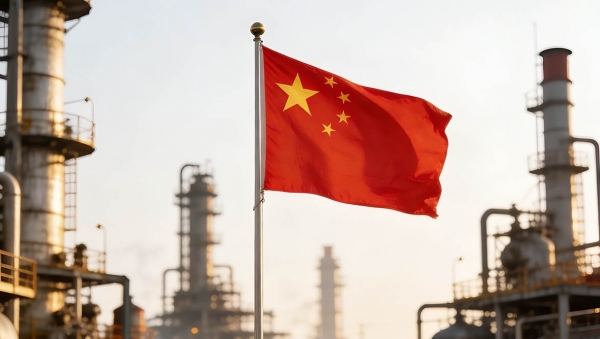
China: The Enigma Shaping Global Oil Markets
For decades, the Organization of the Petroleum Exporting Countries (OPEC) has held supreme power in global oil pricing through its control over production volumes. However, the global energy landscape is undergoing profound changes, with the rise of China—now the world's largest oil importer—exerting increasingly significant influence over oil prices.
The Shifting Power Dynamics in Global Oil Markets
China has surpassed the United States to become the world's largest oil importer, with daily consumption exceeding 14 million barrels. This massive scale has transformed China into an "enigma" that oil producers and investors cannot afford to ignore when making decisions about production and pricing.
China's growing dependence on oil imports—currently accounting for about 70% of domestic consumption—has created a new dynamic in the global oil market. Every decision regarding imports, strategic reserves, or transition to clean energy from China has the potential to create ripples across the global oil market.
China: The Elephant in the Oil Market
China is not only the world's largest oil consumer but also one of the biggest investors in oil and gas projects globally. China's involvement in oil and gas projects across Africa, the Middle East, and Latin America has created a wide-reaching network of influence, allowing the country to indirectly affect global oil supplies.
Additionally, China is actively developing its own refining industry, with total refining capacity exceeding 20 million barrels per day. This not only allows China to capture most of the value-added from crude oil but also enables the country to adjust production activities based on oil price fluctuations, thereby influencing the market in return.
Comparing the Influence of OPEC and China
The following table compares OPEC and China across various factors affecting the oil market:
| Factor | OPEC | China |
|---|---|---|
| Market Share | Approximately 40% of global production | Largest in the world by import volume |
| Channel of Influence | Through controlling production volumes | Through consumption demand and investment |
| Transparency | Relatively transparent through official decisions | Less transparent, difficult to predict accurately |
| Price Impact | Short-term and direct | Long-term and indirect but increasingly significant |
China's Strategic Petroleum Reserves
One of China's lesser-known but extremely effective tools in influencing the oil market is its strategic petroleum reserve policy. China maintains one of the world's largest strategic oil reserves, with a goal of reaching 90 days of imports by 2020 and continuing to expand.
Increasing or decreasing the rate of filling these reserves can create significant market fluctuations. When China increases oil purchases to fill its reserves, oil prices tend to rise; conversely, when China sells oil from its reserves, prices tend to decrease. This creates an indirect but powerful tool for China to influence global oil prices.
Energy Transition and Impact on Oil Markets
China is vigorously pursuing an energy transition strategy, aiming to reach carbon emission peak by 2030 and achieve carbon neutrality by 2060. This strategy could reduce China's oil demand in the long term, creating significant challenges for the global oil market.
However, China's energy transition is gradual and complex. In the short to medium term, China's oil demand continues to grow, particularly in the transportation and industrial manufacturing sectors. The uncertainty surrounding the pace of China's energy transition creates a difficult-to-predict factor in the oil market.
Investment in Global Oil and Gas Projects
China is actively investing in global oil and gas projects through state-owned enterprises such as CNPC, Sinopec, and CNOOC. These investments not only help ensure stable oil supply for China but also create broad political and economic influence.
By investing in oil and gas projects in geopolitically complex regions like the Middle East and Africa, China is gradually building a network of influence that can affect global oil flows. China's involvement in oil and gas projects also creates new competitors for Western companies, changing the power structure of the global oil and gas industry.
Impact on OPEC's Strategy
China's emergence as a significant factor in the oil market has forced OPEC to adjust its strategy. Previously, OPEC could easily control oil prices by adjusting production volumes. However, with China's appearance as an unpredictable "enigma," OPEC has increasingly faced difficulties in forecasting and adjusting the market.
Especially since the United States became the world's second-largest oil exporter after Saudi Arabia, OPEC+ (including Russia and OPEC members) has had to face a much more complex landscape. In this context, forecasting demand from China has become a key factor in OPEC+'s production decisions.
Future Trends in the Oil Market
Future trends in the oil market will depend on many factors, with China's economic growth pace and energy transition progress being prominent. The following are possible scenarios:
- Scenario 1: China maintains high economic growth and energy transition proceeds slowly - global oil demand continues to increase strongly, with prices trending upward in the long term.
- Scenario 2: China achieves moderate economic growth and energy transition accelerates beyond expectations - global oil demand peaks earlier, with prices trending downward in the long term.
- Scenario 3: China experiences low economic growth due to geopolitical factors - global oil demand decreases significantly, with prices experiencing strong fluctuations in the short term.
Conclusion
China has emerged as a major "enigma" in the oil market with growing influence. From being merely a consumer market, China has developed into a significant factor capable of shaping the global oil market. China's rise has altered the power dynamics in the oil and gas industry, forcing traditional organizations like OPEC to adjust their strategies.
In the future, China's development—both economic and energy-related—will continue to be a crucial determinant of oil market trends. Producers, investors, and policymakers need to closely monitor China's actions to make appropriate adjustments to their strategies.
The complexity and uncertainty in predicting China's actions will continue to pose significant challenges to the global oil market. However, this complexity also creates opportunities for those capable of understanding and accurately predicting the moves of this "major enigma."