Oil Market Phase of Mixed Signals: Crude Oil Prices Fall While Refining Profits Soar
The oil market has officially entered a period of mixed signals, where crude prices have erased most of their wartime gains as barrels return to the market and fears of oversupply re-emerge. However, new tensions between the US and Iran have pushed oil prices back up, demonstrating that geopolitical risks can quickly return to the market.
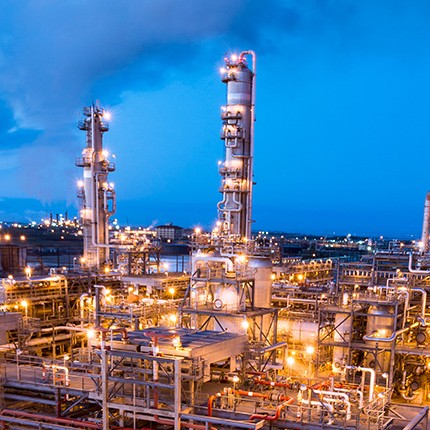
Interestingly, the gasoline and diesel markets are telling a completely different story. According to the latest monthly report from the International Energy Agency (IEA), refining and petrochemical profit margins rose to a four-year high in early July as product markets tightened while crude oil prices fell.
This is an unusual combination. Typically, cheaper crude leads to cheaper fuel. This time, the bottleneck is not the oil, but the process of converting crude oil into a usable product.
The Distinction Between Crude Oil and Refined Products
"The decoupling between the well-supplied crude oil market and the tight product market prompted a rally in refining margins to a four-year high in early July," the IEA report stated.
Refineries in the Middle East remain operating below normal levels after months of disruption due to the Iran war. Exports of refined products from the Persian Gulf remain less than half their pre-war levels, although crude shipments have recovered to about three-quarters of their levels before the Strait of Hormuz almost completely closed.
Russia is not helping this situation either. Ukraine's drone attacks continue to reduce petrochemical refining capacity, putting pressure on diesel and gasoline supplies in Russia and neighboring markets. As a result, product markets continue to tighten even though crude oil has begun shipping again through the Persian Gulf.
| Index | Current situation | Trend |
|---|---|---|
| Crude oil price | Reduced most wartime increases | Volatility due to geopolitical tensions |
| Refining and petrochemical profit margin | Rising to 4-year high | Strong increase in short term |
| Middle East petrochemical refining capacity | Operating below normal levels | Slow recovery |
| Export products from the Persian Gulf | Less than half the pre-war level | Recovery is uneven |
Impact on Oil Companies
Higher refining and petrochemical margins mean companies that keep plants running are making significantly more money converting crude into gasoline, diesel and jet fuel than they were just a few months ago.
This distinction creates attractive business opportunities for refiners that are able to maintain operations in the context of a declining crude oil market. These companies are benefiting from the imbalance between supply and demand in the refined products market.
Future Prospects
The IEA expects this distinction to gradually disappear as more refineries and petrochemicals restart and supply chains return to normal. This is also the assumption behind forecasts that the oil market will return to oversupply by the end of this year.
However, there is one point to note. That outlook assumes that ship traffic through the Strait of Hormuz continues to recover and that the latest round of fighting between Iran and the United States does not disrupt that again.
The complexity of today's oil market means that investors and policymakers need to consider more factors than simply crude oil prices. The interaction between geopolitical factors, petrochemical technology and refined product market dynamics is creating a complex and difficult to predict picture.
Against this backdrop, closely monitoring both crude oil prices and refining margin metrics will become more important than ever to understand the true trends of the global energy market.
#OilMarket #CrudeOilPrice #RefiningMargin #Geopolitics #Energy #IEA #Iran #USA #Russia #Ukraine