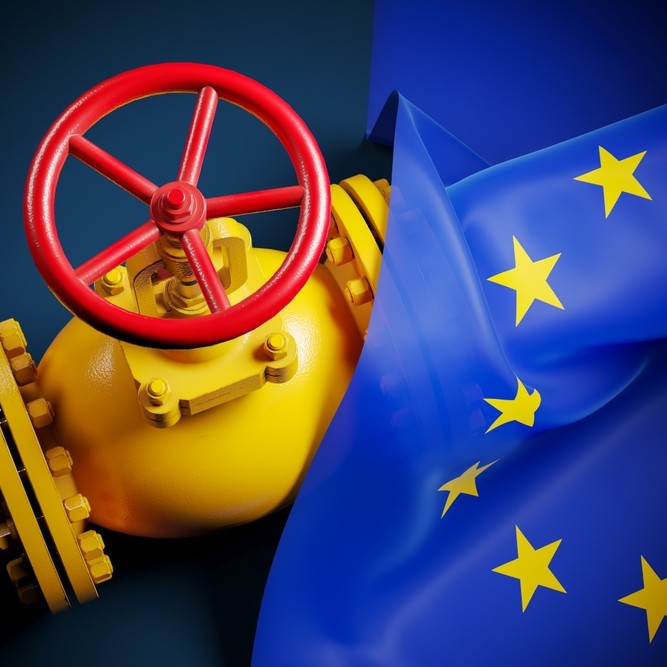
Politics, Geopolitics & Conflict: Impact on Global Energy
UK Court Rejects Nord Stream Insurance Claim, Establishing Important Legal Precedent
A ruling by the UK High Court has ended Nord Stream AG's attempt to claim $662 million in compensation from insurance companies for the sabotage of the Nord Stream 1 gas pipeline in September 2022. The judge ruled that this was a standard war risk exclusion case, exempting Lloyd's and Arch insurance companies from liability.
The court also rejected Nord Stream AG's argument that damage to a specific section of the pipeline was caused by an anchor rather than explosives. This ruling establishes an important legal precedent for companies insuring critical energy infrastructure.
It is now clear that sabotage related to federal conflict can be excluded from commercial insurance coverage even when attacks occur far from the battlefield. The ruling also removes any realistic prospect of restoring the Nord Stream system, which once transported up to 55 billion cubic meters of Russian gas annually to Germany, cementing Europe's post-2022 shift away from Russian pipeline gas.
Conflict in South Sudan Threatens Oil Stability
Fighting has erupted again in South Sudan's oil-producing Jonglei state, threatening the fragile peace that has existed since 2018. The fighting broke out after a government-appointed commissioner was assassinated by opposition forces in the contested Akobo West area.
The opposition force declared control of the area earlier this year after detaining opposition leader Riek Machar. UN peacekeeping forces have recently withdrawn from the area, leaving a vacuum for instability. The long-delayed election, part of the 2018 peace agreement that ended the civil war, was scheduled for December but appears less feasible in the current context.
While the fighting has not directly disrupted South Sudan's oil production, this continued instability threatens the industry, which accounts for the majority of government revenue.
Humanitarian Situation in Sudan Deteriorates
Across the border in Sudan, the humanitarian situation in the strategic city of Al Obeid continues to deteriorate as the UAE-backed Rapid Support Forces (RSF) tighten their siege, leaving the army-held city without electricity for nearly a month, while fuel shortages and rising food prices exacerbate the crisis.
Al Obeid is an important military and commercial center in North Kordofan. Controlling this strengthens RSF's position between Darfur and central Sudan and also hinders the operational capability of the Sudanese Armed Forces in western Sudan.
Conflict in Yemen Reaches New Tensions
The most intense ground fighting in Yemen in years has erupted along the country's western coast after government forces repelled a major Houthi attack near Hodeidah, leaving dozens dead on both sides.
Yemeni officials reported at least 15 government soldiers and more than 50 Houthi fighters killed after the Iran-backed group attempted to attack frontline positions near Jabal Dabbas but was forced to retreat. The escalation marks a significant deterioration in security despite the UN-mediated ceasefire agreement of 2022 and comes as Houthis threaten Saudi infrastructure and commercial shipping following a broader regional confrontation involving Iran.
Fighting around Hodeidah is particularly important as the Red Sea port remains Yemen's main humanitarian corridor and commercial import gateway, while the surrounding coastline borders one of the world's most important maritime trade routes.
US Begins Process to Remove Syria from Terror Sponsor List
The Trump administration has begun the process to remove Syria from the US list of State Sponsors of Terrorism. Last year's executive order had mostly lifted US sanctions, allowing trade, investment, and reconstruction to proceed. Removal of the terrorism designation would remove additional legal barriers to foreign aid, defense exports, and international financing that have continued to restrict Syria's reintegration into the global economy.
Congress has 45 days to block the decision. President Trump announced this move after meeting with Syrian President Ahmed al-Sharaa at the NATO summit.
Mergers & Acquisitions: Global Energy
Equinor Acquires 37% Stake in Bay du Nord from BP
Equinor has acquired BP's 37% stake in the offshore Bay du Nord development, giving the company full ownership of one of Canada's largest undeveloped deepwater oil projects, moving toward a final investment decision (FID) next year. BP is divesting to simplify its upstream portfolio and focus capital on higher-return assets and will retain separate acreage in the area.
Located about 500 kilometers offshore Newfoundland in the Flemish Pass basin, Bay du Nord is estimated to contain hundreds of millions of recoverable barrels but has been shelved since its discovery in 2013 due to high costs, deepwater complexity, harsh North Atlantic weather, and iceberg risks. Equinor is now completing FEED work on the planned FPSO-based development, expected to require approximately $10 billion in investment.
Kuwait Prepares to Sell Minority Stake in National Oil Pipeline Network
Kuwait is preparing to sell a minority stake in its national oil pipeline network in a deal worth around $7 billion. Kuwait Petroleum Corporation (KPC) has advanced BlackRock's Global Infrastructure Partners, Brookfield, KKR, Apollo and EIG to the next phase of the bidding process and is encouraging investors to form larger consortiums to finance the acquisition.
This is a similar strategy to that used by Aramco and ADNOC to raise billions by leasing pipeline and energy infrastructure assets to global institutional investors while maintaining operational control.
Iraq Expands Production Through New US Energy Partners
Iraq is expanding production through a new round of US energy partners. HKN Energy will develop the Hamrin field to produce 140,000 barrels of oil per day and 40 million cubic feet of gas per day, while Halliburton will manage the Bin Omar and Sinbad fields, where production is expected to increase to up to 100,000 barrels of oil per day.
Discoveries & Developments: New Energy Infrastructure
Canada Proceeds with 1 Million Barrel-per-Day Oil Pipeline to Pacific Coast
Canada is proceeding with a new 1 million barrel-per-day oil pipeline to the Pacific Coast, adding another major export corridor for Alberta oil. The route will largely follow the existing Trans Mountain corridor, increasing Canada's capacity to transport crude oil to Asia while reducing dependence on the US market.
Alberta plans to double oil production to 8 million barrels per day in the next 10 to 15 years, making new export capacity increasingly essential. The project still faces environmental assessments and consultations with First Nations before construction can begin.
Mexico Delivers First LNG from Costa Azul Terminal
Mexico has delivered its first LNG shipment from the Costa Azul terminal on the Pacific coast, creating North America's first major LNG export route to Asia that completely avoids the Panama Canal and the Strait of Hormuz. The 3.25 million tons per year terminal in Baja California allows Asian buyers direct access to North American LNG without shipping risks or delays.
The project, operated by Sempra Infrastructure with TotalEnergies as a partner, is expected to reach full commercial operation this summer, with a second expansion phase already being developed.
Summary Table: Important Geopolitical Energy Events
| Country | Event | Energy Impact | Timeline |
|---|---|---|---|
| Germany/Russia | UK Court ruling on Nord Stream | Ends $662M compensation claim, cements Europe's shift away from Russian gas | Recent |
| South Sudan | Fighting in Jonglei | Threatens oil industry, which accounts for majority of government revenue | Recent |
| Sudan | Siege of Al Obeid | Becomes important military and commercial center | Ongoing |
| Yemen | Intense fighting in Hodeidah | Threatens Red Sea port - main humanitarian corridor | Recent |
| Syria | Removal from US terror list | Expands trade and reconstruction opportunities | Process begun |
| Canada | BP's Bay du Nord acquisition | Development of large deepwater oil project | Recent |
| Kuwait | Pipeline network stake sale | Raises $7 billion | Bidding process |
| Iraq | US energy partnerships | Increases oil production by 240,000 barrels/day | Recent |
| Canada | New oil pipeline to Pacific | Increases export capacity by 1 million barrels/day | In development |
| Mexico | Costa Azul LNG terminal | Creates LNG export route to Asia | Recent |
Conclusion
The intersection of politics, geopolitics, and conflict continues to shape the global energy landscape. From a significant legal ruling affecting the Nord Stream gas pipeline to conflicts in oil-producing regions like South Sudan and Sudan, geopolitical factors are creating both challenges and opportunities for the energy industry.
Meanwhile, new transactions and infrastructure developments, from Canadian pipelines to Mexican LNG terminals, demonstrate adaptation and innovation in the global energy sector. Countries are seeking to diversify export markets and reduce dependence on traditional routes.
The future of global energy will continue to be influenced by political dynamics, with policy decisions and conflicts potentially rapidly changing energy flows and prices worldwide.
Hashtags:
#GlobalEnergy #EnergyPolitics #Geopolitics #EnergyConflict #NordStream #AsianEnergy #OilPipelines #LNG #Oil #EnergyPolicy