Amending Vietnam's Petroleum Law: A Breakthrough for Ensuring National Energy Security
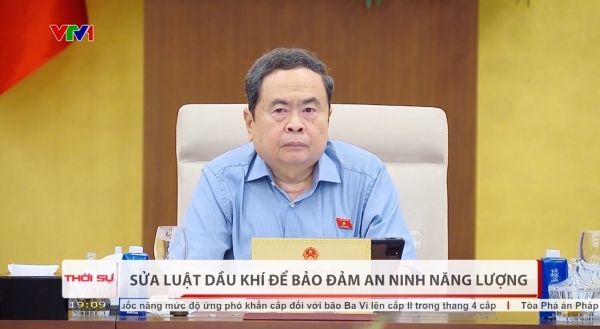
On the morning of July 9, Chairman of the National Assembly Tran Thanh Man presided over the 4th session of the National Assembly Standing Committee to discuss and provide opinions on the draft amended Petroleum Law. This significant event aims to perfect the legal framework for the petroleum industry - a cornerstone of the economy and a critical component in ensuring national energy security.
Background for Amending the Petroleum Law
Vietnam's petroleum industry has developed over 60 years with remarkable achievements. However, both international and domestic contexts have undergone significant changes, necessitating updates and improvements to the legal system to align with new circumstances.
The current Petroleum Law, enacted in 2000, has been amended and supplemented several times. Nevertheless, facing new development requirements of the industry and the global energy transition trend, a comprehensive revision of the law has become essential.
Main Content of the Draft Law
The draft amended Petroleum Law contains numerous important new points, focusing on the following key areas:
- Improving the state management mechanism for petroleum
- Adjusting policies on petroleum resources
- Enhancing the efficiency of exploitation and utilization of resources
- Promoting international cooperation in the petroleum sector
- Ensuring national energy security
Notable New Provisions
During the session, delegates focused discussions on several prominent new aspects of the draft law:
- Regulations on Decentralization and Authority Distribution: Clearly defining the division of responsibilities and powers between the Government, ministries, sectors, and localities in petroleum management.
- Investment Incentive Mechanisms: Establishing mechanisms and policies to encourage investment in the petroleum sector, particularly in new exploration and exploitation projects.
- Environmental Protection: Strengthening regulations on environmental protection in petroleum activities, aligning with sustainable development trends.
- Energy Security: Ensuring national energy security through supply diversification and development of renewable energy sources.
Deliberations and Contributions at the Session
At the session, delegates made numerous constructive contributions to the draft law. Issues of particular concern included:
- Enhancing the effectiveness of national petroleum resource management
- Promoting the application of high technology in petroleum exploration and exploitation
- Ensuring national interests in international cooperation
- Developing high-quality human resources for the industry
Chairman of the National Assembly Tran Thanh Man emphasized: "Amending the Petroleum Law is necessary to adapt to new circumstances, improve the effectiveness of management and utilization of petroleum resources, and contribute to ensuring national energy security."
Impact on the Petroleum Industry and Energy Security
The amendment of the Petroleum Law is expected to generate numerous positive impacts:
| Domain | Expected Impact |
|---|---|
| State Management | More effective, transparent, and practical management |
| Investment | Attracting additional investment, especially in new exploration and exploitation projects |
| Technology | Promoting the application of high technology to enhance exploitation efficiency |
| Energy Security | Strengthening national energy security through supply diversification |
Next Steps
Following the session, the draft amended Petroleum Law will be further refined based on contributions from delegates. It is expected to be submitted to the National Assembly for consideration and approval at the 4th session of the XVth National Assembly.
The amendment of the Petroleum Law represents a significant step in the process of perfecting the legal system, contributing to promoting sustainable development of the petroleum industry and ensuring national energy security in the new context.
#PetroleumLaw #EnergySecurity #NationalAssembly #Vietnam