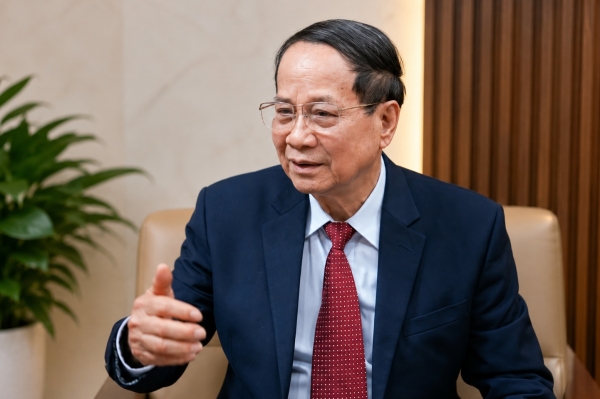
Petrovietnam Under PGS.TS Ngô Trí Long: Pioneering Vietnam's Maritime Economic Development
In an era where Vietnam's economy faces mounting challenges as traditional growth drivers gradually lose momentum, PGS.TS Ngô Trí Long, a leading expert in finance and currently serving as a leader of the Vietnam Financial Consulting Association, has provided profound insights into the pivotal role of the maritime economy in the nation's strategic development. As Vietnam seeks new frontiers for economic expansion, the maritime sector emerges as a critical component of the country's future growth strategy, offering unprecedented opportunities for sustainable development.
The Maritime Economy: A Strategic Development Frontier
PGS.TS Ngô Trí Long emphasizes that the maritime economy will become a strategic development space for Vietnam in the coming years. With a coastline extending over 3,200 kilometers and a strategically advantageous geographical position, Vietnam possesses immense potential to develop coastal economic activities ranging from marine fishing and tourism to renewable energy. The blue economy—encompassing all economic activities related to oceans, seas, and coasts—represents not just an economic opportunity but a national imperative in the context of global climate change and resource depletion.
The expert further elaborates that Vietnam's maritime economic potential extends beyond traditional sectors to include emerging industries such as marine biotechnology, offshore wind energy, and seabed mineral extraction. These sectors, when properly developed, could position Vietnam as a regional leader in maritime economic innovation.
The Central Role of Petrovietnam
The Vietnam National Oil and Gas Group, commonly known as Petrovietnam, is positioned as the vanguard force in opening up Vietnam's maritime economic space. According to PGS.TS Long, Petrovietnam not only possesses formidable financial resources but also advanced technological capabilities and extensive experience in the energy sector. The corporation's unique position as both a state-owned enterprise and an energy industry leader enables it to coordinate effectively between government objectives and private sector innovation.
PGS.TS Long highlights Petrovietnam's comprehensive value chain—from exploration and production to refining and distribution—as a critical asset in developing the maritime economy. The corporation's existing infrastructure, including offshore platforms, coastal refineries, and port facilities, provides a solid foundation for expanding into new maritime economic activities.
Core Areas of Operation and Economic Potential
Petrovietnam's strategic vision encompasses multiple dimensions of maritime economic development:
- Primary Operational Areas:
- Exploration and exploitation of oil and gas resources
- Development of renewable energy sources, particularly offshore wind and tidal power
- Investment in maritime infrastructure including ports, shipyards, and logistics facilities
- Marine environmental protection and sustainable resource management
- Economic Potential and Impact:
- Contribution to sustainable GDP growth through diversified energy sources
- Enhancement of national energy security through reduced import dependency
- Creation of millions of employment opportunities across various skill levels
- Development of supporting industries and technological innovation
- Strengthening of international partnerships through joint ventures and technology transfer
Challenges and Strategic Opportunities
Despite numerous favorable conditions, Petrovietnam faces significant challenges in developing the maritime economy. PGS.TS Long identifies environmental management and protection as one of the most critical priorities. The delicate balance between resource exploitation and ecological preservation requires sophisticated regulatory frameworks and technological solutions.
Additionally, the expert notes the need for close coordination between various governmental agencies to optimize resource allocation and maximize the economic potential of maritime activities. This includes harmonizing policies across sectors such as energy, transportation, tourism, and environmental protection.
On the international front, Vietnam's maritime economic development must navigate complex geopolitical dynamics, particularly in the South China Sea. PGS.TS Long emphasizes the importance of diplomatic engagement and international cooperation to create a stable environment for economic development while protecting national interests.
| Criteria | Petrovietnam's Current Position | Maritime Economic Potential |
|---|---|---|
| Investment Capital | Substantial financial resources with increasing government support | Significant growth potential requiring additional investment |
| Technology Capabilities | Advanced in oil and gas; developing in renewable energy | Requires further innovation, particularly in green technologies |
| Human Resources | Strong technical expertise; needs diversification | Requires expanded training programs for emerging sectors |
| Infrastructure | Well-developed in traditional energy sectors | Needs expansion to support diversified maritime activities |
| International Partnerships | Established with major energy companies | Opportunities for expansion into new markets and technologies |
Strategic Recommendations for Future Development
Based on his analysis, PGS.TS Ngô Trí Long proposes several strategic recommendations for Petrovietnam and Vietnam's maritime economic development:
- Technology Innovation: Accelerate investment in research and development, particularly for renewable energy technologies and environmentally sustainable extraction methods.
- Human Capital Development: Establish specialized training programs to develop expertise in emerging maritime industries, including marine biotechnology and offshore engineering.
- Policy Framework: Advocate for comprehensive legislation that balances economic development with environmental protection, creating clear guidelines for maritime economic activities.
- International Cooperation: Strengthen partnerships with regional and international organizations to share best practices and attract foreign investment.
- Diversification Strategy: Gradually reduce dependence on traditional oil and gas while building capacity in renewable energy and other emerging maritime sectors.
Conclusion: A Vision for Maritime Prosperity
PGS.TS Ngô Trí Long concludes that with unwavering determination and continuous effort, Petrovietnam has the potential to play a pivotal role in opening up Vietnam's maritime economic space. The corporation's unique position, combined with Vietnam's natural advantages, creates a foundation for sustainable economic development that could transform the nation's economic landscape.
The maritime economy represents more than just an economic opportunity—it embodies a vision for a future where Vietnam leverages its natural resources and geographical advantages to achieve prosperity while maintaining environmental sustainability. As the global economy increasingly turns to the oceans for resources and opportunities, Vietnam's strategic development of its maritime economic space positions it to become a significant player in the blue economy of the 21st century.
The successful implementation of this vision will require not only Petrovietnam's leadership but also coordinated efforts across government, industry, and civil society. With the right policies, investments, and international cooperation, Vietnam's maritime economy can emerge as a cornerstone of national development and a model for sustainable ocean-based economic growth.