## The Unseen Energy Crisis Behind the AI Revolution
The artificial intelligence revolution is creating an unprecedented energy crisis in the United States, one that threatens to outpace the power grid's capacity to deliver electricity. As tech giants like Microsoft, Amazon, and Google compete to develop and deploy increasingly sophisticated AI models, they are simultaneously scrambling to secure massive amounts of electricity to power the data centers that run these systems. This hidden energy challenge has become so critical that companies are bypassing traditional grid expansion plans and instead investing directly in power generation facilities—including nuclear plants that were once considered obsolete.
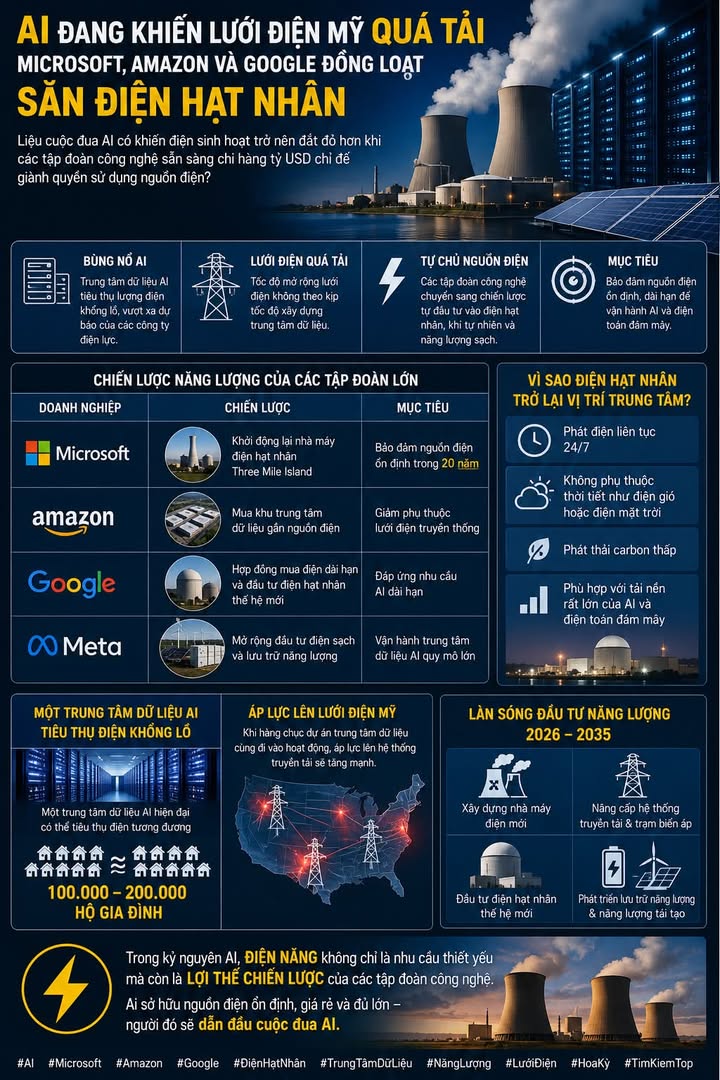
The scale of this energy demand is staggering. Modern AI data centers can consume electricity equivalent to hundreds of thousands of households. When multiple such facilities come online simultaneously, the strain on transmission systems becomes overwhelming. Rather than waiting for the national grid to catch up, these technology behemoths are pursuing a more direct approach: securing their own dedicated power sources through long-term contracts and direct investments in energy infrastructure.
## The Great Tech Migration: From Grid Dependency to Power Generation
Faced with an electrical grid that cannot keep pace with their expansion plans, major technology companies have fundamentally shifted their energy strategies. Rather than simply connecting to existing infrastructure and hoping for adequate supply, they are now actively participating in the energy market as both consumers and producers.
This paradigm shift represents one of the most significant changes in the technology sector in decades. Companies that once focused solely on software development, cloud services, and consumer electronics are now becoming major players in the energy sector, investing billions of dollars in power generation facilities, transmission infrastructure, and energy storage solutions.
The urgency of this transition cannot be overstated. The International Energy Agency estimates that data centers and other AI-related infrastructure could account for 4-6% of global electricity consumption by 2026, a dramatic increase from just 1-2% in 2022. This exponential growth has created a race to secure reliable power sources before competitors do, with nuclear energy emerging as the preferred solution for many.
## Corporate Strategies in the Energy Arms Race
Each major technology company has developed its own approach to securing the massive amounts of electricity required for AI operations, but all share a common goal: reducing dependency on an increasingly strained national power grid.
### Microsoft's Nuclear Power Play
Microsoft has emerged as a leader in this new energy landscape, making headlines with its ambitious plan to restart the Three Mile Island nuclear power plant in Pennsylvania. The company has signed a 20-year agreement to bring the dormant facility back online, marking one of the most significant corporate investments in nuclear power in recent history.
The Three Mile Island facility, which suffered a partial meltdown in 1979 and has been largely inactive since, represents a strategic asset for Microsoft. Nuclear power offers the continuous, high-capacity electricity that AI data centers require without the intermittency issues associated with renewable sources like solar and wind. By securing a long-term contract with the restarted plant, Microsoft ensures stable power pricing and availability for its expanding network of AI data centers.
This move aligns with Microsoft's broader sustainability goals, as nuclear power produces virtually no carbon emissions during operation. The company has pledged to become carbon negative by 2030, and nuclear energy represents a critical component of achieving this ambitious target.
### Amazon's Proximity Power Strategy
Amazon has taken a different approach, focusing on proximity to existing power generation rather than investing directly in new plants. The company committed approximately $650 million to acquire a data center campus situated near a major power generation facility, allowing it to access high-capacity electricity without relying on the strained transmission grid.
This strategy leverages the principle that the most efficient way to deliver large amounts of electricity is through direct, short-distance transmission rather than routing through the broader grid. By positioning its data centers near power sources, Amazon reduces transmission losses and increases reliability—both critical factors for energy-intensive AI operations.
Amazon's approach also reflects its broader strategy of vertical integration, where the company controls as many aspects of its supply chain as possible. By securing direct access to power generation, Amazon gains greater control over its energy costs and availability, which becomes increasingly important as AI workloads expand.
### Google's Diversified Energy Portfolio
Google has pursued a more diversified energy strategy, combining long-term power purchase agreements with investments in next-generation nuclear technology, natural gas facilities, and renewable energy sources paired with advanced storage systems.
The company has been particularly active in pursuing advanced nuclear technologies, including small modular reactors (SMRs) that offer greater flexibility and safety than traditional nuclear plants. Google has also invested heavily in combining renewable energy with sophisticated storage solutions, creating a more sustainable but still reliable power supply for its AI operations.
This diversified approach allows Google to balance multiple priorities: ensuring reliable power supply, meeting sustainability commitments, and managing costs. By maintaining a portfolio of different energy sources, Google can mitigate risks associated with any single technology or fuel source.
### Meta's Renewable Energy Expansion
Meta (formerly Facebook) has focused primarily on expanding its investments in clean energy and advanced storage systems to power its AI data centers. The company has committed to powering its operations with 100% renewable energy and has invested heavily in wind, solar, and storage technologies.
However, even with this focus on renewables, Meta has recognized the need for baseload power that can provide consistent electricity regardless of weather conditions. This has led to increased interest in nuclear power and other non-intermittent sources to complement its renewable investments.
## Comparative Analysis: Tech Giants' Energy Strategies
The following table summarizes the key elements of each major technology company's approach to securing power for AI operations:
| Company | Primary Strategy | Key Investments | Time Horizon | Sustainability Focus |
|---------|-----------------|-----------------|--------------|---------------------|
| Microsoft | Direct investment in nuclear power | Restarting Three Mile Island nuclear plant | 20-year agreements | Carbon negative by 2030 |
| Amazon | Proximity to existing power generation | $650M for data center campus near power sources | Medium to long-term | 100% renewable energy commitment |
| Google | Diversified energy portfolio | Next-gen nuclear, natural gas, renewables with storage | Long-term power purchase agreements | Carbon-free energy by 2030 |
| Meta | Renewable energy expansion | Wind, solar, and advanced storage systems | Long-term investments | 100% renewable energy by 2025 |
## The Nuclear Renaissance: Why It's Making a Comeback
Nuclear power has experienced a remarkable renaissance in the technology sector, driven by several key factors that make it uniquely suited to the demands of AI operations:
### Uninterrupted Power Generation
Unlike renewable sources that depend on weather conditions, nuclear plants can operate continuously 24 hours a day, 365 days a year. This baseload power is essential for AI data centers that require constant electricity to maintain computational operations without interruption.
### Weather Independence
Solar and wind power generation fluctuates with weather patterns, creating challenges for operations requiring consistent power. Nuclear plants, by contrast, are not affected by weather conditions, making them ideal for locations where weather-dependent renewables might be less reliable.
### Low Carbon Emissions
As technology companies face increasing pressure to reduce their carbon footprints, nuclear power offers a compelling advantage. Nuclear facilities produce virtually no carbon emissions during operation, making them an attractive option for companies with ambitious sustainability goals.
### High Power Density
Nuclear power plants generate enormous amounts of electricity from a relatively small physical footprint. This high power density makes them particularly suitable for areas where land is limited or expensive, such as near major metropolitan areas where data centers are often located.
### Economic Stability
Once constructed, nuclear plants provide stable electricity pricing over long periods, as they are not subject to the fuel price volatility that affects natural gas and other fossil fuel plants. This predictability is valuable for companies planning multi-year AI development roadmaps.
## The Grid Challenge: Infrastructure vs. Demand
The fundamental challenge facing the technology sector is that the expansion of electrical infrastructure cannot keep pace with the rapid growth of AI data centers. Traditional grid expansion involves lengthy planning processes, regulatory approvals, and construction timelines that can span a decade or more.
Meanwhile, AI development is accelerating at an unprecedented rate, with new models and applications emerging constantly. This mismatch has created a situation where technology companies must secure power for facilities that may not even exist yet, forcing them to take extraordinary measures to guarantee electricity supply.
The strain on the grid extends beyond just generation capacity. Transmission infrastructure—high-voltage lines, substations, and distribution networks—is also struggling to keep pace with demand. In many regions, existing transmission systems are already operating at or near capacity, leaving little room for additional load from new data centers.
## The Future of Energy and AI: A Symbiotic Relationship
Looking ahead, the period from 2026 to 2035 is expected to witness unprecedented investment in electrical infrastructure across the United States. This will include not only new power generation facilities but also upgrades to transmission systems, substations, and advanced grid technologies designed to support the growing demands of AI and other high-energy computing applications.
The relationship between AI and energy is becoming increasingly symbiotic. While AI systems require enormous amounts of electricity to operate, they can also be used to optimize energy generation, distribution, and consumption. AI algorithms can help balance loads across the grid, predict demand patterns, and improve the efficiency of power plants—creating a virtuous cycle where each technology enhances the other.
## The New Frontier of Competition
As the AI landscape evolves, competition among technology companies may shift from developing the most sophisticated algorithms to securing the most reliable, cost-effective energy sources. In this new paradigm, access to abundant, affordable electricity could become as critical as access to advanced semiconductors.
Energy is emerging as a strategic resource that will determine which companies can lead in the AI era. Those that can secure stable, affordable power will have a significant advantage in developing and deploying AI systems at scale. This has transformed energy from a mere operational cost into a core competitive advantage.
## Conclusion: The Energy-AI Nexus
The convergence of artificial intelligence and energy represents one of the most significant technological and economic shifts of the 21st century. As AI systems become increasingly sophisticated and widespread, their energy requirements will continue to grow, placing unprecedented demands on electrical infrastructure.
The response from major technology companies—investing directly in power generation, particularly nuclear facilities—signals a fundamental change in how energy is produced, distributed, and consumed. This transformation extends beyond the technology sector to impact energy policy, environmental goals, and economic development on a national scale.
The race for energy security is now inextricably linked to the race for AI supremacy. As these technologies continue to evolve, their interdependence will only deepen, creating new opportunities and challenges for industries, governments, and societies worldwide. The companies that successfully navigate this complex relationship between AI and energy will likely emerge as the dominant forces shaping our technological future.