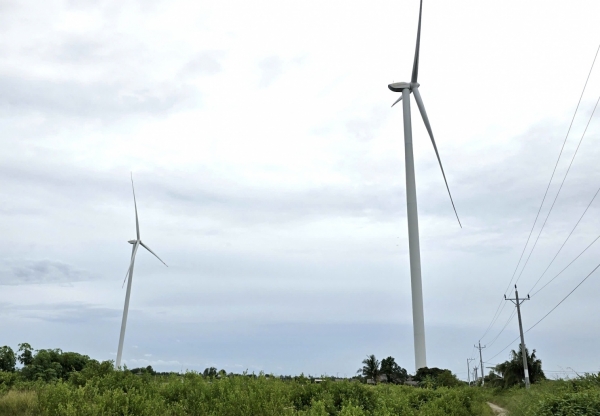
Can Tho Adopts Special Support Policy for Onshore Wind Power Projects
In a significant move toward advancing renewable energy development, the Can Tho People's Council has recently approved a special support policy for onshore wind power projects. This decision aims to address key challenges related to land acquisition compensation, land clearance, and complaint resolution, thereby accelerating the development of the clean energy sector in the region.
Background and Significance of the Policy
Can Tho, strategically located in Vietnam's Mekong Delta region with substantial renewable energy potential, is striving to become a center for renewable energy in the area. The adoption of this special support policy demonstrates the city's strong commitment to attracting investment in clean energy, contributing to sustainable development goals and carbon emission reduction targets.
According to a report from the Can Tho Department of Industry and Trade, the city currently has five onshore wind power projects with a total registered capacity of approximately 1,200 MW. However, the implementation progress of these projects has been slow due to numerous obstacles, particularly in land acquisition and compensation processes.
Key Components of the Support Policy
The special support policy approved by the Can Tho People's Council focuses on addressing core issues:
- Land Use Incentives: Reduction of land use fees and land rental fees for wind power projects; allowing investors to lease land for extended periods (up to 50 years).
- Land Acquisition Support: The city will proactively coordinate with investors in land measurement and identification of areas to be acquired; support for resettlement and job creation for affected residents.
- Administrative Procedure Simplification: Shortening permit approval time and simplifying project evaluation and approval processes.
- Financial Support: Connecting investors with preferential capital sources from banks and renewable energy development funds.
- Complaint Resolution: Establishing mechanisms for quick and transparent resolution of complaints and disputes.
Specific Solutions to Overcome Obstacles
To address land compensation and asset issues—one of the biggest barriers to wind power projects—the policy introduces specific solutions:
| Issue | Solution | Responsible Agency |
|---|---|---|
| Inappropriate land compensation valuation | Establish an independent valuation board, reference market area prices | City People's Committee, Department of Natural Resources and Environment |
| Lack of resettlement land | Proactively plan resettlement areas with complete infrastructure | Department of Construction, District-level People's Committees |
| Public disagreement | Organize direct dialogues, transparent information sharing, benefit sharing | District-level People's Committees, Land Clearance Steering Committee |
Impact on Renewable Energy Development
The implementation of this special support policy is expected to create a breakthrough in attracting investment to the renewable energy sector in Can Tho. According to experts, this policy could accelerate the implementation timeline of wind power projects, positioning Can Tho as an attractive destination for domestic and international investors.
"The special support policy is an important step for Can Tho to tap into its wind energy potential, contributing to national energy security and sustainable economic development," stated Ms. Tran Thi Kim Dung, Director of the Can Tho Department of Industry and Trade. "We are committed to providing the most favorable conditions for investors."
Response from the Business Community
The approval of the support policy has received positive feedback from the energy business community. Mr. Nguyen Van Thanh, representing a company implementing a wind power project in Can Tho, shared: "This policy is timely and practical, addressing the major obstacles that investors are currently facing. We believe that with this support, our project will be implemented more quickly and effectively."
However, some businesses have also urged the city to soon issue detailed regulations to ensure feasibility and transparency in implementation. Additionally, a robust monitoring mechanism is needed to ensure the policy achieves its intended goals.
Future Vision
The approval of the special support policy for onshore wind power projects is part of Can Tho's long-term renewable energy development strategy. Moving forward, the city will continue to improve its institutional framework and policies to attract investment in other clean energy sectors such as solar power, biomass, and power transmission infrastructure development.
According to the plan, by 2030, Can Tho aims to achieve approximately 2,000 MW of onshore wind power capacity, making a significant contribution to the country's renewable energy development goals and greenhouse gas emission reduction targets.
Concurrently, the city will focus on developing supporting industries for renewable energy, creating a complete value chain from production, installation to operation and maintenance of wind power projects, thereby creating jobs and boosting the local economy.
The approval of the special support policy for onshore wind power projects not only represents a significant advancement in renewable energy development in Can Tho but also serves as a valuable lesson for other localities in attracting investment in this sector.