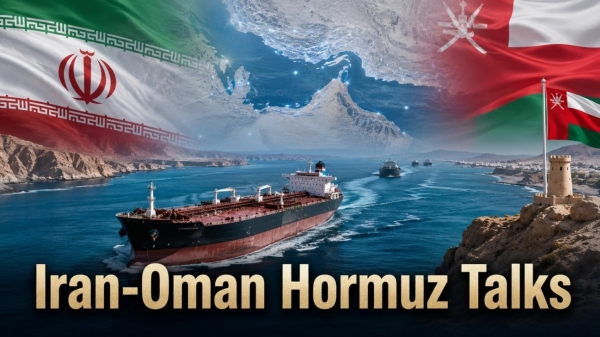
Establishing Bilateral Governance Mechanisms for the Strait of Hormuz
In the context of increasingly complex geopolitical dynamics, recent negotiations between Iran and Oman regarding the future of the Strait of Hormuz mark a significant milestone in the governance of this strategically vital maritime corridor. This represents the first instance since conflicts disrupted shipping activities through Hormuz that the two nations sharing coastline along this critical waterway have formally discussed establishing a bilateral governance mechanism for the world's most important energy transportation route.
The Strategic Importance of the Strait of Hormuz
The Strait of Hormuz stands as one of the world's most strategically significant maritime choke points, connecting the Persian Gulf with the open ocean. Approximately 20% of globally traded crude oil passes through this narrow waterway, making its security and management critically important to numerous nations worldwide. Beyond energy transportation, the strait serves as a vital conduit for global trade, with an estimated one-third of the world's liquefied natural gas also transiting through this passage. The economic implications of any disruption to shipping in this region extend far beyond the immediate area, potentially triggering global energy price shocks and supply chain disruptions.
The geopolitical significance of the Strait of Hormuz cannot be overstated. It represents a convergence point of major international interests, with regional powers and extra-regional actors all maintaining substantial naval presence in and around the waterway. The strait's narrowest point measures only 21 nautical miles wide, creating a natural bottleneck that has historically been both a strategic vulnerability and a point of geopolitical contention.
The Iran-Oman Negotiation Process
The ongoing negotiations between Iran and Oman represent more than merely a discussion about maritime security; they encompass economic, political, and social dimensions that reflect the complex interplay of interests in this critical region. Both nations have recognized that establishing a formal bilateral governance mechanism could significantly mitigate conflict risks and enhance regional stability.
These discussions gained particular urgency following several incidents in recent years that threatened to escalate into larger conflicts, including vessel seizures, military standoffs, and attacks on oil tankers. The international community has increasingly expressed concern about the potential for miscalculation or escalation in this already tense environment, making diplomatic initiatives like this one particularly valuable.
Oman, traditionally maintaining diplomatic relations with both Iran and Western powers, has positioned itself as a natural mediator in regional affairs. The sultanate's neutral stance and longstanding diplomatic channels have made it an ideal facilitator for discussions that might otherwise be impossible between Iran and other regional actors.
Key Aspects of the Bilateral Governance Mechanism
The proposed bilateral governance framework encompasses several critical areas designed to enhance cooperation and reduce tensions:
- Maritime Security: Establishing clear rules and regulations to ensure the safety of vessels transiting the strait. This would include coordinated surveillance mechanisms, joint patrols in certain areas, and standardized protocols for handling security incidents. The framework would likely address issues such as freedom of navigation, anti-piracy measures, and emergency response coordination.
- Resource Management: Defining rights and responsibilities regarding the exploitation and protection of natural resources in the region. This encompasses fisheries management, environmental protection protocols, and potentially hydrocarbon resources in adjacent waters. The agreement would need to balance economic development with sustainable resource utilization.
- Economic Cooperation: Enhancing investment and trade projects between the two nations to develop the regional economy. This could include port development initiatives, tourism promotion, joint infrastructure projects, and facilitation of cross-border commerce. Economic interdependence is viewed as a potential stabilizing factor in the relationship.
- Conflict Resolution Mechanisms: Establishing formal channels for dispute resolution to prevent misunderstandings from escalating into larger conflicts. This might include hotlines between military commands, regular diplomatic consultations, and third-party arbitration options.
- Maritime Environmental Protection: Developing joint protocols to prevent and respond to environmental incidents, including oil spills and other forms of marine pollution. Given the volume of hydrocarbon traffic through the strait, environmental protection represents a shared interest.
Significance of This Development
The establishment of a bilateral governance mechanism carries implications that extend far beyond Iran and Oman. The stability of the Strait of Hormuz directly impacts global energy markets, with any disruption potentially triggering significant price volatility and economic uncertainty worldwide. A successful framework could serve as a model for other contested maritime regions, demonstrating how formalized cooperation can replace confrontation.
For Iran, such an agreement represents an opportunity to demonstrate its commitment to international norms while advancing its economic interests. The Islamic Republic has consistently emphasized its sovereign rights in the Persian Gulf region, while simultaneously seeking relief from international sanctions that have constrained its economy. A bilateral agreement with Oman could potentially open new economic opportunities while reinforcing Iran's position as a regional power.
For Oman, facilitating this agreement reinforces its traditional role as a diplomatic mediator in the Gulf region. The Sultanate has long pursued a foreign policy of engagement and dialogue, positioning itself as a bridge between different regional powers and between the Gulf states and the international community.
For the broader international community, particularly energy-importing nations, a stable and secure Strait of Hormuz translates into greater energy security and price stability. Major consumers including China, Japan, India, and European nations all have substantial interests in the uninterrupted flow of energy through this waterway.
Challenges and Considerations
Despite the apparent benefits, establishing an effective bilateral governance mechanism faces significant challenges. Historical tensions, competing territorial claims, and broader geopolitical rivalries all complicate efforts to achieve comprehensive cooperation. The involvement of extra-regional powers with their own strategic interests in the region adds another layer of complexity to the negotiation process.
Moreover, any agreement must navigate the complex web of international agreements and existing maritime law frameworks, including the United Nations Convention on the Law of the Sea (UNCLOS). While both Iran and Oman are parties to UNCLOS, interpretations of its provisions have sometimes differed, creating potential points of contention.
Expected Timeline and Implementation
Based on similar diplomatic initiatives in the region, the negotiation process is likely to proceed in phases. Initial confidence-building measures might be implemented relatively quickly, followed by more substantive agreements on specific aspects of governance. A comprehensive framework could potentially take several years to finalize, with ongoing adjustments as circumstances evolve.
The successful implementation of any agreement will depend on continued political will from both nations, as well as the ability to establish effective working mechanisms at both governmental and operational levels. Regular review and adaptation of the framework will likely be necessary to address emerging challenges and changing circumstances.
Comparative Analysis: Regional Maritime Cooperation Frameworks
The proposed Iran-Oman bilateral framework would exist alongside other regional maritime cooperation initiatives. Understanding these complementary and sometimes competing arrangements provides important context for evaluating the potential impact of the new agreement.
| Initiative | Participating Nations | Primary Focus | Relationship to Iran-Oman Framework |
|---|---|---|---|
| Maritime Security Cooperation Agreement | GCC States | Collective security, counter-terrorism | Complementary but excludes Iran |
| Indian Ocean Rim Association | 22 Indian Ocean rim states | Economic cooperation, disaster management | Broader regional context |
| Combined Maritime Forces | 34 nations | Maritime security, counter-piracy | Operational coordination possible |
| Hormuz Peace Initiative | Conflict prevention, confidence-building | Complementary diplomatic track |
Conclusion
The ongoing negotiations between Iran and Oman regarding bilateral governance of the Strait of Hormuz represent a potentially significant development in regional security architecture. By establishing formal mechanisms for cooperation on maritime security, resource management, and economic development, the two nations could create a more predictable and stable environment for one of the world's most critical maritime corridors.
While challenges remain, the initiative demonstrates that even in regions marked by historical tensions and geopolitical competition, diplomatic solutions can advance shared interests. The success of this framework could potentially inspire similar approaches to governance in other contested maritime regions worldwide.
As global energy markets continue to evolve and the transition toward alternative energy sources gradually unfolds, the strategic importance of the Strait of Hormuz may eventually diminish. However, for the foreseeable future, ensuring the security and stability of this vital waterway remains a paramount international concern, making diplomatic initiatives like the Iran-Oman negotiations particularly valuable.