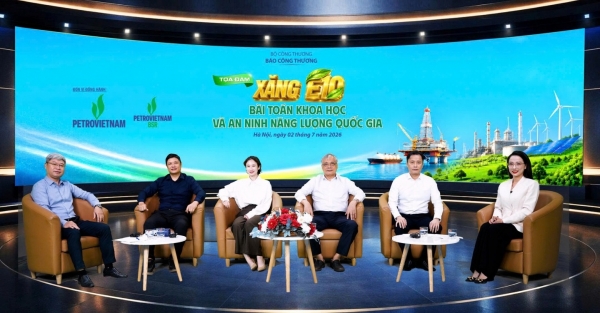
E10 Gasoline: From Scientific Solution to National Energy Security Foundation
After over a month of nationwide implementation, E10 biofuel is showing positive signals in both market performance and practical effectiveness. Not only has it quickly gained consumer trust, but this fuel type is also recognized by experts as a strategically significant step in Vietnam's energy transition, green economic development, and national energy security assurance.
Understanding E10 Biofuel
E10 gasoline is a fuel blend containing 10% ethanol (bio-alcohol) derived from biological materials such as sugarcane, corn, cassava, etc., mixed with 90% conventional petroleum gasoline. This is considered an important intermediate solution in Vietnam's transition pathway from fossil fuels to clean energy.
The implementation of E10 gasoline is the result of many years of research, testing, and thorough preparation by scientists, businesses, and state management agencies. This decision reflects the strategic vision of the Government in diversifying energy sources, reducing dependence on imports, and protecting the environment.
Development History and Background
The E10 gasoline project was initiated several years ago with the goals of reducing greenhouse gas emissions, decreasing air pollution, and developing agricultural economics. However, this process was by no means easy due to numerous challenges in technology, infrastructure, and consumption habits.
The relentless efforts of Vietnamese scientists have helped solve the technological challenge of producing high-quality ethanol suitable for the country's climatic and soil conditions. Simultaneously, the distribution system has been invested in and upgraded to ensure stable supply of E10 gasoline to consumers.
Technology and Production Process
Producing ethanol for E10 gasoline requires advanced technology and a closed-loop production process. In Vietnam, ethanol is primarily produced from sugarcane, a strength of the country's agricultural sector.
The production process includes several steps: squeezing sugarcane to extract juice, fermenting sugar into ethanol, distilling, and refining to achieve the required alcohol content. Modern technology allows for recovery and reuse of by-products, minimizing environmental impact.
The technology for blending ethanol with gasoline is also a crucial factor. Oil refineries and gasoline producers have invested in automatic blending systems to ensure precise ratios and consistent quality for each product batch.
Economic and Environmental Benefits
Using E10 gasoline offers practical benefits for both the economy and environment:
- Economic: Creates a market for agricultural products, especially sugarcane, increasing income for farmers and stabilizing the agricultural sector.
- Energy Security: Reduces dependence on imported gasoline and diesel, saving billions of USD annually in foreign currency.
- Environmental: Reduces CO2 and other pollutant emissions, contributing to improved air quality.
- Health: Reduces harmful substances in exhaust emissions such as benzene, butadiene, etc., that affect human health.
Current Implementation Status and Initial Results
Since January 1, 2023, E10 gasoline has been officially implemented nationwide, replacing conventional RON92 gasoline. After over a month of implementation, the results show:
| Indicator | Result |
|---|---|
| Consumer acceptance rate | Above 85% |
| Sales volume | Accounts for approximately 60-70% of gasoline market share |
| Number of gas stations supplying | Over 95% of gas stations nationwide |
| User feedback | Over 70% positive reviews |
Many consumers have expressed support for E10 gasoline, indicating growing awareness about environmental issues and community responsibility. Many vehicle owners report that E10 allows engines to run more smoothly and provides fuel efficiency comparable to conventional gasoline.
Challenges and Solutions
Despite the initial successful implementation, E10 gasoline still faces several challenges:
- Changing consumption habits: A segment of consumers remains hesitant, concerned about quality and engine durability when using biofuel.
- Distribution infrastructure: Continued upgrading of the gas station system is needed, especially in rural and mountainous areas to ensure equal access.
- Stable raw material supply: Ensuring consistent sugarcane supply unaffected by price fluctuations and weather conditions.
- Quality standardization: Need for strict inspection and monitoring mechanisms to ensure consistent E10 quality nationwide.
To address these challenges, comprehensive solutions have been proposed:
- Enhance communication campaigns to raise consumer awareness about biofuel benefits.
- Improve the system of standards and technical specifications to ensure product quality.
- Invest in developing large-scale, sustainable raw material areas for ethanol production.
- Establish a long-term biofuel development roadmap aligned with global trends.
Strategic Vision for the Future
E10 gasoline is viewed as the first step in Vietnam's energy transition. In the near term, the biofuel industry aims to increase the ethanol ratio in gasoline to 15-20% in the coming years.
In the long term, Vietnam aims to develop biofuels into a leading industry, making significant contributions to energy security and green economic development. Next-generation biofuels such as biodiesel from vegetable oils, ethanol from wood, straw, etc., are also being researched for future development.
Particularly, with its great agricultural potential, Vietnam has the opportunity to become one of the leading biofuel production centers in the region, creating high added value for agricultural products and promoting sustainable economic development.
Conclusion
The successful implementation of E10 gasoline is clear evidence of Vietnam's science and technology capabilities and political will in the energy transition process. This is not just an economic decision but also a strong commitment to the international community regarding greenhouse gas emission reduction and environmental protection.
E10 gasoline is gradually establishing itself as a sustainable energy solution, contributing to national energy security and a greener future. With the continued development of biofuels, Vietnam is progressively realizing its goals of green economic development, emission reduction, and improved quality of life for its people.