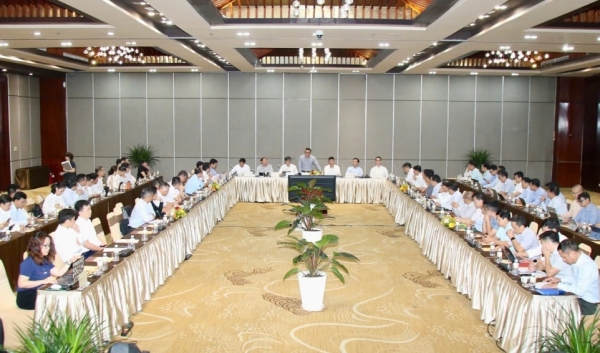
Petrovietnam Discusses Solutions to Enhance Safety Management in Continuous Operations
In the rapidly evolving landscape of the oil and gas and energy sectors, Petrovietnam is confronting significant challenges as numerous oil and gas facilities enter their long-term operational phases. Maintaining continuous production not only requires a focus on economic efficiency but also demands that Petrovietnam enhance its safety management effectiveness. These critical issues were recently discussed at a comprehensive conference organized by the corporation.
The oil and gas industry, by its very nature, operates in environments with inherent risks that require meticulous management. As Petrovietnam's infrastructure ages and new facilities come online, the company faces the dual challenge of maintaining operational continuity while ensuring the highest standards of safety for personnel, assets, and the environment.
Transitioning from Compliance-Based Safety Management to Proactive Risk Governance
Petrovietnam has recognized that to ensure safety during operations, a transition from compliance-based safety management to a proactive risk governance approach is essential. This strategic shift not only optimizes operational workflows but also delivers sustainable benefits for the organization.
Compliance-based safety management, while important, often focuses on meeting regulatory requirements rather than addressing potential risks before they manifest. In contrast, proactive risk governance involves anticipating potential hazards, implementing preventive measures, and continuously monitoring safety performance across all operational levels.
Proposed Solutions for Enhanced Safety Management
During the recent conference, Petrovietnam outlined several innovative solutions aimed at transforming their safety management framework:
- Comprehensive Training Programs: Implementing advanced training initiatives designed to elevate safety awareness among all employees, from field operators to senior management. These programs will focus not only on regulatory compliance but on developing a deep understanding of risk factors and mitigation strategies.
- Technological Integration: Deploying cutting-edge technologies for enhanced monitoring and risk management. This includes implementing IoT sensors, AI-driven analytics, and digital twins of critical infrastructure to predict potential failures before they occur.
- Streamlined Safety Procedures: Developing clear, standardized safety protocols that ensure consistency across all operations. Additionally, fostering a culture where employees are actively encouraged to identify and report potential hazards through anonymous reporting systems and regular safety audits.
- Rapid Response Mechanisms: Establishing agile feedback systems to address safety concerns promptly. This includes creating dedicated safety response teams, implementing real-time communication channels, and conducting regular drills to ensure preparedness for emergency scenarios.
The Critical Importance of Safety Management in the Oil and Gas Industry
Safety management in the oil and gas sector transcends mere regulatory compliance—it represents a fundamental business imperative. The highest levels of safety protection not only safeguard human lives and valuable assets but also contribute to maintaining Petrovietnam's reputation and credibility among partners and the broader society.
The potential consequences of safety failures in this industry can be catastrophic, resulting in environmental disasters, substantial financial losses, irreparable damage to corporate reputation, and most importantly, loss of human life. Therefore, investing in robust safety management systems is not just a cost but a critical investment in sustainable operations.
Comparative Analysis: Compliance-Based vs. Proactive Risk Management
The following table provides a detailed comparison between traditional compliance-based safety management and the emerging proactive risk governance approach that Petrovietnam is considering:
| Criteria | Compliance-Based Safety Management | Proactive Risk Governance |
|---|---|---|
| Methodology | Focus on adhering to legal regulations and established safety standards | Early identification and management of potential risks through predictive analytics |
| Proactivity Level | Reactive; addressing issues only after incidents occur | Proactive; preventing and minimizing risks before materialization |
| Employee Training | Standardized training based on regulatory requirements | |
| Feedback Mechanism | Slow response, typically activated only after incidents | Rapid feedback loops with real-time monitoring and immediate corrective actions |
| Performance Metrics | Measuring compliance with regulations and absence of incidents | Tracking leading indicators and predictive risk factors to prevent incidents |
| Cultural Impact |
Implementation Strategy and Future Outlook
Petrovietnam's initiative represents a significant strategic shift in how safety is managed within the organization. The implementation will likely occur in phases, beginning with comprehensive risk assessments across all facilities, followed by technology upgrades, and culminating in cultural transformation initiatives.
The company is expected to collaborate with international safety experts and technology providers to ensure the adoption of global best practices while adapting them to the specific context of Vietnamese operations. This approach will not only enhance safety but also position Petrovietnam as a leader in safety management within the Asian oil and gas sector.
As the global energy transition accelerates, the importance of safety management in traditional oil and gas operations becomes even more critical. Petrovietnam's proactive approach to safety governance will be essential in maintaining operational excellence while navigating the complexities of the evolving energy landscape.
In conclusion, Petrovietnam's discussion on enhancing safety management in continuous operations marks a pivotal moment in the company's operational philosophy. By embracing proactive risk governance, the organization is not only protecting its most valuable assets—its people and infrastructure—but also setting new standards for safety excellence in the Vietnamese oil and gas industry.