Trump's Energy Strategy: The Intense Battle Between Federal and California Policies
In recent years, President Donald Trump has exerted profound influence over California's energy and environmental sectors, promoting fossil fuels and reversing the state's climate initiatives with varying degrees of success. This confrontation transcends mere politics, actively reshaping the energy future of America's largest economic state.
Trump's Energy Policy: A Strategic Shift in Direction
Returning to 2019, the Trump administration effectively revoked California's federal waiver under the Clean Air Act, which had permitted the state to establish its own stringent greenhouse gas emission standards. This decision delivered a significant blow to California's climate efforts, a state that has long been a pioneer in combating climate change.
During his second term, President Trump has become even more decisive. Last year, he utilized federal agencies to compel the reopening of the Sable offshore platform near Santa Barbara, which had been shuttered following a major oil spill in 2015. This directive circumvented state environmental barriers, permitting the facility to resume pumping 50,000 barrels of oil daily.
Investment Shift: From Green Energy to Fossil Fuels
The Trump administration has also allocated over $2 billion to acquire and terminate offshore wind lease contracts along central California's coastline, redirecting investment away from green initiatives championed by state leadership toward fossil fuel production.
The confrontation escalated when the Trump administration initiated a formal federal investigation into the California Coastal Commission, intensifying ongoing disputes regarding offshore energy production, commercial space launches, and environmental monitoring along the Pacific coastline.
| Timeline | Trump Administration Action | Impact on California |
|---|---|---|
| 2019 | Revoked federal waiver under Clean Air Act | Lost autonomy over emission standards |
| Last year | Forced reopening of Sable Offshore platform | Increased oil production by 50,000 barrels/day |
| Recent | Investigation into California Coastal Commission | Environmental monitoring challenged |
The Confrontation with SpaceX and Space Initiatives
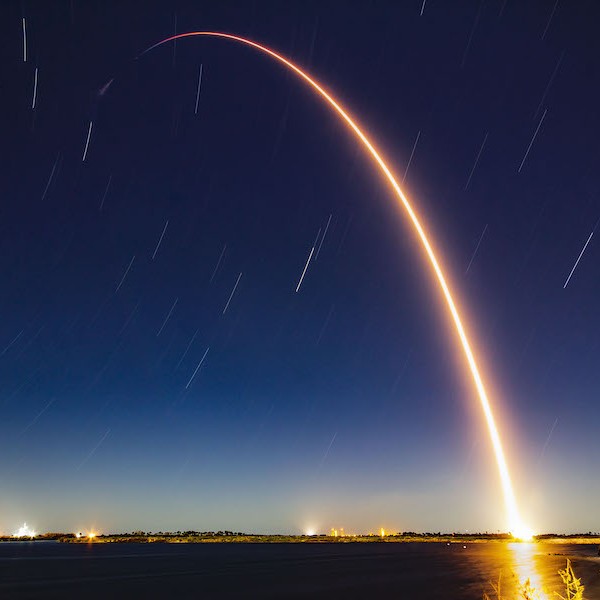
The National Oceanic and Atmospheric Administration (NOAA) is conducting a comprehensive performance review of California's coastal management program under the federal Coastal Zone Management Act. The Department of Commerce cited the California Coastal Commission's "unsubstantiated objections" to proposals by the U.S. Space Force, threatening to impede or limit the expansion of commercial rocket launches by Elon Musk's SpaceX from Vandenberg Space Force Base, thereby hindering federal space and national security priorities.
This conflict originates from the Coastal Commission's previous rejection of SpaceX's requests to substantially increase Falcon 9 rocket launches at Vandenberg. Although SpaceX subsequently filed a federal lawsuit alleging political bias against CEO Elon Musk—which the commission ultimately resolved with a formal apology—the Trump administration's current regulatory review seeks to permanently resolve the state's environmental oversight of space launches.
The Trump administration's protection of SpaceX occurs despite the tumultuous history between Trump and Musk. The two have engaged in a public feud over a federal spending bill, leading to Trump threatening to cancel SpaceX's multi-billion dollar government contracts and Musk retaliating by threatening to withdraw Dragon spacecraft from NASA missions.
Legal Battles and Court Disputes
The federal investigation follows court defeats for oil interests. The California Court of Appeal recently upheld the state's ban on Sable Offshore, preventing the company from repairing and restarting the Santa Ynez pipeline network along the Gaviota coast. The pipeline has remained inactive since the infamous 2015 Refugio Beach oil spill, when 450,000 gallons of crude oil spilled into the Gaviota coastline, severely polluting coastal ecosystems and forcing beach closures.
Although the Trump administration previously invoked the Defense Production Act to bypass state authority and restart production, California Attorney General Rob Bonta has responded with lawsuits to protect state sovereignty.
In a separate but parallel confrontation, California is preparing to sue the federal government over the systematic cancellation of renewable energy projects. Last month, California sent a 60-day notice of intent to sue regarding the Department of the Interior's agreements that have canceled offshore wind projects and redirected developers to invest in Gulf of Mexico fossil fuels. The state has issued subpoenas to leaseholders, including Golden State Wind and Invenergy, to investigate these acquisitions.
Details of Buyout Agreements
Previously, the Trump administration agreed to pay developer Invenergy $765 million to voluntarily terminate four offshore wind lease contracts. The agreement included an offshore project in Central California's Morro Bay, two in the Gulf of Maine, and one in New York Bight. Under the terms of the agreement, Invenergy redirected funds to build natural gas plants in Indiana, Wisconsin, Iowa, Kansas, and Missouri, as well as geothermal energy projects in the Western United States.
In April, the Golden State Wind project—a 2-gigawatt offshore wind farm in California's Morro Bay Wind Energy Area—was formally terminated in April 2026 when developers agreed to voluntarily relinquish their lease contracts. The U.S. Department of the Interior and Golden State Wind, a joint venture between Ocean Winds and Reventus Power, settled with a payment of approximately $120 million in leaseback fees. Similar to the Invenergy deal, the refund was conditional, with Golden State Wind required to invest an equivalent amount into oil and gas assets, energy infrastructure, or LNG projects along the U.S. Gulf Coast. Golden State Wind also agreed to abandon any future offshore wind development in the United States.
State Coalitions and Federal Lawsuits
Finally, California, along with a coalition of 12 other states, has filed a continuous lawsuit in the U.S. District Court for the Northern District of California against the U.S. Department of Energy (DOE) and the Office of Management and Budget. The coalition argues that the termination of $2.7 billion in clean energy and infrastructure incentives—including $1.2 billion for California's ARCHES (Alliance for Renewable Clean Hydrogen Energy Systems) clean hydrogen hub—violates the constitutional separation of powers and the Administrative Procedure Act. The states contend that because Congress controls the budget and had previously allocated these funds, the executive branch cannot unilaterally terminate programs established by Congress.
The confrontation between the Trump administration and California over energy and environmental policy represents more than just a political battle—it is a fundamental struggle over the nation's energy future. With ongoing lawsuits and continuous policy decisions, the outcome of these conflicts could reshape America's energy landscape for years to come.
| Key Players | Position | Stated Goals |
|---|---|---|
| Trump Administration | Federal Government | Energy independence, fossil fuel production, reduced regulatory barriers |
| California State Government | State Government | Climate leadership, renewable energy, environmental protection |
| SpaceX | Private Company | Increased launch capacity, reduced regulatory oversight |
| California Coastal Commission | State Regulatory Agency | Environmental protection, balanced coastal development |