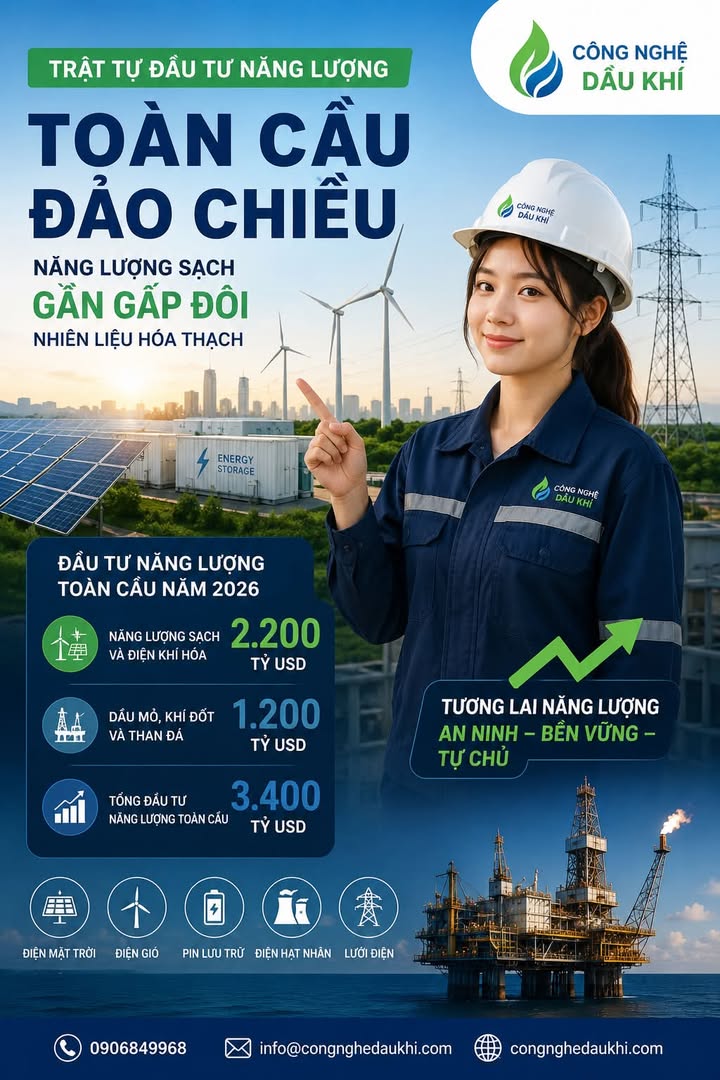
Global Energy Investment Reverses Course: Clean Energy Investments Nearly Double Fossil Fuels
The global energy landscape is undergoing a seismic shift, with clean energy investments projected to nearly double those of fossil fuels by 2026. This transformation marks a potential turning point in the world's energy dominance, raising critical questions about the future of oil and gas in our rapidly evolving energy ecosystem.
The International Energy Agency's (IEA) World Energy Investment 2026 report reveals a stunning reversal in global capital allocation, challenging long-held assumptions about the cost and viability of renewable energy. While many have historically argued that renewable energy is too expensive, subsidy-dependent, and unreliable to replace fossil fuels, the reality of investment flows tells a different story entirely.
The Investment Shift: By the Numbers
According to the IEA's projections, total global energy investment in 2026 will reach approximately $3.4 trillion. Of this substantial sum, approximately $2.2 trillion will flow into clean energy and electrification projects—nearly double the $1.2 trillion allocated to oil, gas, and coal combined.
| Investment Category | Estimated Value (2026) |
|---|---|
| Total Global Energy Investment | $3.4 trillion |
| Clean Energy & Electrification | $2.2 trillion |
| Oil, Gas & Coal | $1.2 trillion |
Why Capital is Changing Direction
This monumental shift in investment patterns cannot be attributed solely to climate change objectives. Several converging factors are driving this reorientation of global energy capital:
- Geopolitical Instability: The ongoing Middle East crisis and the risk of disruptions in the Strait of Hormuz have heightened concerns about energy security and supply reliability.
- National Security Imperatives: Many nations now view clean energy, electrical grids, energy storage, and nuclear power as critical components of national security strategy, not just environmental initiatives.
- AI and Data Center Demand: The explosive growth of artificial intelligence has created unprecedented demand for massive, continuous electricity supplies, driving investment in clean generation and grid infrastructure.
Leading Investment Areas
The capital surge is particularly pronounced in several key sectors of the clean energy transition:
| Investment Sector | Trend |
|---|---|
| Solar Power | Continued strong growth |
| Wind Power | Expanding investment |
| Transmission Grids | Rapidly increasing |
| Energy Storage | One of the fastest-growing segments |
| Nuclear Power | Strong resurgence |
| LNG | Continued growth for energy security |
Notably, upstream oil investment continues its decline for the third consecutive year, while natural gas investment has reached its highest level in approximately a decade, driven by the need to secure reliable energy supplies.
The Future of Oil and Gas: Not Obsolete, But Evolving
Despite the dramatic shift in investment patterns, oil and gas are not disappearing from the energy landscape. Oil remains critically important for transportation, petrochemicals, aviation, and maritime shipping. Natural gas is increasingly being viewed as a transitional fuel to reduce dependence on coal.
The key difference lies in where new capital is being directed. Rather than expanding traditional oil exploration, investors are increasingly prioritizing assets that can provide stable, long-term electricity generation. This represents a fundamental change in the energy investment paradigm.
The Unexpected AI Catalyst
The artificial intelligence revolution has emerged as an unexpected but powerful driver of clean energy investment. The thousands of new data centers being constructed to support AI require enormous amounts of continuous electricity, creating unprecedented investment opportunities in:
- Modernized electrical grids capable of handling variable renewable generation
- Large-scale energy storage solutions
- Nuclear power for baseload generation
- Offshore wind farms for high-capacity, reliable power
- Utility-scale solar installations
Even sovereign wealth funds, which collectively manage approximately $29 trillion, are increasingly prioritizing energy infrastructure and energy security as strategic assets in their portfolios.
Expert Perspectives and Analysis
Skeptics who once predicted that renewable energy would fail during energy crises may need to reconsider their positions. Rather than driving a return to oil dependency, geopolitical tensions are actually accelerating investment in domestic, controllable energy sources.
This doesn't mean the disappearance of oil and gas, but rather the emergence of a more diversified energy landscape where multiple sources coexist. The new focus is on energy security and long-term self-sufficiency rather than the traditional dominance of fossil fuels.
Conclusion: A New Energy Paradigm
The IEA's projections for 2026 suggest that we are entering a new era of energy investment—one where clean energy is no longer just an environmental choice but an economic and strategic imperative. The nearly 2:1 ratio of clean to fossil fuel investments signals a fundamental shift in how the world powers its future.
As this transition unfolds, the energy landscape will become increasingly diverse, with technologies that provide stability, security, and sustainability sharing the spotlight. The question is no longer if clean energy will replace fossil fuels, but how quickly this transition will occur and what new energy dominance will emerge in its place.