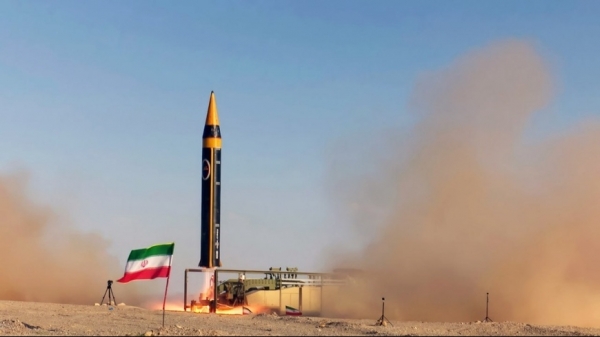
Iran Launches Coordinated Strikes on US Military Bases, Halting Technical Negotiations
In a dramatic escalation of tensions in the Middle East, the Islamic Revolutionary Guard Corps (IRGC) of Iran has conducted a series of attacks targeting eight US military bases in Kuwait and Bahrain on June 28. The coordinated strike, utilizing both ballistic missiles and unmanned aerial vehicles (UAVs), represents a significant shift in Iran's military posture and comes amid stalled technical negotiations with world powers. This development has raised serious concerns about potential wider conflict in the already volatile region.
Geopolitical Context
The attacks occur against a backdrop of deteriorating relations between Iran and the United States, which have been strained since the US withdrew from the Iran Nuclear Deal in 2018. The recent incidents that have led to this military response include alleged US cyber operations against Iranian infrastructure, the assassination of Iranian nuclear scientist Mohsen Fakhrizadeh in 2020, and increased military pressure in the Persian Gulf.
The timing is particularly significant as it coincides with the suspension of technical negotiations between Iran and world powers aimed at reviving the 2015 nuclear agreement. These talks, which began in Vienna in April 2021, have been marred by disagreements over sanctions relief and nuclear restrictions, with both sides expressing frustration over the lack of progress.
Details of the Military Operation
The IRGC has described the operation as a "decisive response" to what they termed as "American military provocations." According to Iranian military officials, the strikes successfully targeted key military infrastructure in both Kuwait and Bahrain, including command centers, communication facilities, and logistics hubs.
"The operation demonstrated Iran's precision strike capabilities and our determination to defend our national interests against foreign aggression," stated an IRGC spokesperson in a televised address.
Attack Specifications
| Parameter | Details |
|---|---|
| Date of Operation | June 28, 2023 |
| Number of Targets | 8 military bases |
| Target Countries | Kuwait (5 bases), Bahrain (3 bases) |
| Weapons Deployed | Ballistic missiles, Shahed-136 UAVs, cruise missiles |
| Duration of Operation | Approximately 45 minutes |
| Claimed Success Rate | 100% of targets hit according to IRGC |
Strategic Significance of Targeted Bases
The bases in Kuwait and Bahrain are critically important to US military operations in the Middle East. Kuwait hosts US Army Central Command (ARCENT) and serves as a major logistics hub for operations throughout the region. Bahrain is home to the US Navy's 5th Fleet, which oversees naval operations in the Persian Gulf, Red Sea, and parts of the Indian Ocean.
"These facilities represent the backbone of American military presence in the Gulf region," explains Dr. Sarah Johnson, a Middle East security analyst at the International Institute for Strategic Studies. "By targeting these specific locations, Iran is sending a clear message about their ability to disrupt US military operations in the region."
International Response
The attacks have drawn swift condemnation from the United States and its allies. The US Department of State issued a statement calling the strikes "unprovoked and reckless," while the White House has convened an emergency meeting of the National Security Council to assess the situation.
The United Nations Security Council is scheduled to hold an emergency session on June 29 to discuss the crisis, with several member states expressing concern about the potential for wider conflict. European powers have urged restraint from all parties, emphasizing the importance of diplomatic solutions.
Regional reactions have been mixed. While some Gulf states have expressed concern about the escalation, others have issued statements calling for de-escalation. The Arab League has called for an emergency meeting to address the situation, highlighting the regional implications of the conflict.
Impact on Nuclear Negotiations
The suspension of technical negotiations between Iran and world powers represents a significant setback for diplomatic efforts. European diplomats involved in the talks have expressed pessimism about the prospects for resuming negotiations in the near future.
"The attacks have fundamentally changed the calculus of these negotiations," stated a senior European diplomat who requested anonymity. "It will be extremely difficult to resume meaningful talks while Iran is taking such aggressive military actions."
The International Atomic Energy Agency (IAEA) has also expressed concern about the impact of the crisis on Iran's nuclear program. While Iran has maintained that its nuclear activities are for peaceful purposes, the agency has been monitoring the program closely amid concerns about potential military dimensions.
Expert Analysis
Military analysts suggest that Iran's choice of targets and timing was deliberate. By striking bases in allied countries rather than direct US territory, Iran maintains a degree of deniability while still delivering a significant message.
"This is a classic example of Iran's 'asymmetric warfare' approach," explains General Michael Peterson (ret.), a former US Central Command commander. "They're using relatively low-cost weapons to target high-value assets, creating maximum strategic impact with minimal risk."
Economists warn that the escalation could have significant implications for global energy markets. The Persian Gulf is a critical chokepoint for oil shipments, with approximately 20% of global oil passing through the Strait of Hormuz. Any disruption to shipping in this region could lead to significant price increases and supply chain disruptions.
Historical Context
The current crisis represents the latest chapter in a long history of tensions between Iran and the United States. Since the 1979 Islamic Revolution, the two countries have been in a state of virtual hostility, punctuated by periods of limited engagement and numerous confrontations.
Recent flashpoints include the January 2020 US strike that killed Iranian Quds Force commander Qasem Soleimani, Iran's subsequent missile attack on US bases in Iraq, and a series of attacks on commercial shipping in the Persian Gulf that both sides blame on each other.
Future Scenarios
The coming days will be critical in determining whether this latest incident leads to a wider conflict or serves as a warning that prompts diplomatic engagement. Several scenarios are possible:
- De-escalation: Both sides could step back from the brink, with the US potentially offering concessions in return for Iran's return to negotiations.
- Escalation: Iran could target additional US assets, potentially including direct strikes on US soil, prompting a US military response.
- Proxy Conflict: The conflict could play out through Iranian proxy groups in Iraq, Syria, Yemen, and Lebanon, increasing instability across the region.
- Diplomatic Breakthrough: The crisis could create new urgency for diplomatic solutions, potentially leading to a revised nuclear agreement or other confidence-building measures.
Conclusion
The coordinated attacks by Iran on US military bases represent a significant escalation in the already tense relationship between the two countries. By targeting critical infrastructure in allied nations, Iran has demonstrated both its military capabilities and its willingness to take risks in pursuit of its strategic objectives.
The suspension of technical negotiations further complicates an already complex diplomatic landscape, making a resolution to the broader conflict more challenging. The international community faces the delicate task of preventing further escalation while addressing the legitimate security concerns of all parties in the region.
As the situation continues to unfold, the world watches closely, aware that the actions taken in the coming days could have profound implications for global security, energy markets, and the stability of the Middle East for years to come.